
Share & more
Journalist Ghada Abdulfattah recently spoke to 10 Palestinians in the Gaza Strip about how their lives have been affected by three years of genocide, what has or hasn’t changed in the year since Israel and Hamas signed a ceasefire agreement, and their thoughts on Gaza’s future. These are their stories, as told to Ghada.
Since Israel launched its military campaign in response to the Hamas-led attack into Israel on 7 October 2023, more than 74,000 Palestinians have been killed in Gaza, including 21,000 children. Thousands are still missing under the rubble. More than 175,000 others have been injured, and Gaza is now home to the largest cohort of childhood amputees in modern history.
Over 80% of all structures in the Strip have been damaged or entirely destroyed, and 65% of the population is living in tents, with many others staying in war-damaged buildings. The essential infrastructure needed to sustain life – from the electricity grid and medical facilities to water and sanitation – has also been destroyed.
Numerous leading human rights groups, international law experts, and scholars of the subject have all determined that Israel is committing genocide. Palestinians in Gaza often use the word war when discussing what they are living through, according to Ghada, but when they stop to think about it, they say it is not a war – it is a genocide or an annihilation.
In the year since the Israel-Hamas ceasefire came into effect on 10 October 2025, Israel has continued to carry out near daily attacks, killing almost 1,500 people. Israeli troops directly occupy around 65% of Gaza, while around 2.1 million Palestinians are squeezed into the remaining 35% of the territory.
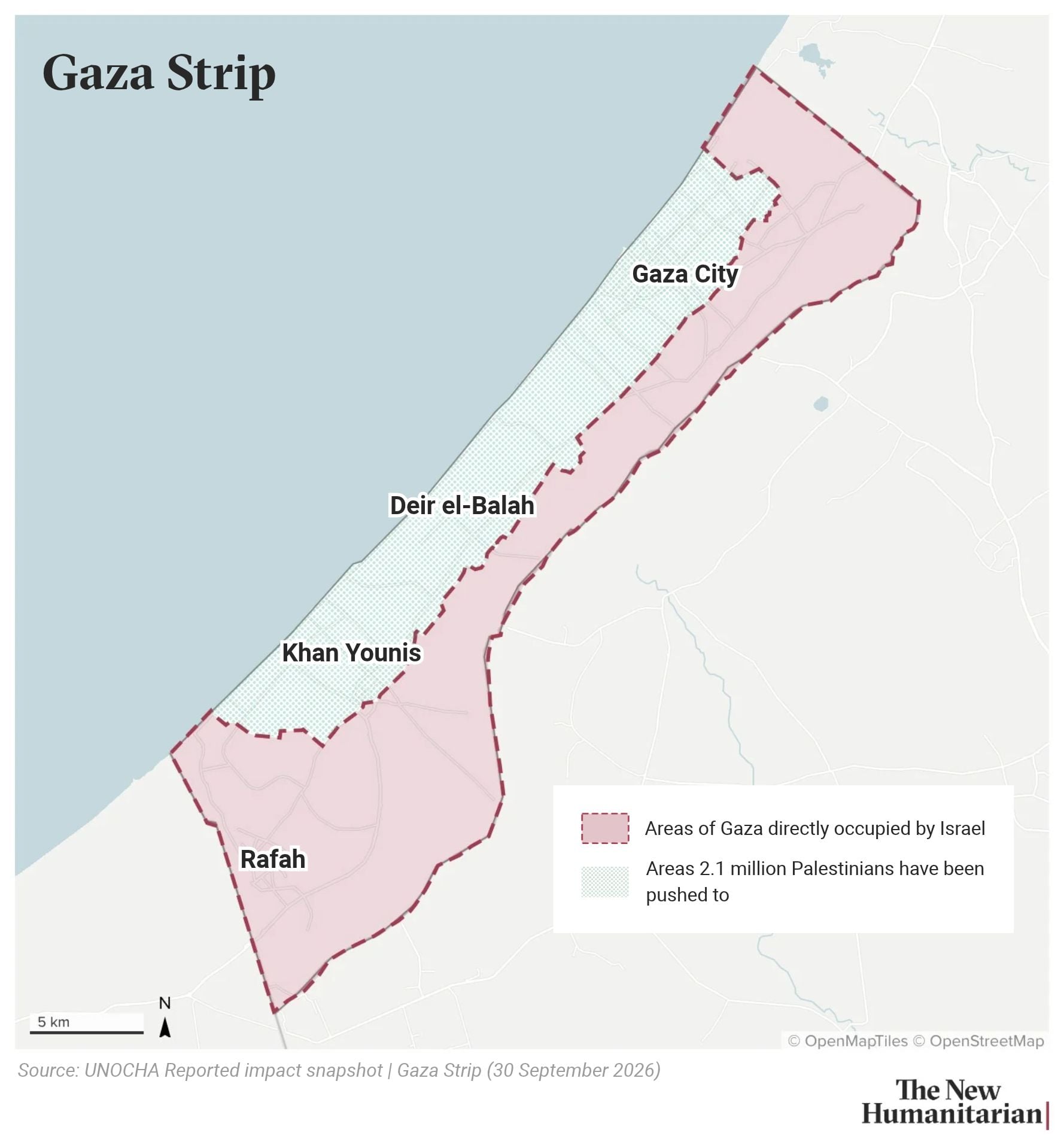
On the Israeli-controlled side of the so-called yellow line dividing Gaza, Israel has entirely demolished Palestinian communities and agricultural land, grinding them into dust, while building military bases for its soldiers as well as Palestinian militias that it is backing. At the same time, Israel is continuing to impose a blockade on Gaza, controlling how much aid and what items enter.
At the international level, US President Donald Trump’s Board of Peace has been given a mandate by the UN to oversee what comes next. It has put forward visions for Gaza’s redevelopment and announced plans for initial steps. The Board’s visions and plans, however, are entirely disconnected from the lives of people in the Strip and have little apparent path to actually being implemented.
As Yasmin al-Sbeihy, a 41-year-old widow and mother of six, told Ghada: “It has been a year, and not a single sack of cement has gotten into Gaza. What we hear is nothing like reality.”
Ayad al-Jazzar
When it comes to Gaza’s future, I don't believe anything I hear. I want to see something real on the ground. Israeli Prime Minister Benjamin Netanyahu talks a lot. America talks even more, and none of them do anything. Our Arab leaders don’t do anything either. Our fate is in everyone's hands but ours.
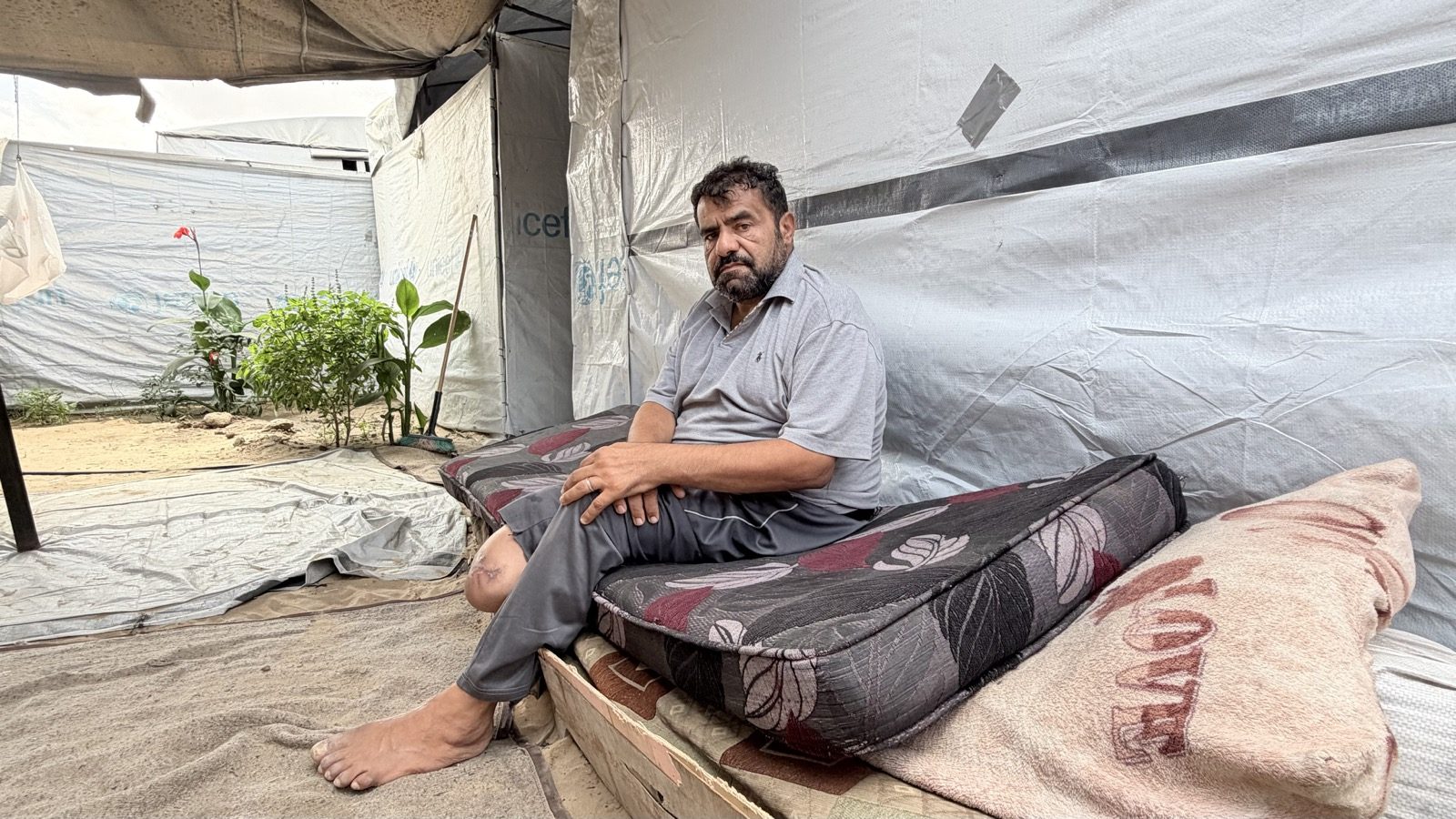
My name is Ayad al-Jazzar, and I used to have a dignified life. I’m 54 years old, and I’m originally from al-Tannour, a neighbourhood in eastern Rafah in southern Gaza. I have five children: three daughters and two sons. The oldest was born in 2000, and the youngest in 2008.
I worked as an ambulance driver in a hospital and was employed by the Palestinian Authority (PA). During the war in 2014, shrapnel hit my leg. I did not receive proper medical care, and I am diabetic. The wound got infected. I went to Egypt for treatment, but eventually my leg had to be amputated. I’ve been walking on one leg ever since. I have a prosthesis, but it isn’t fitted properly, and it’s uncomfortable.
We were displaced from al-Tannour on the very first day of Israel’s invasion of Rafah on 6 May 2024, and we’ve been displaced five times since then. Now, we are staying in al-Mawasi. I had a house of 140 square metres on 300 square metres of land. It was a ceiling over our heads. Now, we live in tents so close to our neighbours that they hear us breathing. They hear us coughing. There are rodents, bugs, and mosquitoes. Winter is coming, and last winter we were nearly washed away.
There is no safety. I cannot leave the tent, which is a pile of cloth. There is no light in the tents. There are dogs. There is no power. Sometimes, you hear the sound of the men walking at night. You feel afraid.
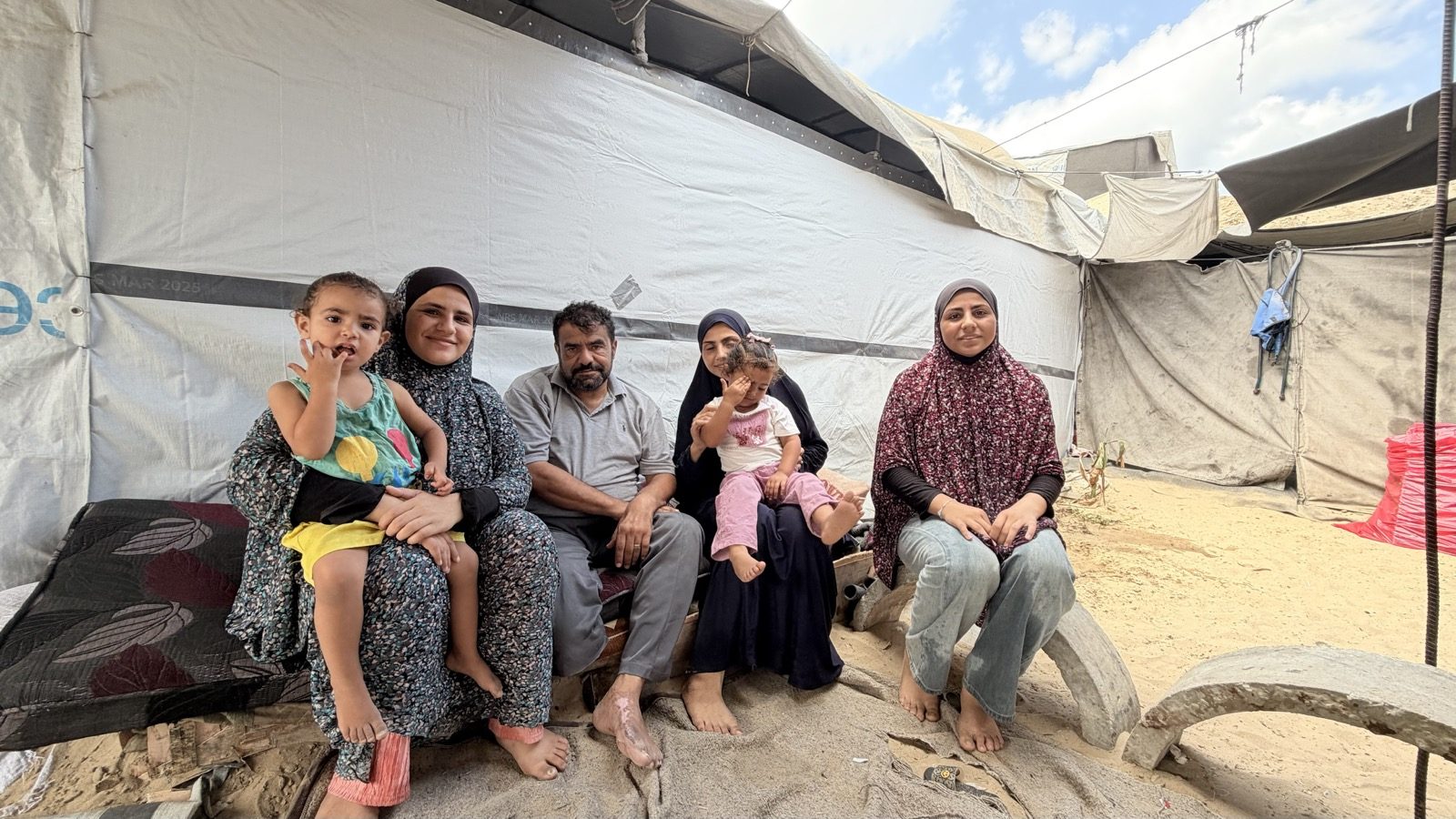
Al-Mawasi is far from the city and has no infrastructure. It’s difficult for people to walk here. Everything is far away, and it is sandy. I cannot walk even when I am wearing the prosthetic limb. There is no transportation. The streets are destroyed, and pushing a wheelchair through the sand is exhausting. There is no health system at all.
Since the ceasefire last October, I don’t feel any real change, except that there is food in the market. It feels like they keep us confined, but they feed us. I get 50% of my salary from the PA. But someone earning 1,000 or 2,000 shekels per month (about $325 or $650) now faces goods that cost 10 times more.
I cannot say that there is a real ceasefire. They killed someone yesterday, and the other day, they also killed someone. We can hear the sound of tanks and bullets. The navy boats are still shooting from the sea. The airstrikes and missiles still continue.
Before the war, I wanted to see my children married and make my home better. I bought the house and built it up as much as I could. That was just before the 2014 war started. Half of the house was destroyed during that war. I rebuilt it, and I planned to add a floor above for each of my two sons. I want my children to get an education. My two daughters are trying to get their university degrees, although the war has made it difficult.
I have simple dreams, like safety and peace. Rafah has been forgotten. We barely hear it mentioned in the news anymore. I’d be satisfied to return to Rafah, back to the debris and rubble of my home.
Malak al-Jazzar
The people in charge of reconstruction should be responsible and accountable. They should be Palestinian and from inside Gaza, not outsiders, because someone who hasn’t lived what we have lived can’t feel it. There should be specialised committees overseeing reconstruction and aid distribution, and jobs should go by merit, not connections.
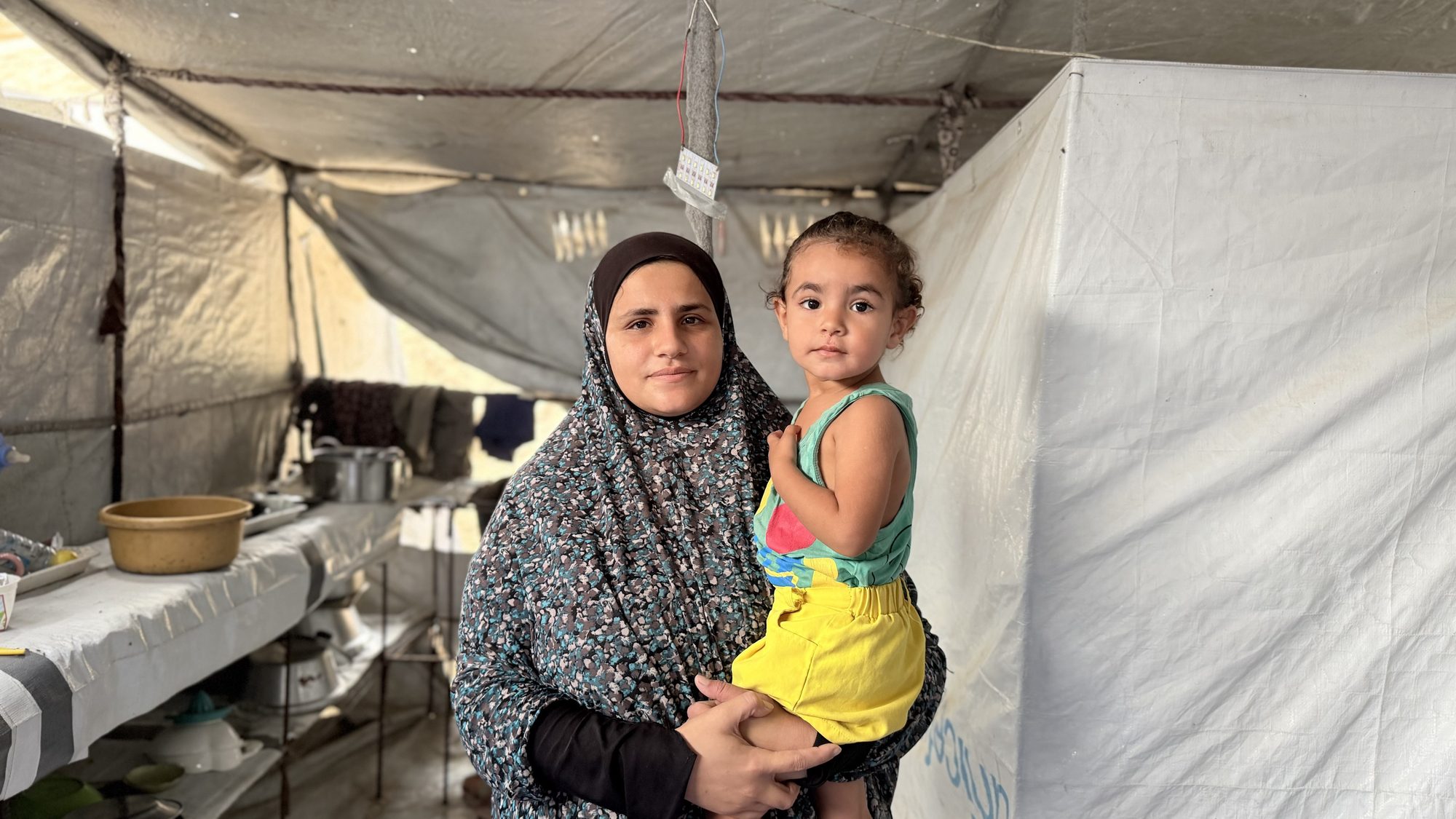
My name is Malak al-Jazzar. I am 26 years old, and I have two daughters. Malaak is two and a half, and Samar was born on 19 December last year. I got married in 2023, three months before the war. My husband and I had a small apartment in Rafah with one room, a living room, a kitchen, and a bathroom. I got pregnant right after we married, so every week I put aside a small amount of money to build a room on the roof for our children.
The first time we were displaced was six days after I gave birth to Malaak. When I gave birth to Samar, we were coming out of famine. We’ve been displaced around nine times now. My children have never seen a good life. My husband and I, at least we were able to live some of our lives and have some fun, but my children never had the chance.
Before the war, I was a nursing student. My father, Ayad, had a leg injury, and I watched him go in and out of the hospital for treatment. I wanted to become a nurse to lighten the suffering of people like him. My studies were interrupted by the war. My university records were in Rafah, and my phone with information about my studies was destroyed. I had nearly finished my degree, but now I’ve had to start over from the beginning. Even that is difficult because my phone broke and I haven’t been able to replace it, so I have no way to study.
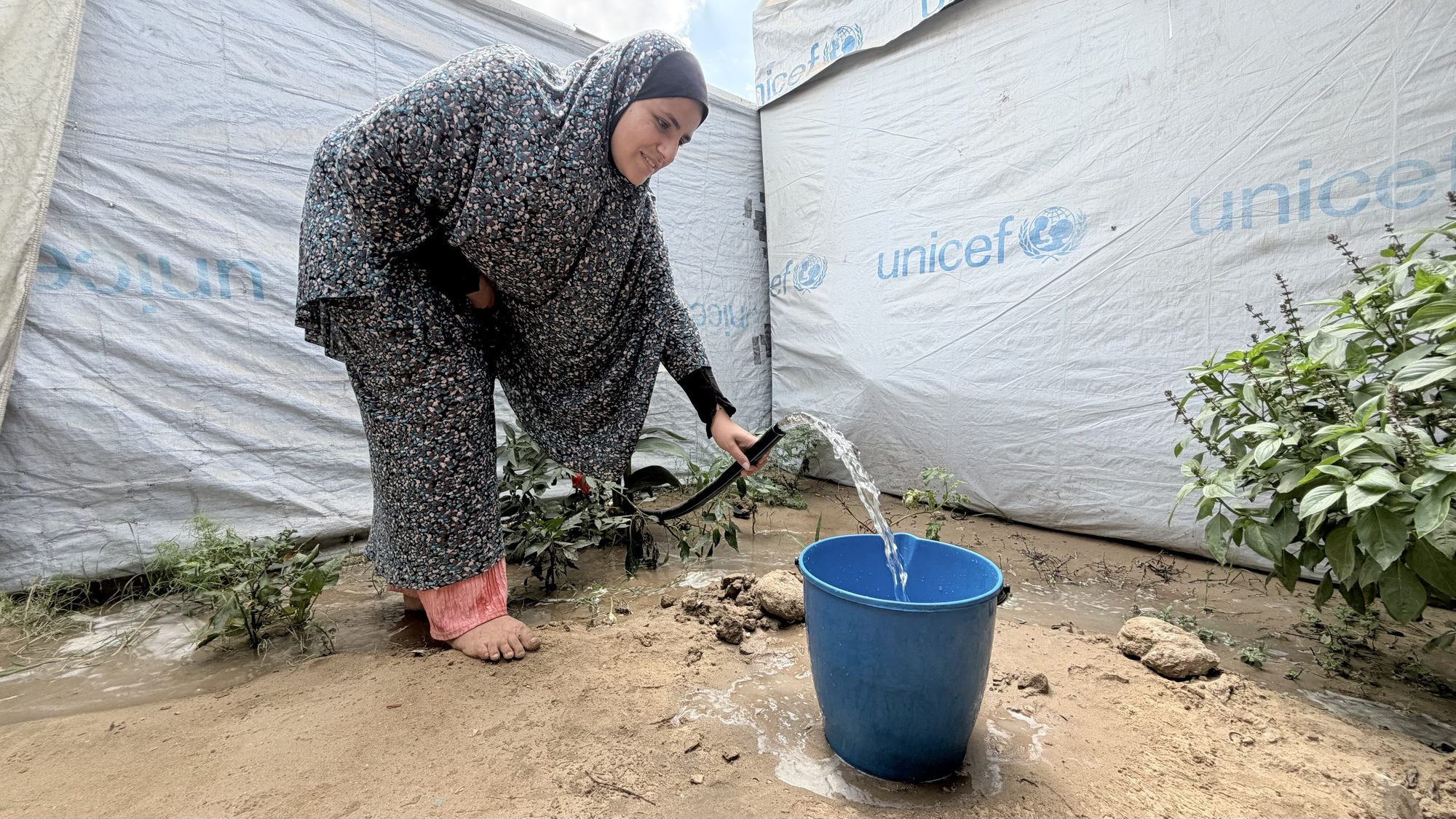
I don’t feel that we are in a ceasefire. A ceasefire would allow us to return to Rafah, to our home, to the place we know. We do not know the area where we live now.
Since the beginning of the war, we’ve heard people in positions of power say they will let caravans (prefabricated, temporary housing units) in, but we have never seen them. No matter what they say, those in power do not care about us. None of them live in a tent or have experienced a rat biting his or her child. Social media influencers were active with the people of Gaza at the beginning of the war, then they started to get bored.
One tent we were staying in burned down with everything in it, except for some clothing, in June 2024. Another collapsed during a rainstorm around October that year. Last winter, the rains flooded the used tent I bought as a replacement for 500 shekels (about $160), soaking our children’s clothes, the bedding, and the carpets.
In terms of what I’d like to see regarding reconstruction, start by letting in tarps and tents. Let in food. Let us buy what we need. We don’t need charity. We’ll work for ourselves, but there’s no work. We need proper school for our children.
When I hear the news about reconstruction, I pretend I’m not listening. It’s all lies. If they wanted to rebuild, they would have done it years ago. Nobody thinks of us. They think of their own interests first. People posted on social media for two or three days, then they went back to their own lives.
I fear for my children’s future. I am afraid that we are stuck in these conditions. I am afraid we will have to wait 100 years to have a dignified life. A couple of days ago, people said that some Israeli-backed militias came into the camp, and everyone in the camp stayed in their tents because they were afraid.
My dreams are small now. A tarp to fix my tent. A flashlight to light the night. A phone to wake me for dawn prayer and to teach my girls. Some toys for the children. Proper blankets for children. A jerry can to use as a water tank.
People outside would laugh at my dreams. I used to be a dreamer. Now, our dreams are silly. We wait for hygiene kits and food parcels.
Before the war, I wanted to finish my studies, furnish my home, and travel to Egypt – the closest country to us – to see things. Now, we go to the sea just to alleviate life’s pressures. Even our dreams before the war were not as rosy as other people’s in the world. Before the war, it was difficult to have what you wanted. Now, we cannot have it. Everything is difficult.
Yasmin al-Sbeihy
I do not feel that there is a ceasefire. There is still bombing, and we still feel fear. I am also afraid of the Israeli-backed militias now present in Gaza. Food prices are a bit lower, but nothing has been rebuilt. Even if they rebuild, what has been broken inside us won’t be mended.
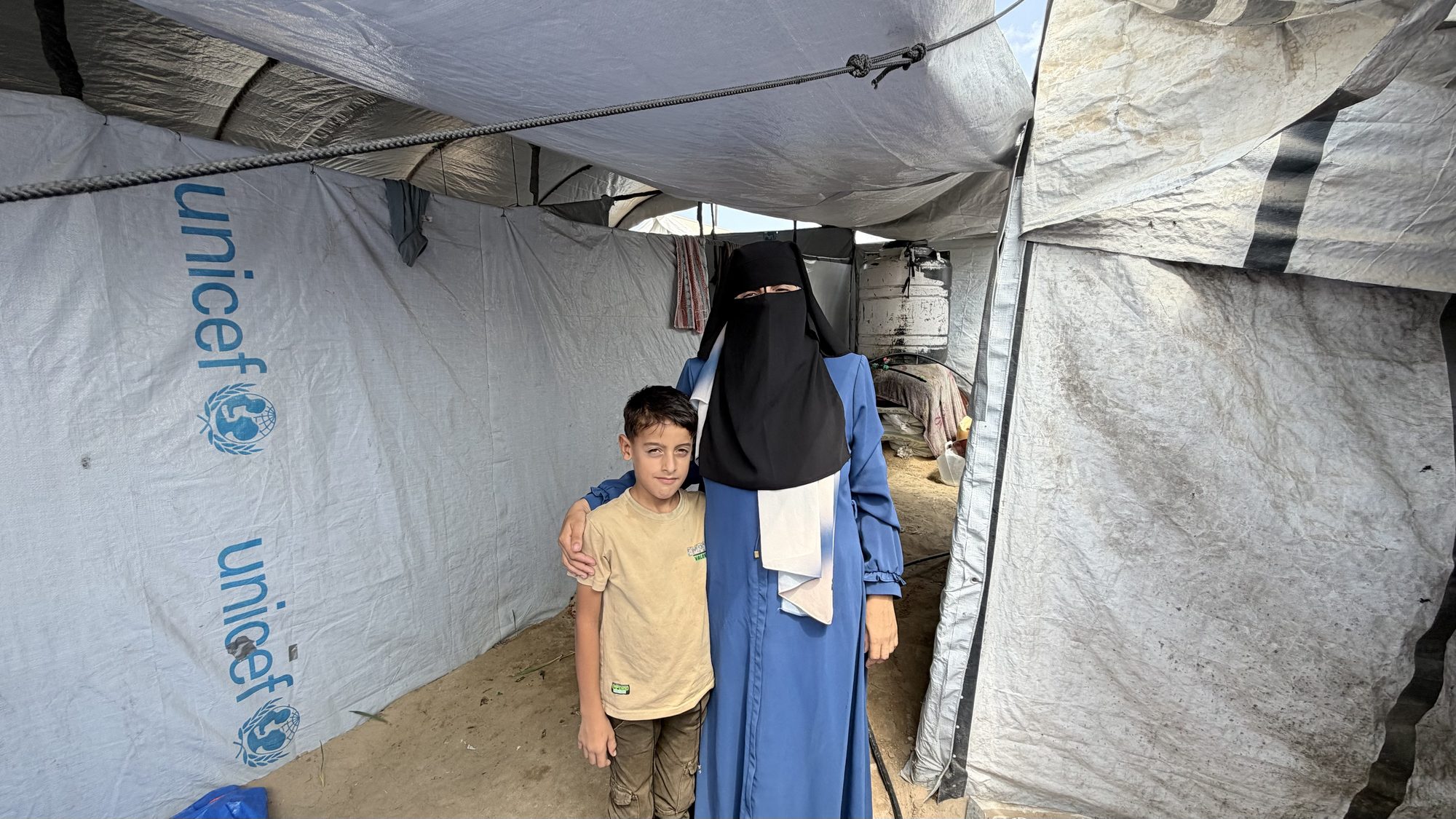
My name is Yasmin al-Sbeihy. I’m 41 years old, from Rafah. I have six children: three sons and three daughters. The youngest is eight, and the oldest is 21. I live for my children. My husband was killed. Now, I’m responsible for everything, from A to Z. I pray I won’t fall short.
Before the war, we lived in al-Tannour, a neighbourhood in eastern Rafah. We were displaced, and our home was destroyed. We had nothing when we were displaced and arrived here in al-Mawasi. Even finding the basics, like a single blanket, was hard.
On 24 August 2024, my husband went to try to retrieve some of our belongings from the part of the house that was still standing. A day before, our neighbours told us that they had gone and that it was safe. My husband had also gone back once or twice before to retrieve kitchenware and other things. He wanted so badly to be able to provide everything for his children. That’s why he went back again.
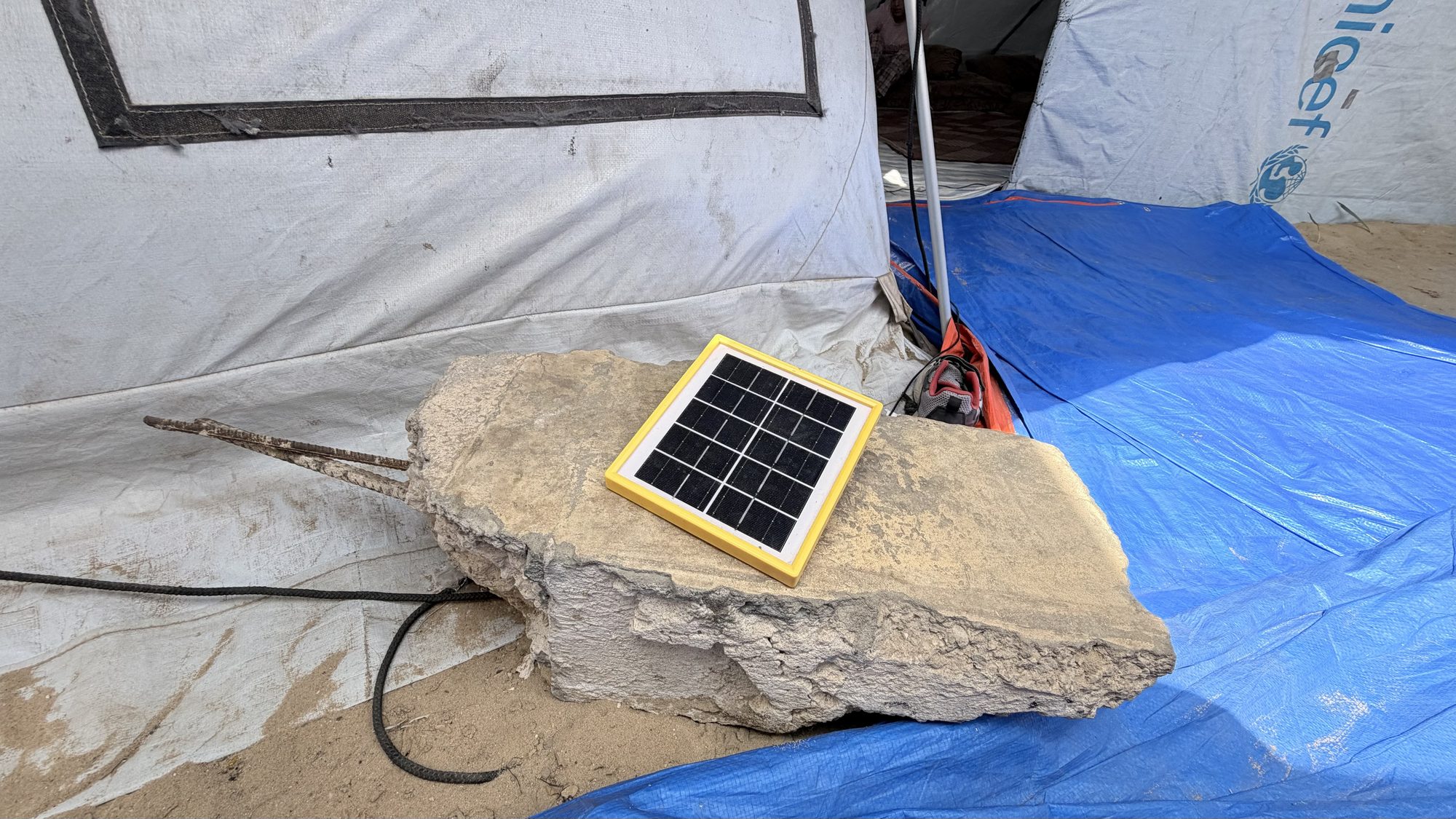
My husband left at a quarter to 10 in the morning. He said he’d be back soon. I called at 11 and he said he was still on his way there. That was our last call. After that, nothing from afternoon until sunset. That was the hardest day. I felt something had happened. I called a million times, but his phone was always unreachable. I thought there was no network in Rafah.
For five months, we didn’t know what happened to my husband. I thought maybe he had been taken prisoner by Israeli forces or that he was hiding from them in Rafah. I never thought that he had been killed.
Immediately after the first ceasefire began on 19 January 2025, my eldest son Abdulraham, who is now 21, went to the house. He called and said, “Mama, I found Dad”.
He found his father’s body at the door of the house. It was just bones, scattered. He recognised them by the bag my husband always wore on his back, his sandals, and what was left of his clothes. I broke down, and so did my daughters.
Even five months after he disappeared, I had still hoped that we would return and share the burden of caring for our family. Now, everything is on me. Abdulrahman is 21, but he is still young and wants someone to guide him and advise him. I am now the father and mother of my children. I have to provide them with food, shelter, and education.
Abdulrahman is in his second year of engineering school at al-Azhar University. He is studying online and lost a year because of the war. There’s no full scholarship, and I have to pay part of the fees. My second oldest daughter registered at al-Aqsa University for an education degree. I don’t know how I’ll manage to pay the fees beyond the first semester, and there’s no phone for her to study on.
My youngest, Adam, is eight. The doctor told me that he is malnourished because of the famine. He weighs 21 kilograms when he should weigh 27.
We rely on tekiya and aid parcels for orphans for food. Last winter our tent flooded. My brother gave us a tent, and that saved us. My children study in a learning tent organised by people in the camp so students have somewhere to continue their education. They sit on the ground with 30 to 35 children in each class. It hurts to remember what we had.
I want to see my children educated and my daughters settled in their homes. When I see the hopes and dreams and wishes I used to have, I laugh. They are silly. In the past, I used to want to refurbish my home and paint my apartment. I did not have lofty dreams. Now, I don’t have any.
When it comes to the Board of Peace and reconstruction, I’ve stopped listening to the news. We hear one thing and see another. We hear about reconstruction and see nothing. It has been a year and not a single sack of cement has gotten into Gaza. What we hear is nothing like reality.
Gaza’s future should be designed by people who are accountable, who know our conditions, and who are not affiliated with any party. They should be Palestinian. Those who are outside and not Palestinian will not be better to me than my own people. Those outside will not feel our suffering. People in Gaza have skills and capacity to contribute to reconstruction. Those capacities should be put to use, without nepotism.
Samah Asfour
When it comes to talk of reconstruction, I’ll believe it when I see it. They say a new government will come in. We’ll believe it when we see it. People say plans are being made, but if they were going to do anything, it would have been done by now.
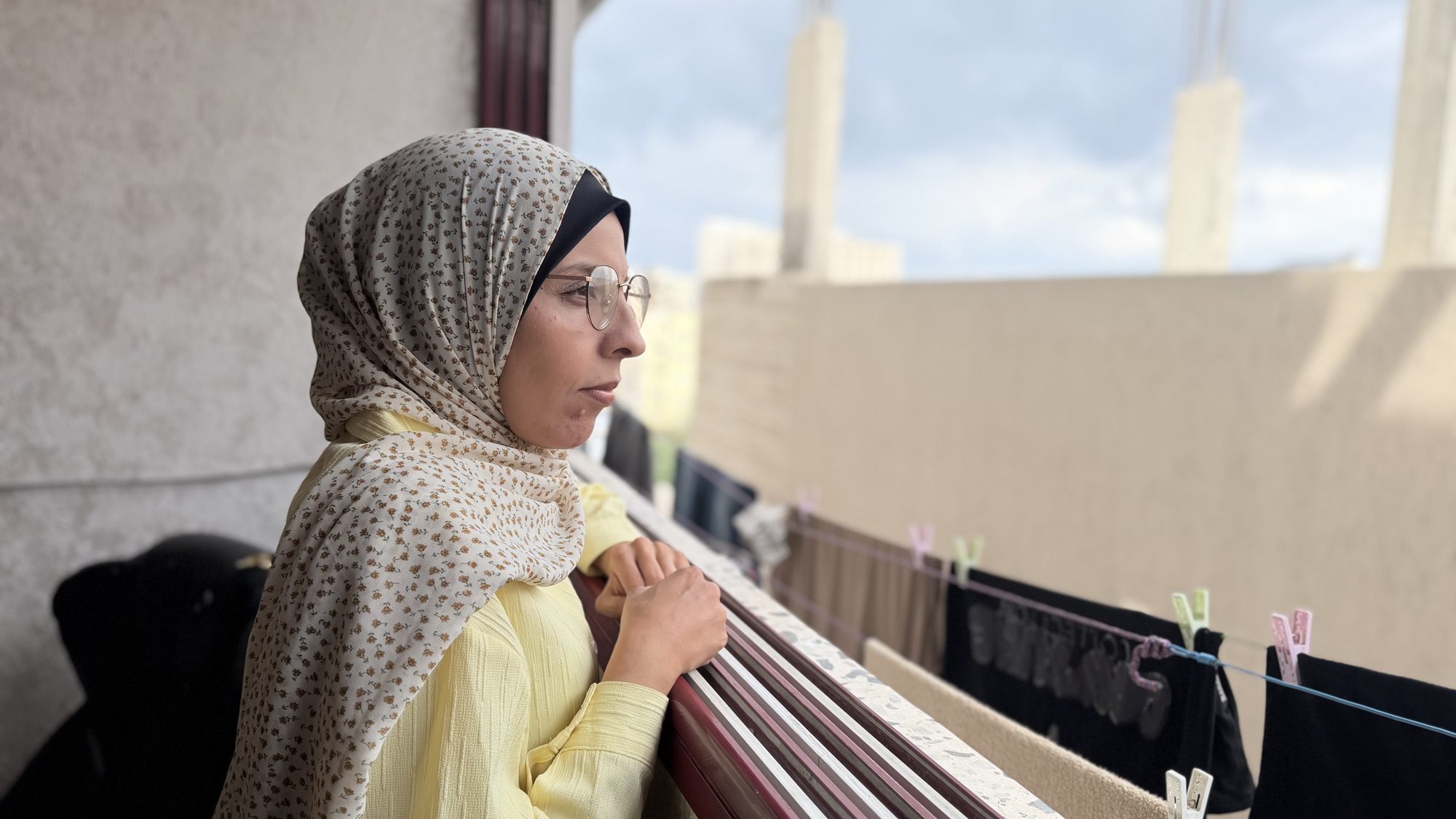
My name is Samah Asfour. I’m 38 years old, and I have three boys and a girl. The oldest is 16 and the youngest is nine. The war was hard for us, like it was for everyone.
We’ve been living for three years outside our homes, and it’s a year into a ceasefire, and they talk about a Board of Peace. I used to hear this before and get curious about it. Now, I cannot believe the talk. When I see things change with my own eyes, I will believe it. So far, I do not trust the Board of Peace.
The only thing that’s better since the ceasefire is that there’s less bombing. Prices are still driven up by merchants who exploit us, and landlords too. I want that to change. I’m still frightened to take my children outside because the airstrikes are still ongoing.
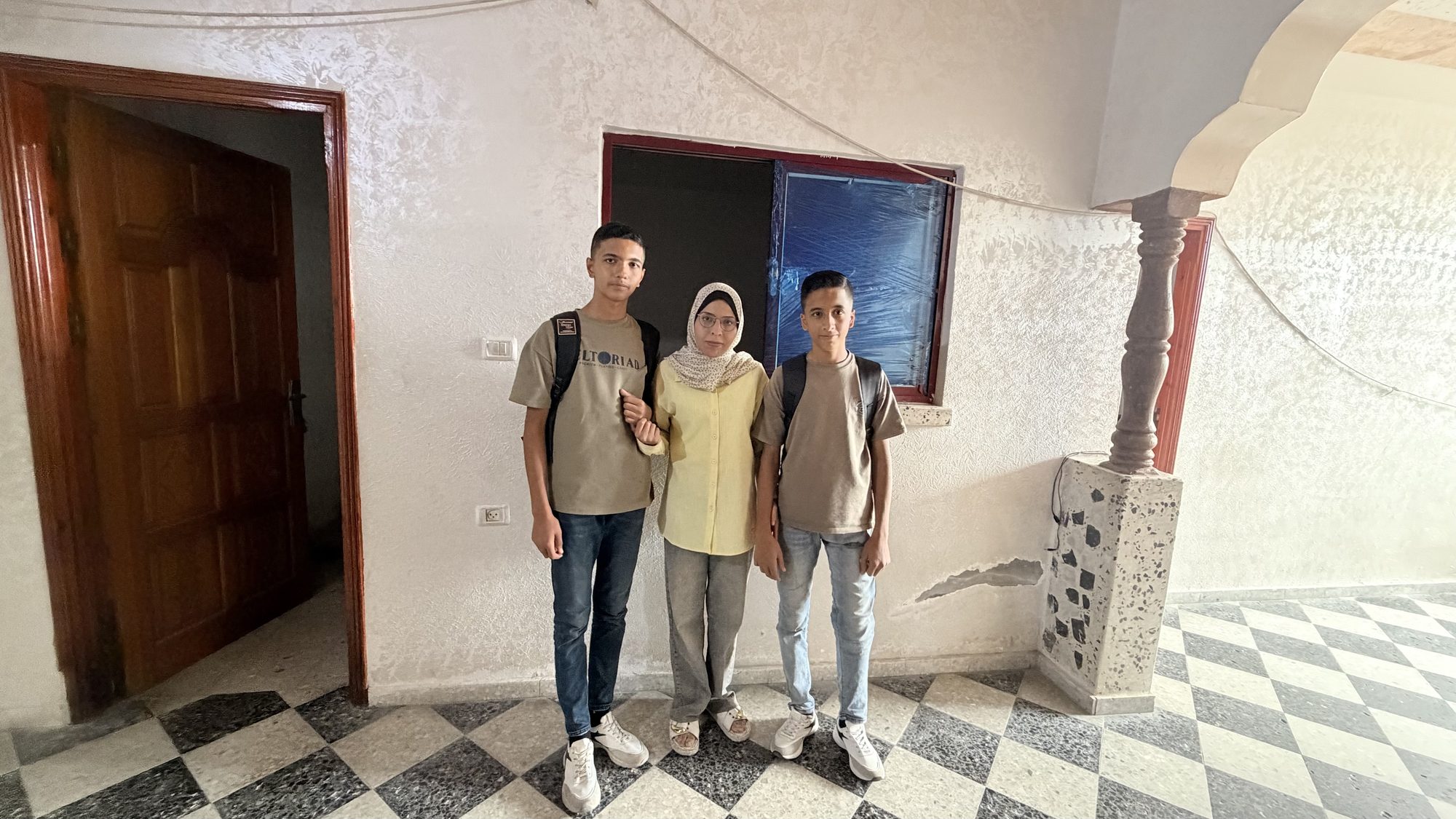
We were displaced twice from our home in al-Shujaiya in northern Gaza at the very beginning of the war. I remember the night clearly. It was 15 January 2024, around midnight. It was a night of terrible winter weather. We were staying in an apartment we had found in a neighbourhood of Gaza City. We all know that when there is an airstrike, the family that is struck does not hear it. My husband, Fady, woke me up. He was saying, “Samah, get up. We’ve been hit”.
I saw only fog and dust. I tried to get up, but my leg wouldn’t move. Half the bed I was lying on was hanging out over the street. A little further and I would have fallen down six floors. My eldest son, Hassan, who is now 16, was lying with his head on my shoulder. His head was cut open and his leg was burned.
On my other side, my husband was holding our son Yamen’s leg in his hand. It was almost entirely severed. The front of the foot on his other leg was also missing. Yamen was only 13. My other son, Muhammad, and my daughter Zeina, were calling out from under the rubble, “Mama, we’re here, but we can’t get out.”
In those days, there was no civil defense to speak of. It took two hours for anyone to arrive to help rescue us, and they had no equipment. My husband stood in the corner of the room, covered in white dust, not a scratch on him. His parents and his brothers, Shadi and Ali, and their wives, were in the apartment with us. They were all killed.
When the rescuers finally came, I wouldn’t let them move us until they got Muhammad and Zeina out from under the rubble. They were small, and the fallen stone was pressing on them, cutting off the air.
At al-Shifa hospital, they kept asking how we had come out alive. The hospital was a tragedy. There were no beds. I was lying on the ground. I didn’t care about myself. I wanted Yamen to have a bed, which they finally brought him. I begged the doctors not to amputate. My husband was the only thing holding me together. He is strong, God bless him.
In under a week, my son had four operations. Then the hospital began to be evacuated because there was an Israeli invasion. We left, struggling. We went to the al-Nafaq neighbourhood of Gaza City. My sister’s husband was a nurse at al-Shifa, and he was staying with us and helped take care of us. There was no alcohol or medicine to use to clean Yamen’s wounds, so he washed them with chlorine. I had to leave the room because I couldn’t stand his screaming.
Yamen lost his leg and the front of his other foot also had to be amputated. He could still feel his leg at first, even though it wasn’t there. When they amputated the front of his other foot, he asked how many toes they had taken. I told him that they had gone ahead of him to Paradise. “My love, you’re a hero,” I said. He replied, “Who told you I want to be a hero? I want my leg and my toes.”
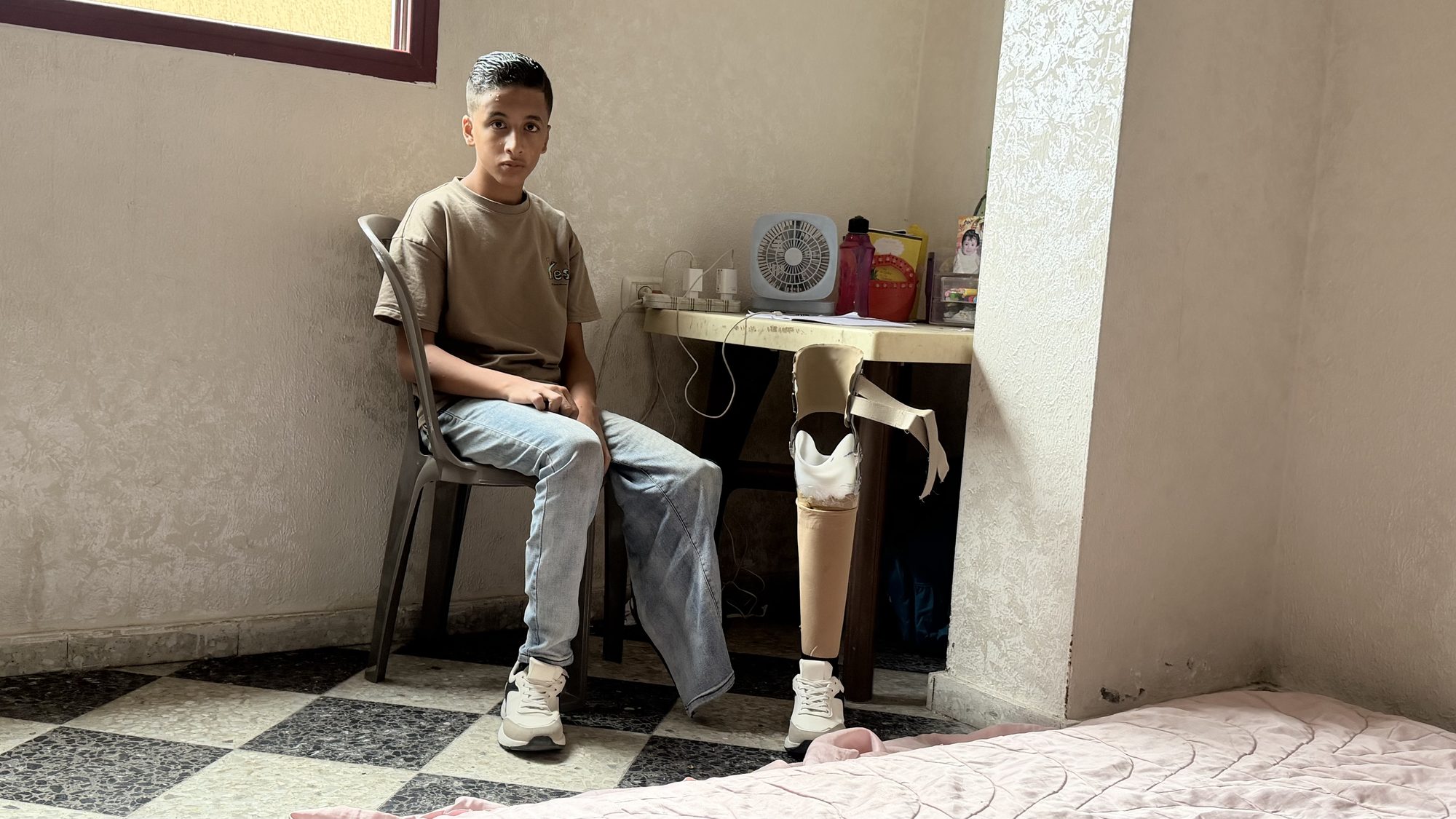
Yamen sometimes gets angry at the other children when they are playing or running around close to him. “Why do you all have two legs and I don’t,” he yells. He’s very silent now and doesn’t speak much. My brothers, his uncles, pamper him. He finally accepted to go back to school, which he’s been doing for over a month now, but he doesn’t want to make friends.
Yamen says he wants to be a surgeon. Hassan, whose head required 30 stitches, wants to be a photographer. He’s still affected by his injury too. My husband keeps telling them, “I have lost my parents and my brothers. You are my support now. Who are my men now?”
In terms of our current conditions, last night I sat with a woman about to give birth by caesarean in a tent, sleeping on the ground. All these people in tents had homes and comfort. They sent their children to the best schools and fed them the best food. Now, we barely manage a good meal on Fridays.
Our children have accepted how different their life is now. Zeina had toys, a bedroom, dolls, makeup. The three boys had their own room. In July, I found an apartment for us to rent after living for months in a tent. The tent was impossible for the children, with rats and rodents, the fear of a snake, and the increased possibility of Yamen catching an infection. Everything is expensive. Prices are like Paris, and we live in Gaza.
Now, I just want us to be able to settle somewhere and for my husband to find a comfortable job. Right now, he’s working as a delivery man. My children say, “Mama, you’re our human shield.” The wish of my life is to see them coming down the university steps in graduation gowns. Gaza produced professors, doctors, and engineers.
I want the conditions to improve and for reconstruction to happen. The rubble everywhere has to be cleared so we can build on the land. Winter is coming with insects, mice, and rats. There’s no transportation. It’s been entirely destroyed. I can’t keep running from one doctor to another.
When the ceasefire was announced, I cried. The war is over, but I cannot go to my in-laws or meet them again. I was very connected with them. I cried that my relatives are not there. Sometimes, I want to collapse, but I remember my husband and my children.
After the ceasefire, the airstrikes got slower, but there are still some airstrikes. All the time, I fear for my husband moving from one place to another for his job.
Raneem al-Jadba
Talk about reconstruction doesn’t matter to me as long as there is no action. Words, I’ve heard plenty. During the war, they kept saying there’d be a ceasefire, we’d rejoice, and then we’d be let down. During the first ceasefire, my husband was still alive and I was happy. By the time this one came, he’d been killed, so it didn’t affect me. I just wanted to follow my husband.
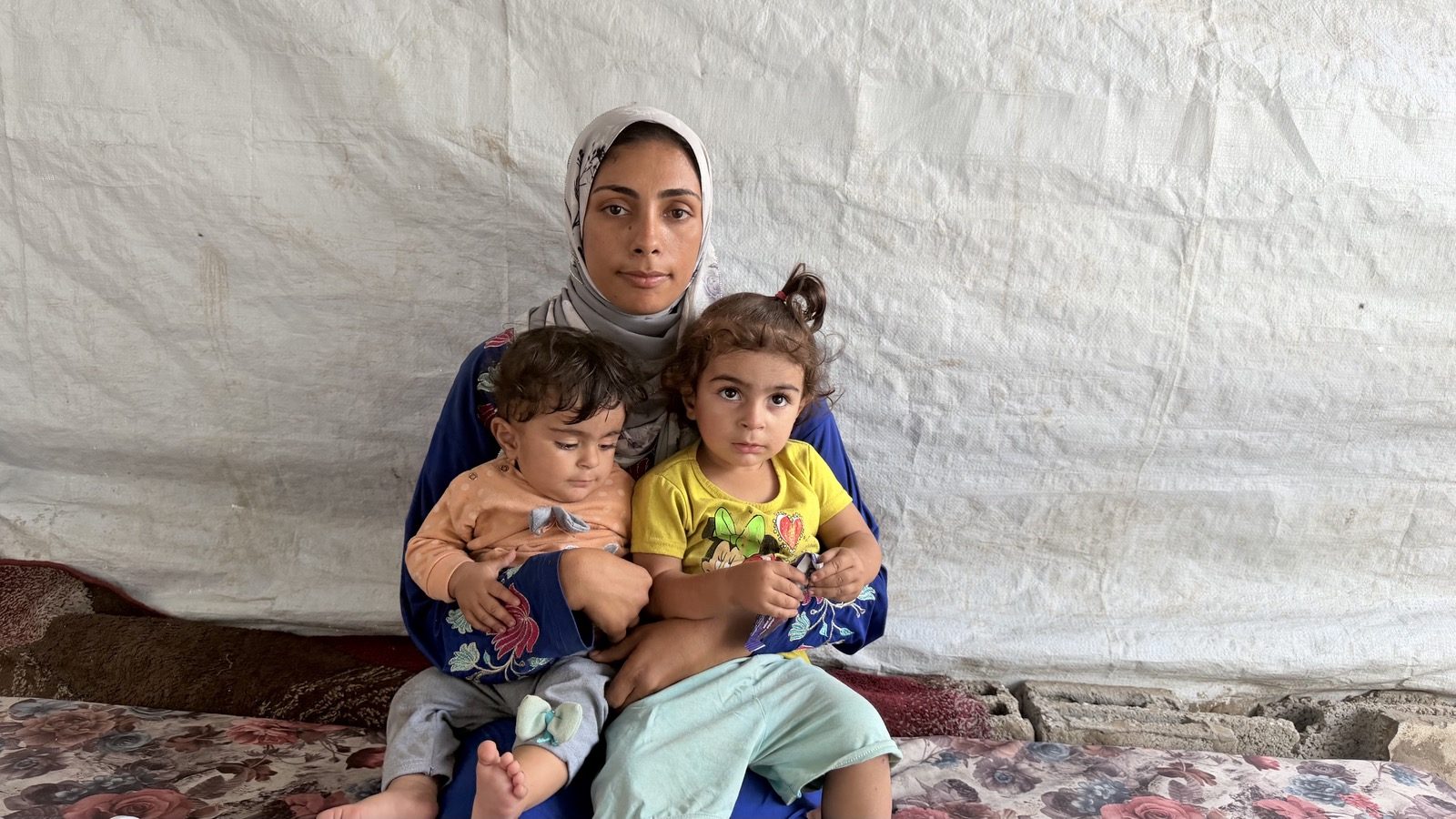
My name is Raneem al-Jadba, I’m 23 years old, and I have two children. My first daughter Zeina is a year and eight months old, and my second daughter, Sara, is three months.
My husband and my cousins were killed on 18 September 2025. We were at our house in the al-Tuffah neighbourhood of Gaza City. Israel declared the area a red zone, and they bombed us with planes, drones, and helicopters. My husband and my cousins died in front of me. I was holding Zeina, and I was pregnant with Sara. My daughter and I choked on the dust.
It was terrifying, and I still carry it with me. If a pot falls on the floor, I scream. Thank God my husband died instantly and didn’t suffer. I woke up in the hospital and left without serious injuries.
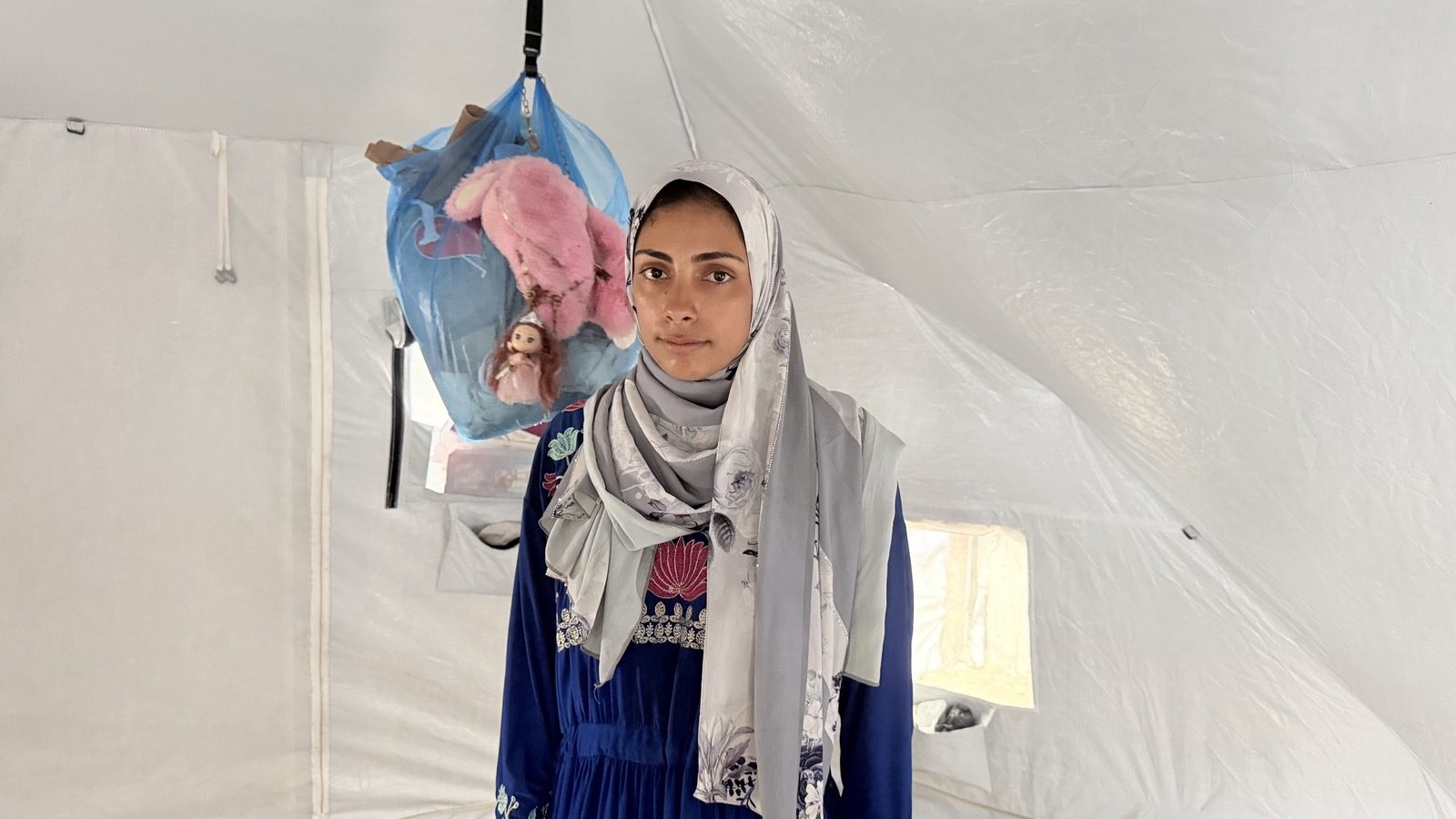
At first, I wanted to take my daughters and go with my husband. I remember the instant he was killed all the time, and raising my daughters has become a huge responsibility.
When the ceasefire was announced last October, people were happy, but I was crying because it came a couple of weeks after my husband was killed. I was glad for the calm, but I didn’t want to take the responsibility of raising my daughters on my own. Zeina holds the phone and looks at her father’s picture saying, “Baba, Baba”. Her first word was “Baba”. She sees his picture and kisses the screen.
Honestly, my heart got burned. When the ceasefire was announced, I wished I was dead with him.
Now, I’m a new student in my first semester at Gaza College studying social work. I studied basic education at al-Aqsa University for about one semester before, but then married and became a housewife. I returned to my education because I want to get educated so that I can help my daughters. I want to raise my children. I haven’t started at the university properly yet. I have no laptop or phone, but I’ll begin.
Money is a struggle. When I get a food parcel, I sell part of it to buy diapers and other things. No charity sponsors us. I live on food parcels, which, at most, is worth about 1,200 shekels (around $390).
We’re still living in camps, in tents, in humiliation. We’re still afraid. There are still assassinations happening.
Before the war, I lived in an apartment above my husband’s family’s house. I lived for a while in a camp specifically for orphans and widows with children. Then the camp closed and we went to rented land. We spent a year in the orphans camp, and it was good. I felt safe and there was support.
Now, I’m alone. My husband’s family is hard on me. We were staying with them, but they asked me to leave and move to the orphans camp because of the pressure and financial strain we are all facing.
As far as Gaza’s future goes, I’d wish for no orphans to be isolated. What I want is for widows and orphans to have security and for them to be included in society. My dream is to raise my girls as their father had hoped, with a good upbringing. I hope I can be up to the task. I’d like someone to sponsor them so I can educate them and give them clothing and everything they need.
Before the war, it was the man who went out to the market, brought the food, and handled everything outside the house. Now, I must be father and mother at once. I go to the market in the morning, with two small children. I bring the food. I fill the water. My own life is lived, and now I want to live for my daughter’s lives. My hopes and my wishes are for my daughters, not for me.
Muhammad Sa’dat
They say the ceasefire is a year old, but there is no ceasefire here. The Israelis kill every day. Last night, someone was killed nearby. There are challenges in almost every aspect of life. We used to dream big, but now I dream only to return to Beit Hanoun. Displacement is not easy.
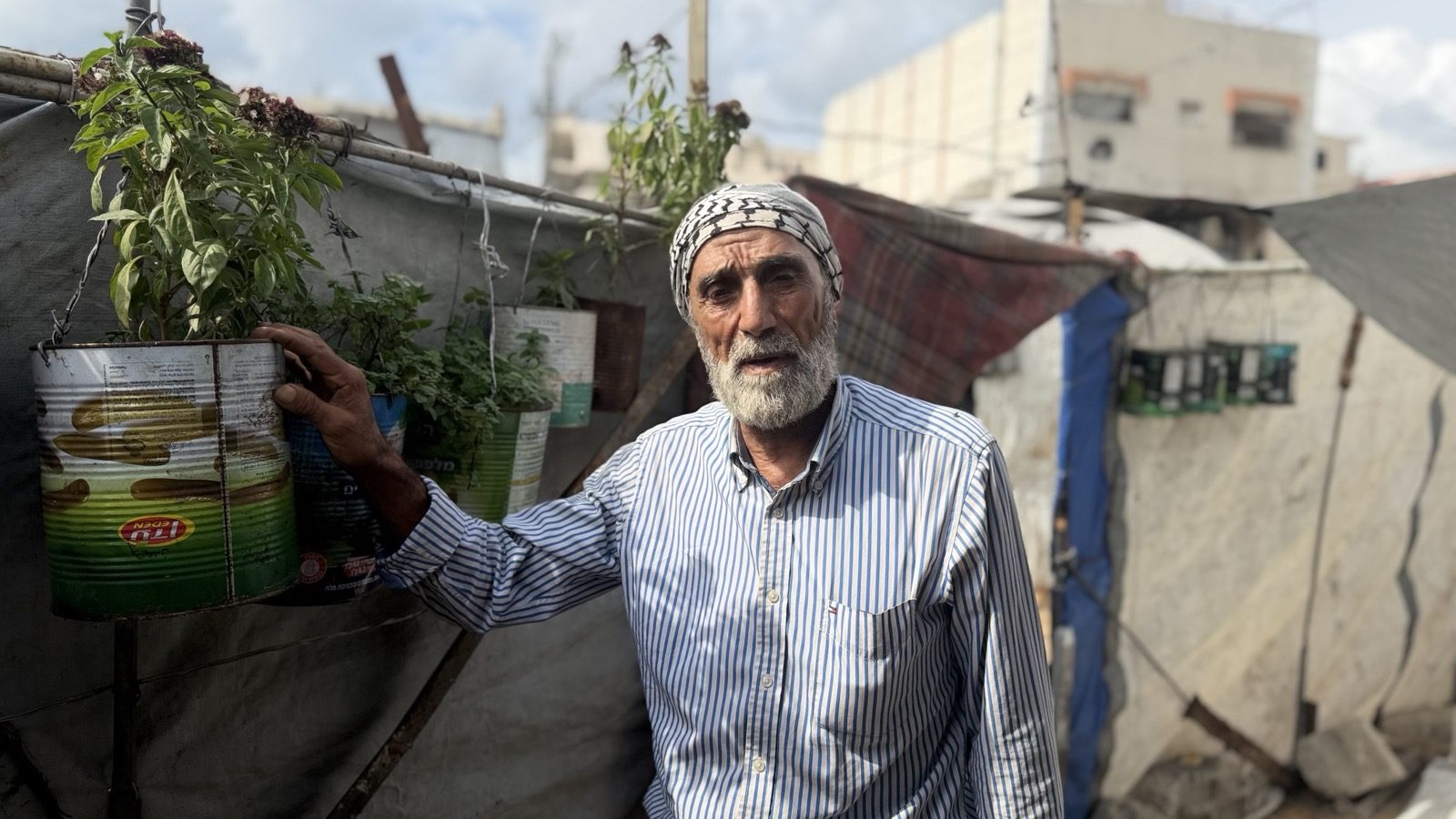
My name is Muhammad Sa’dat. I’m 73 years old, from Beit Hanoun in the north of Gaza. I have 12 children. I had seven or eight dunams (1.7-2 acres) of land with lemon and olive trees. When the olive trees grow, they shade the vegetables, so vegetables don’t do well under them. Before that, I grew cucumbers, squash, and tomatoes. I also had about 25 head of sheep, a poultry farm, ducks, chickens, pigeons.
My land was close to the border, about 900 metres away. When the war began, I felt the tanks immediately. We left the house in the first hours of the first night and stayed about a week in the Indonesian Hospital before we were told to evacuate the area.
Today, people have no money and nothing is left. Housing is the biggest challenge. We live in tents, and the owners of the land we are staying on could ask us to leave at any moment. No one expected things to last this long. Food and water are the next biggest challenges. Every hour, there’s a fight. Yesterday, at a school that’s been turned into a shelter, people shot each other over water.
A small child growing up in this environment of charity kitchens, water, and dirt with no school and no one to look after him, what do you expect from him?
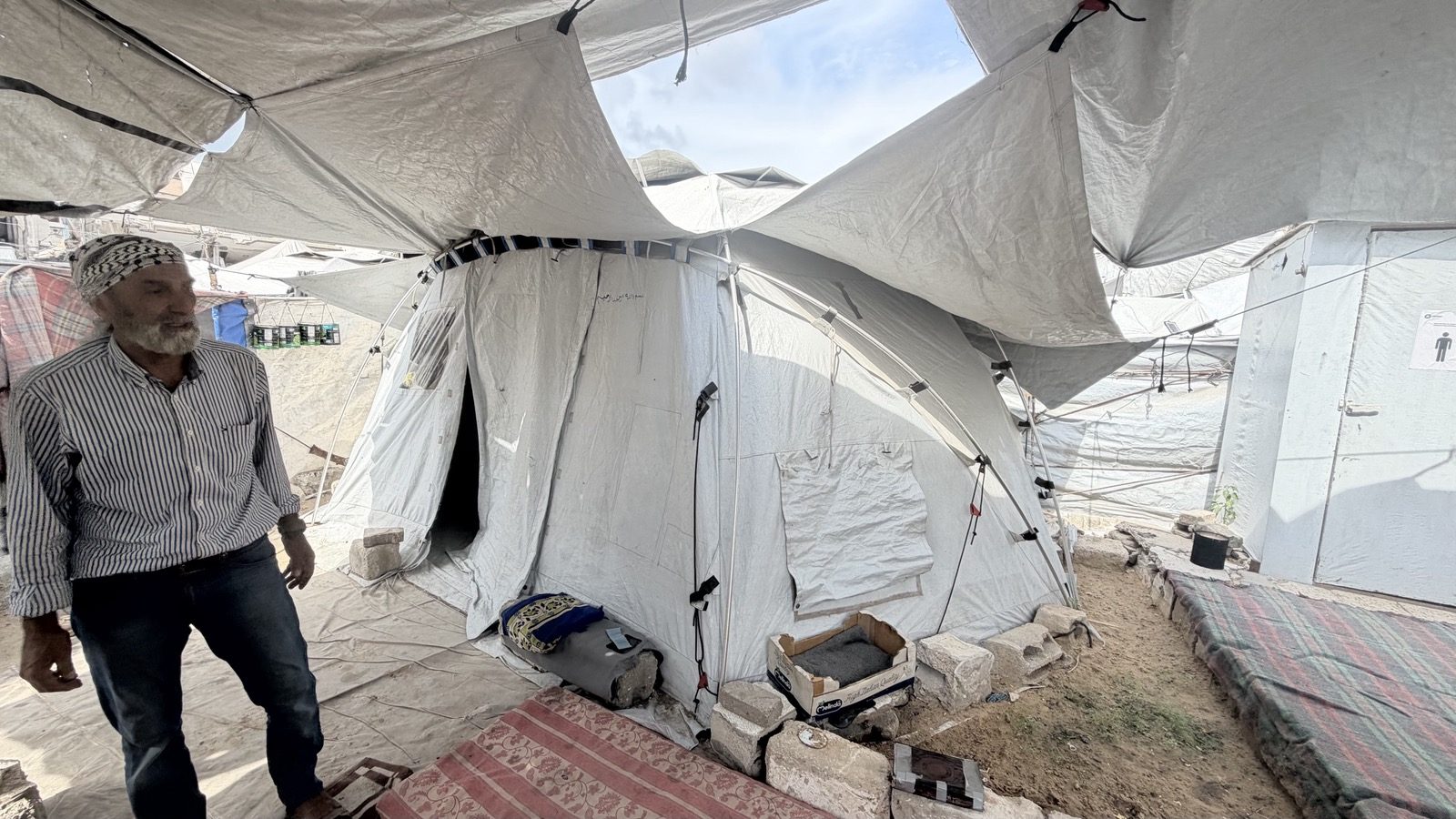
I was born in 1953. I was three years old in 1956, the first time Israel occupied Gaza. I remember 1967, when Israel occupied Gaza again, and the 1973 war between Israel and Egypt. I’ve lived through all of it. But nothing was like this war, which has brought killing, hunger, poverty, and displacement and burned everything.
We’re farming people. During the olive season, we used to fill 150 cans of olive oil. I started planting on the land where I am displaced – to remember what I had and to pass the time. I can’t forget Beit Hanoun. My only wish is to return to it. Beit Hanoun is the nearest area to the Israeli settlements on the other side of the border, where they have farms. They say that’s why they want it.
When I hear about the Board of Peace and all this talk, I see it as one big joke at our expense. [Israeli minister of national security] Itamar Ben-Gvir and Netanyahu, what they want is for the Palestinian people not to exist.
I hope we can live in dignity. We suffer from everything.
Suhair Abu Nimr
One year after the ceasefire, the bullets are still passing by our roads. We are not that far from the yellow line Israel has made dividing Gaza. I feel afraid that if I leave my tent I will not return to my children. I am afraid that if my children leave, they will not come back to me.
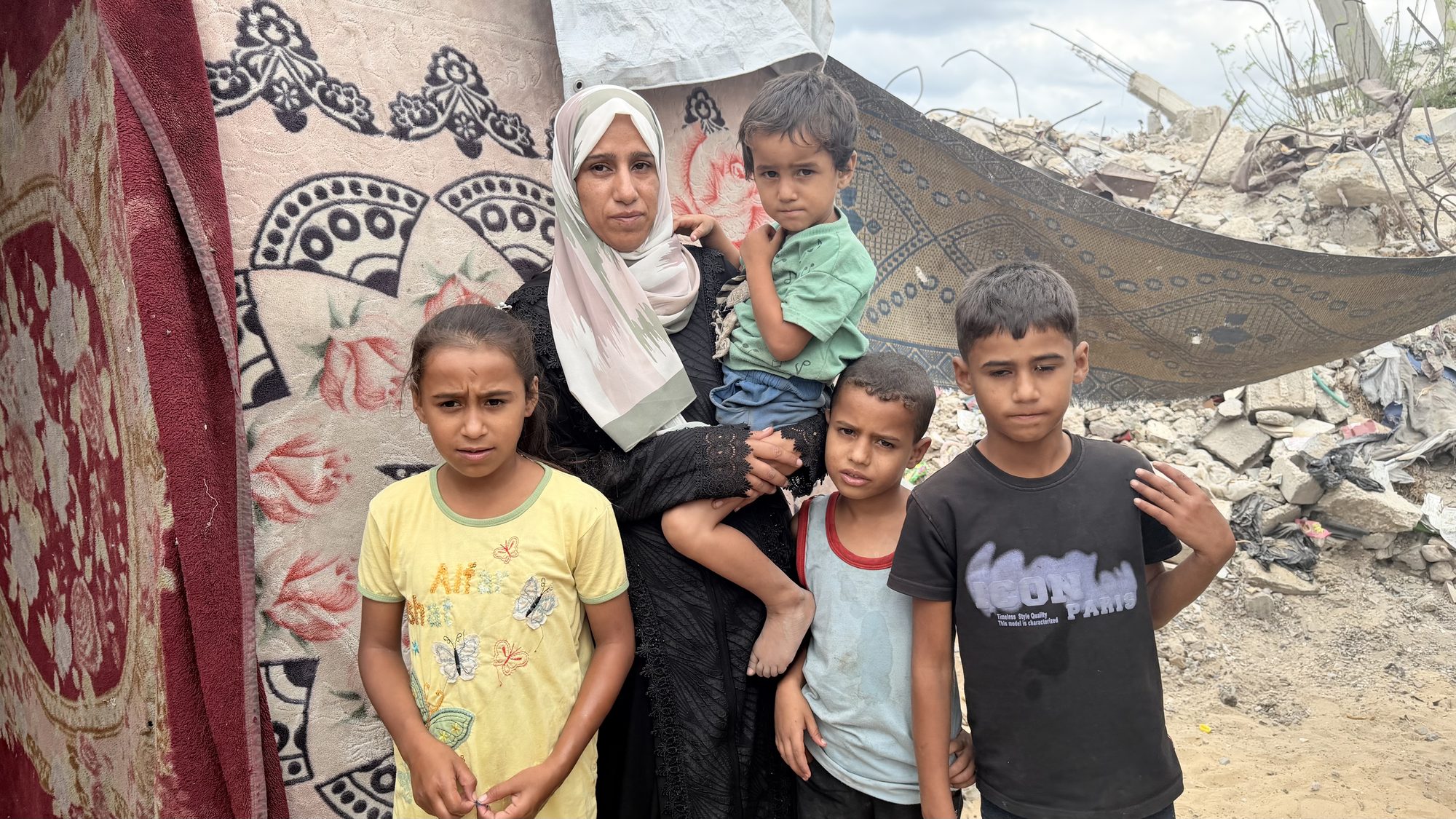
My name is Suhair Abu Nimr. I’m 32 years old. I have three boys and a girl between the ages of 3 and 10. I studied basic education and hold a bachelor’s degree. I’m from Rafah but moved to Khan Younis when I married, which is where my husband is from.
My husband and I moved into our own apartment two months before the war began. Before that, we lived with my in-laws. My husband worked at a car wash in Israel. Everything we dreamed of, he put into that apartment. It was small, but it was ours. During the war, we were displaced 11 times.
At the very beginning of the war, the house opposite ours was hit with no warning. Wadi’, my second oldest, was standing at our door. He was going to the shop, like any other child, to buy something. The doctors estimate the blast threw him four metres into the air. We never expected a strike.
About 80% of Wadi’s body was burned. His left leg almost needed to be amputated. The doctors had to take skin from the waist to the knee of his right leg to graft it onto his left leg, shoulder, and stomach. He was evacuated to Egypt in early November 2023 for treatment. His grandfather volunteered to go with him because the Israelis wouldn’t allow full families.
Wadi’s leg was saved, and when the treatment ended, he said, “I want to go home”. He had no mother, no father, not even his brothers or sister with him. He’s a child and needs his parents. He couldn’t bear it.
Now, we live in a tent right next to the rubble of our house. The tent isn’t suitable for a child like Wadi’. There are mosquitos, bugs, and the kitchen is right beside the tent. The food aid parcels are just rice, lentils, and so on. Yesterday, a snake came into our area. It’s in the rubble, and there are small children around.
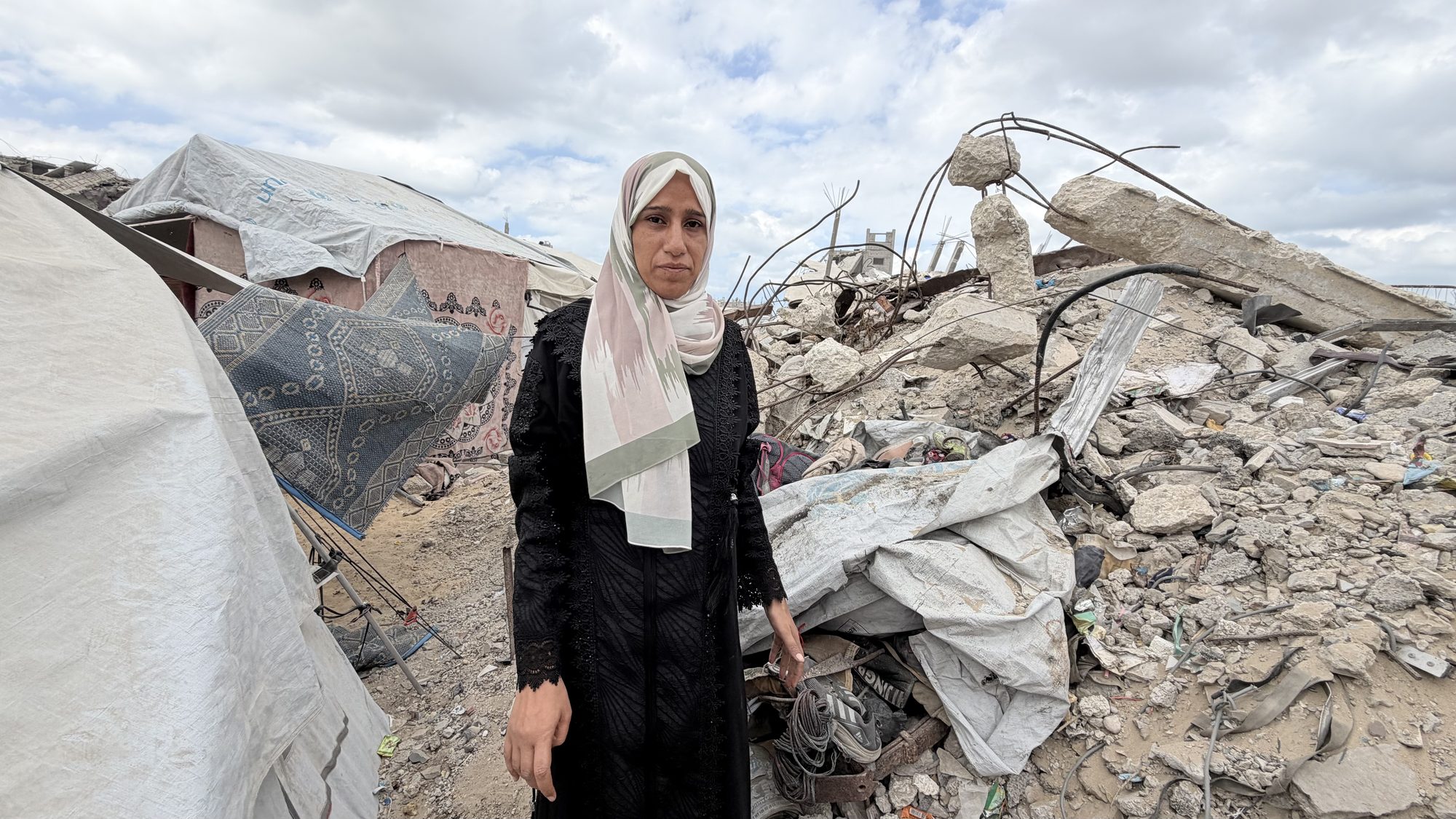
Wadi’ is eight years old now, and his leg hasn’t healed properly. It keeps developing ulcers. He can’t walk far or play like other children. There’s a bone sticking out below his knee. I took him to Nasser Hospital and to a clinic for the Médecins Sans Frontières (MSF). I asked for medical shoes because ordinary shoes hurt him. He gets small wounds, and in a tent with flies, infection spreads.
One small scar took about seven months to heal. MSF suggested another graft, but they said they couldn’t guarantee the wound wouldn’t open again because the bone is still a problem. I’ve asked for a report from several orthopaedic doctors, but they won’t give me one. Without a report, the organisations that supply crutches and shoes won’t help.
The mental impact is the hardest part. Wadi’ still hasn’t accepted the injury. He’s often aggressive. He hits his brother and sister for no reason. I think it’s because he was away from us in Egypt for six months. He asks, “Where were you when I was in Egypt? Where did you go?” I took him to a psychiatrist. He’s in third grade. He started attending school again but comes home halfway through the day because the bathroom is dirty.
We live in a marginalised area. We haven’t even received a flashlight from aid organisations, and I’d like cleaning supplies. We need more tarps for our tent too. Since the start of the war, I have received three tarps. How long can that last me? I need at least five. A tarp costs 280 shekels (about $90) in the market.
Before the war, I dreamed of living in a house with my children, a house that was mine, where I could sleep peacefully. Now, the biggest dream is for a decent tent, one that is safe for me and my children. I dream of safety and security. I need dignity. I feel we are abandoned.
When it comes to talk of reconstruction, I don’t believe the news. A while ago, there were negotiations, and I thought, “Maybe this time is different”. But nothing has changed. Now, my dream is just that a referral for a medical evacuation comes for Wadi’ so I can travel with him.
If I could help design Gaza’s future, I’d ask for one thing: a dignified life, and a replacement for the tents.
Mahasen Abu Samra
It’s been a year since the ceasefire, and nothing has changed. Prices have come down a little, but things are still expensive. The only change is that there’s less bombing.
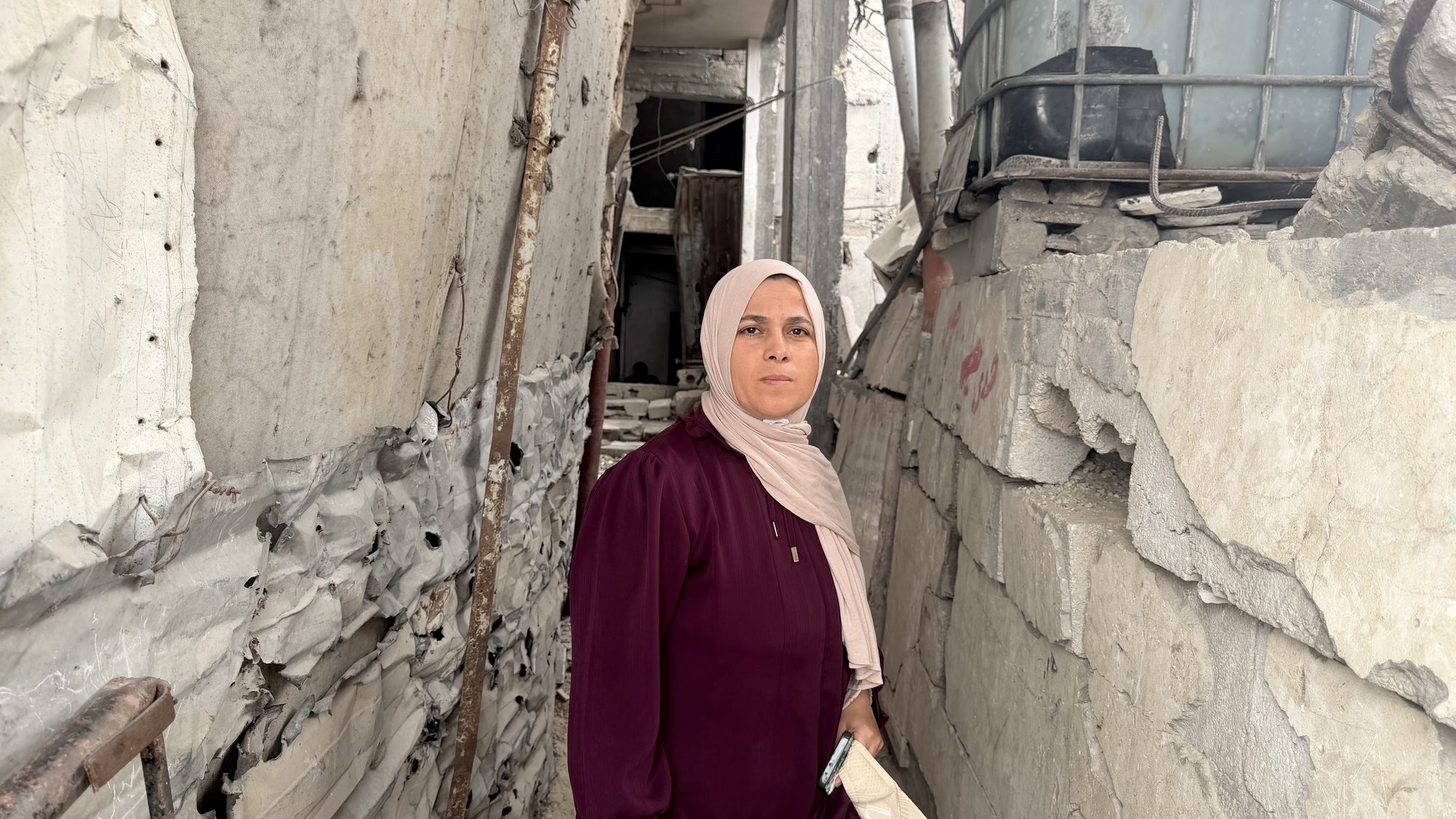
My name is Mahasen Abu Samra. I am 46 years old. I have three daughters and one son. My eldest son and my husband were both killed. I’d like to salute every woman and girl in Gaza who carries water, cooks, washes, and keeps everything going.
We stayed in our house in the al-Arayshiya area on the western outskirts of Khan Younis throughout the war. When we felt danger, we would move, usually staying for a day or two with my sister or my husband’s family and then coming back. Counting all of it, I’ve been displaced about 15 times. But I’ve stayed in my area throughout most of the war. Even when the shells were landing, I stayed in the sitting room.
One of the times we were displaced was at the end of January 2024. The Israeli army was entering Khan Younis from all directions. We left under fire. My mother-in-law, who can’t walk, was carried out in a wheelchair. We took nothing, not even clothes for the children.
We went to my sister’s on a Saturday. On Monday, my husband and my son decided to go back to the house, even though everyone told them it was dangerous. My husband said he would go back this one time and not again after that. Three or four hours later, I felt something was wrong. Then, someone told me they had been killed. My son was 17. He was in his last year of high school. My husband was 45.
I didn’t scream or cry out when I heard. Their deaths left the family in shock. My eldest daughter was born in 2004. She is a medical student in her fourth year of university now. She scored 98% on the tawjihi, the Palestinian high school matriculation exam. When my husband and son were killed, she was in such shock she couldn’t study.
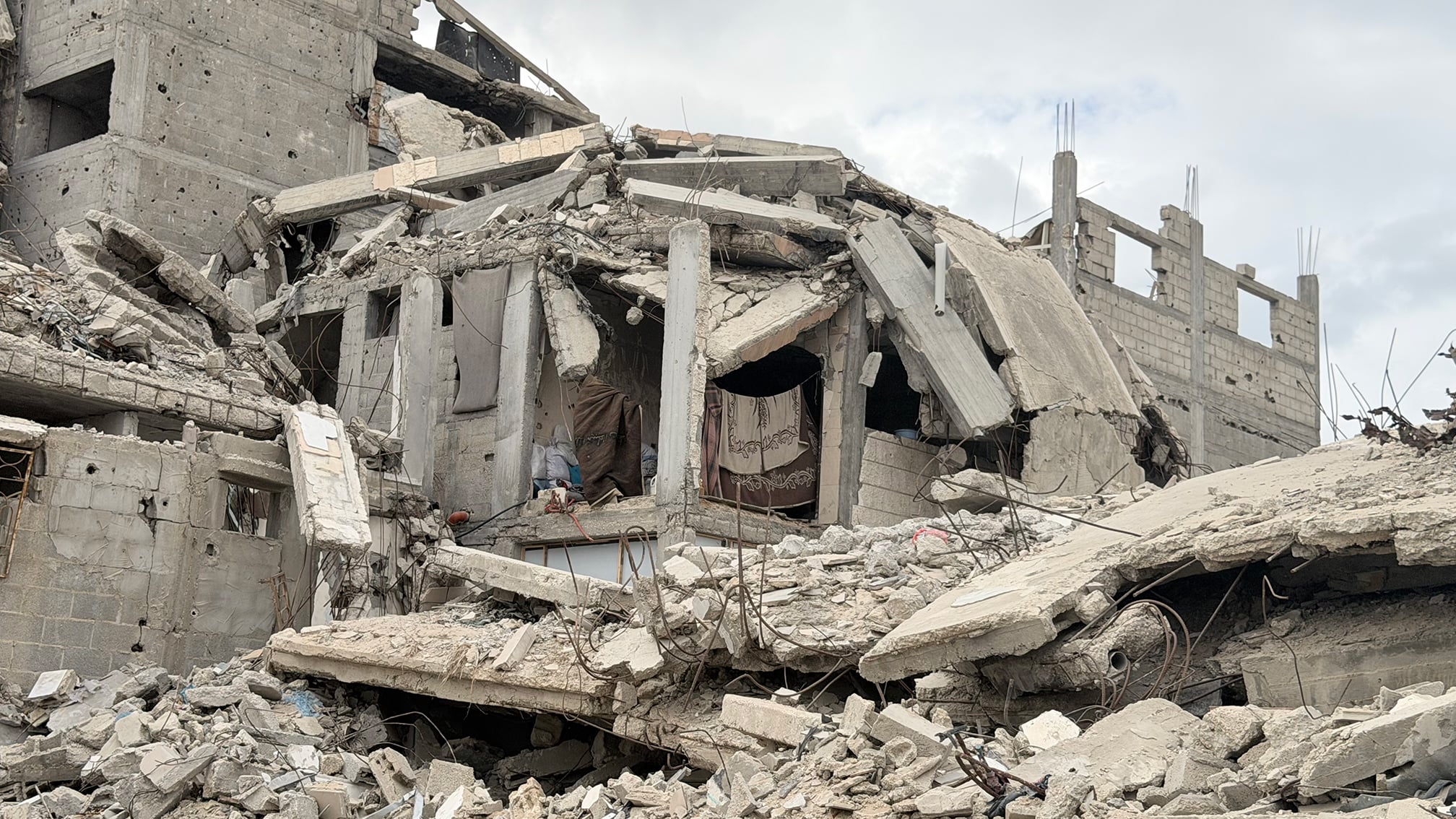
I still live in our house in al-Arayshiya – the same one my husband and son were killed trying to return to. It is very close to the so-called yellow line and is exposed to Israeli military positions. We stay in the one room that’s still usable – my killed son’s room. Rubble falls from the ceiling. The windows are broken, and the door to the sitting room is gone. I’ve asked the municipality twice to fix just two windows and a door, but they haven’t done it.
When I heard about the al-Saada building collapsing and killing at least 21 people a couple of weeks ago, I felt afraid. Everyone asks how I can live in a house like this. Where else am I supposed to go? I can’t afford rent, and I’ve lived in tents before. I know the rats and the dogs at night.
My eldest daughter needs earphones and an iPad for her university courses, and I can’t provide them. My second daughter was born in 2006 and scored 96.6% on the tawjihi. My third daughter was born in 2010 and will take the exam this year. My youngest, my little boy, is in fourth grade. He has so much energy. It isn’t normal. He was very attached to his father and his brother.
I have a diploma in secretarial studies, but my husband never let me work. Now, the responsibility of taking care of the family is all mine. The area we live in is marginalised. Nobody comes to survey the damaged houses. I’ve spent three and a half months cooking over a wood fire because cooking fuel isn’t always available, and when it is I can’t afford it.
My daughters are responsible for getting water, food, everything. When men in the streets see this, they feel sorry for us. The neighbours help us carry water sometimes, bless them. At night, there are rumours that men from the Israeli-backed militias are moving around the area. We’re afraid someone will come in. My neighbours are respectable people, and I feel safer with them around.
My dream isn’t big. I want a house like before. A door I can close. I want electricity, water, a water barrel to store it in. Living is hard. You wake up with rubble all around you, and the sight wears down your spirit. I wanted to have a dignified life. I feel that Israel enjoys watching us live these humiliating lives.
Mai al-Ghalban
When I hear that people are planning Gaza’s reconstruction abroad, I don’t feel like they are talking to us. They don’t consult Palestinians. They draw Gaza from their own viewpoint as an economy for trade and tourism with hotels on the coast. What I want is for them to give people an apartment and secure jobs for our children.
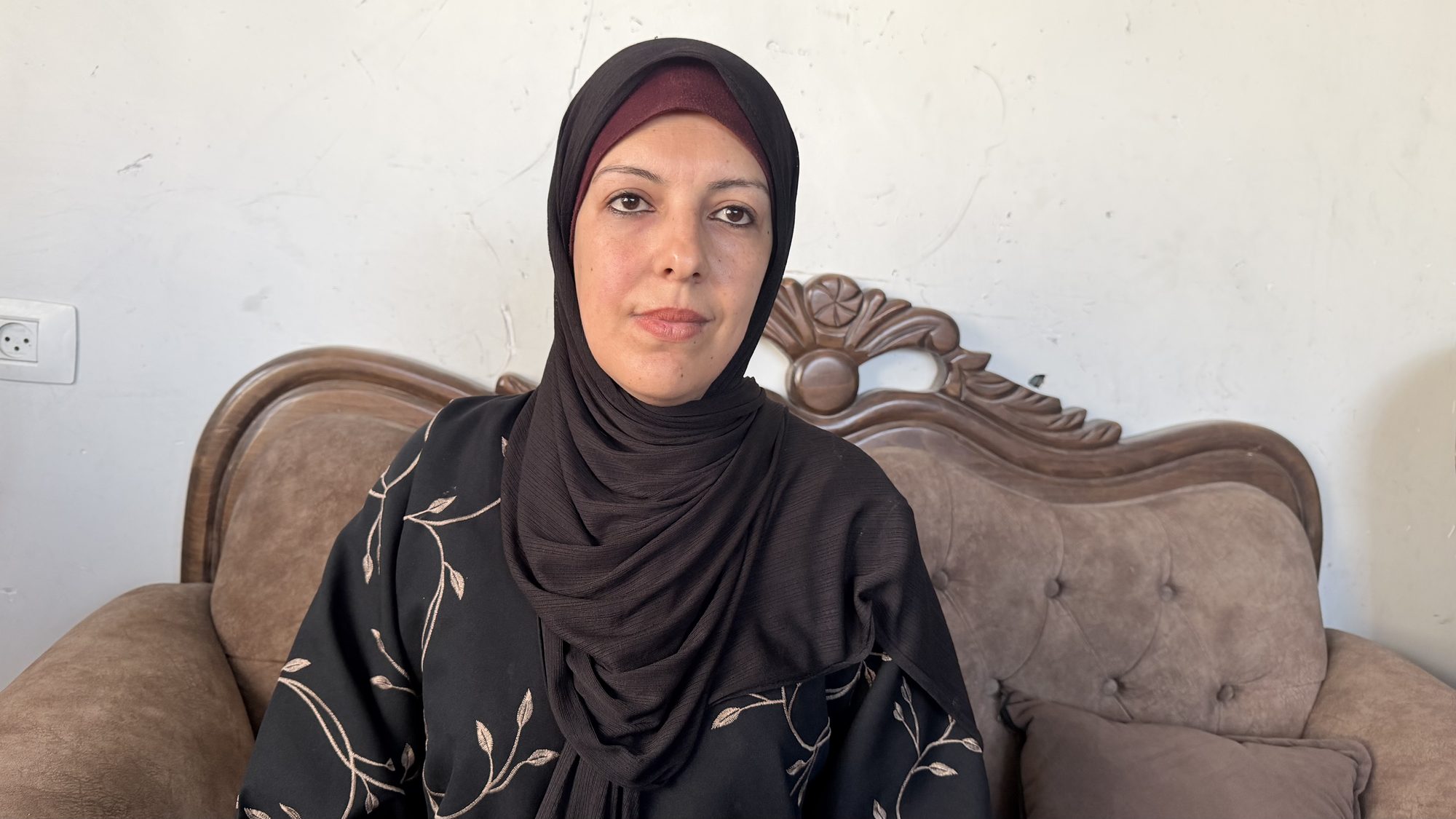
My name is Mai. I’m 42 years old and from the al-Amal neighbourhood of Khan Younis. I studied mathematics at al-Aqsa University. My husband works for the Palestinian Authority. I have three sons and two daughters. They are all top students. The oldest, Ahed, is 19 and studies medicine at al-Azhar University. My youngest is three years old.
I never imagined that we would live through what we are living through now. There is always tension. It is never quiet. I always fear for my children because there are still so many airstrikes. At times, I cannot look outside the windows. I keep saying, “Who will remove this rubble? How will we get clean? How long will we have to live to see the reconstruction of Gaza?”
We were displaced three times, first to Rafah, then to my in-laws home in Khan Younis, and finally to al-Mawasi, where we stayed for a year or more. We’ve now returned to our home in Khan Younis, but it has been destroyed. It had four rooms and a sitting room. Everything in it burned. Only one room survived, that’s the room we all live in.
A week ago, we found mice under the tiles that came in from the street. I’m fighting them. The municipality sometimes puts out poison. I live on the ground floor, so it’s easy for rodents to get in.
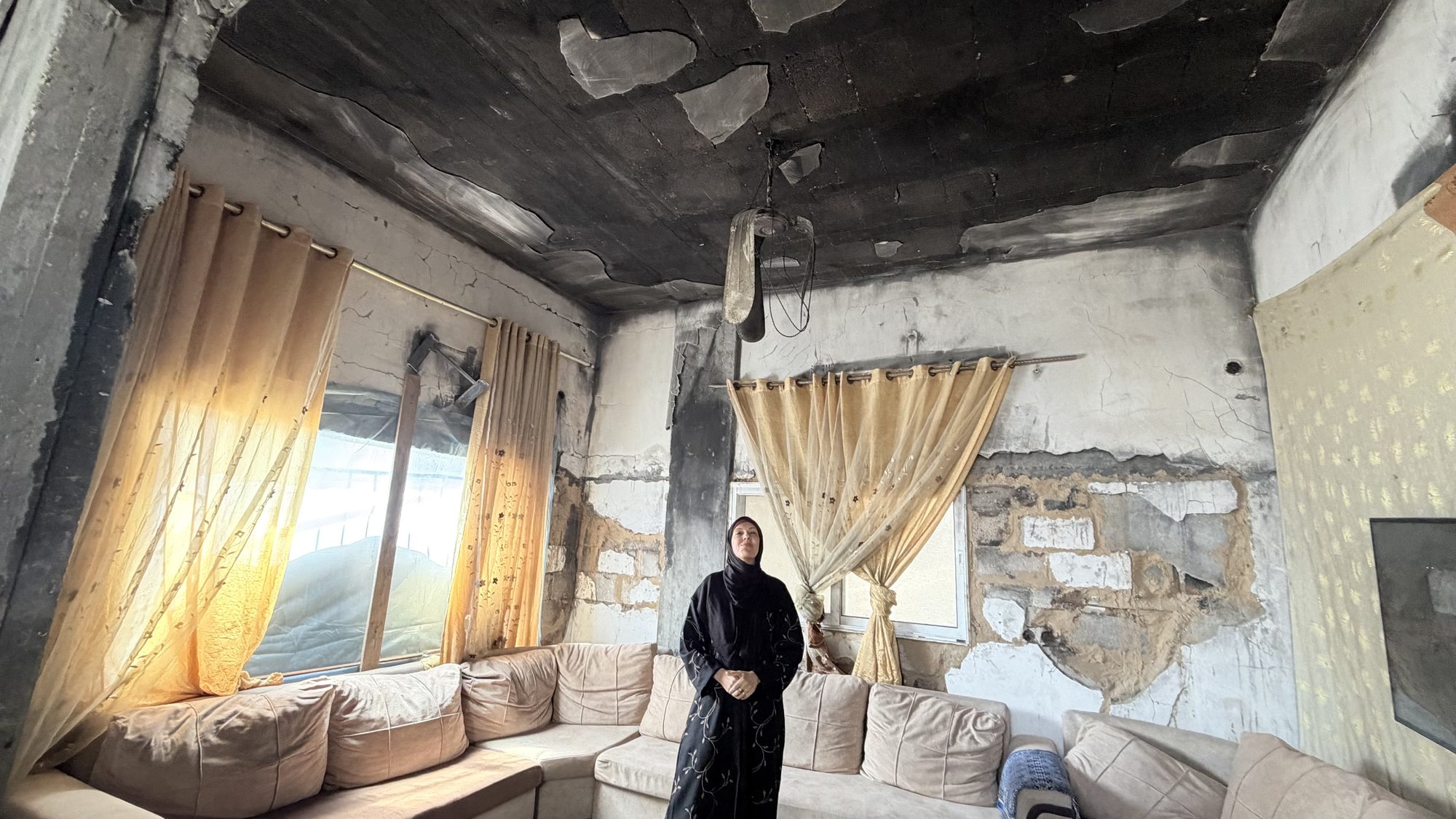
Ahed has to study all day for his medical courses. I worry because we only have one room. In his first semester, he went in person once a week to classes in Gaza City. The lecture was at 9am. He had to leave at 6:30 and often arrived late. I was afraid. The second semester, I told him to stay home. I’m afraid because transport is dangerous. Anything could be hit, and I can’t be sure who is in the car with him.
I send my other children to schools run by UNRWA (the UN agency for Palestine refugees) and UNICEF (the UN children’s agency). I like the UNRWA schools because the teachers are competent. At UNICEF, I feel the children only copy. I sit with my daughter and teach her myself. Notebooks are expensive. The school gave them four notebooks to share across all subjects. My son needs printed coloured materials for his studies. I’ve gone around the shops, and a single page costs money.
I’m a thyroid patient. During the war, I spent five or six months with no medicine, and I fell into a depression. I cried and nobody wanted to talk to me. Now, the medicine is available again, but doctors tell me to buy zinc, vitamin D, and other things I can’t afford.
I once had a chance to emigrate. Ten or 11 years ago, my husband’s friend, who is now settled in Belgium, offered. We thought about it for a moment. But we didn’t know how we would take the children. We thought about our home, our families, my belonging to my people.
When the war came, I thought about those who had gone, but then I remembered the reward for patience. We stayed here and endured. There is reward in that.
After the ceasefire, I expected life to open up, and it hasn’t. They tell us there is calm, but I am full of fear. The day before yesterday, my son went to see his aunt in al-Bureij refugee camp, an area between Deir al-Balah and Gaza City. I didn’t want him to take his little brother. I can’t be sure that nothing will happen on the way.
My dream is for my children to live a normal life, and for the Israelis to stop the bombings and attacks so safety returns. The most important thing in life is that your family is well and that God is pleased with you.
Ahed al-Ghalban
The first thing I want is for the schools and transportation to work again. I don’t need a big house. I’d accept the situation we have, but we need the basics – water, electricity, school. I want security to return.
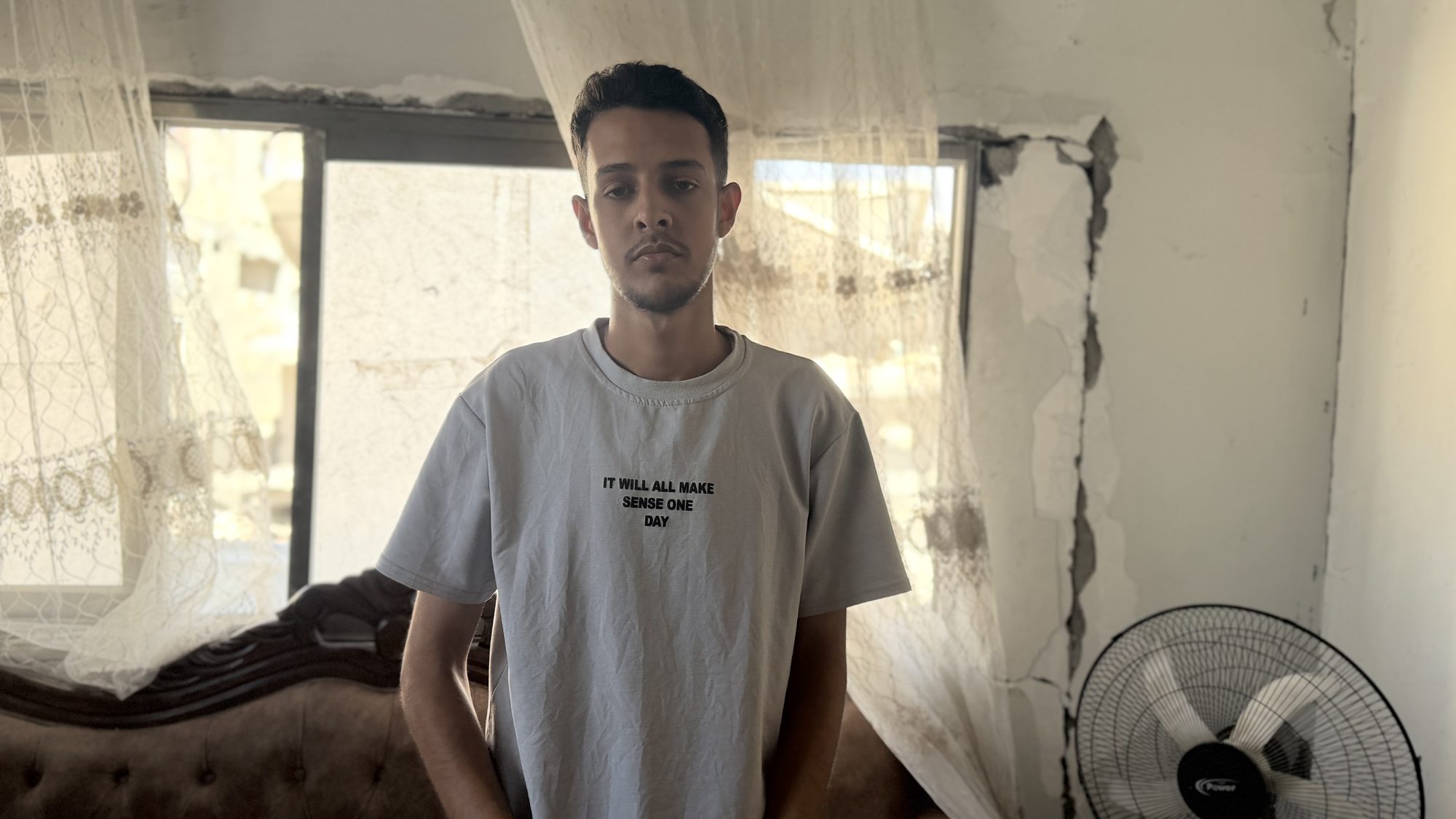
My name is Ahed al-Ghalban. I’m 19 years old, and I’m studying medicine at al-Azhar University. I am at the beginning of my second year.
I’ve wanted to study medicine all my life. Now, I’m taking all of my classes online, and I study at home. There is internet in our area, but the electricity is irregular, especially lately. I mostly work during the day and sometimes at night.
The electricity comes from generators for a short period in the morning and a short one at night, and it is expensive. When the ceasefire started, it was about 11 or 15 shekels (about $3.50 to $5) for a kilowatt hour. Then it rose to 25 ($8), then 30 ($10), then 35 ($11.50). I need roughly four hours a day, which comes to 700 shekels per week ($230). I use a laptop, but it doesn’t perform how I need it to. One of my brothers and I work in a shop to be able to pay for the internet.
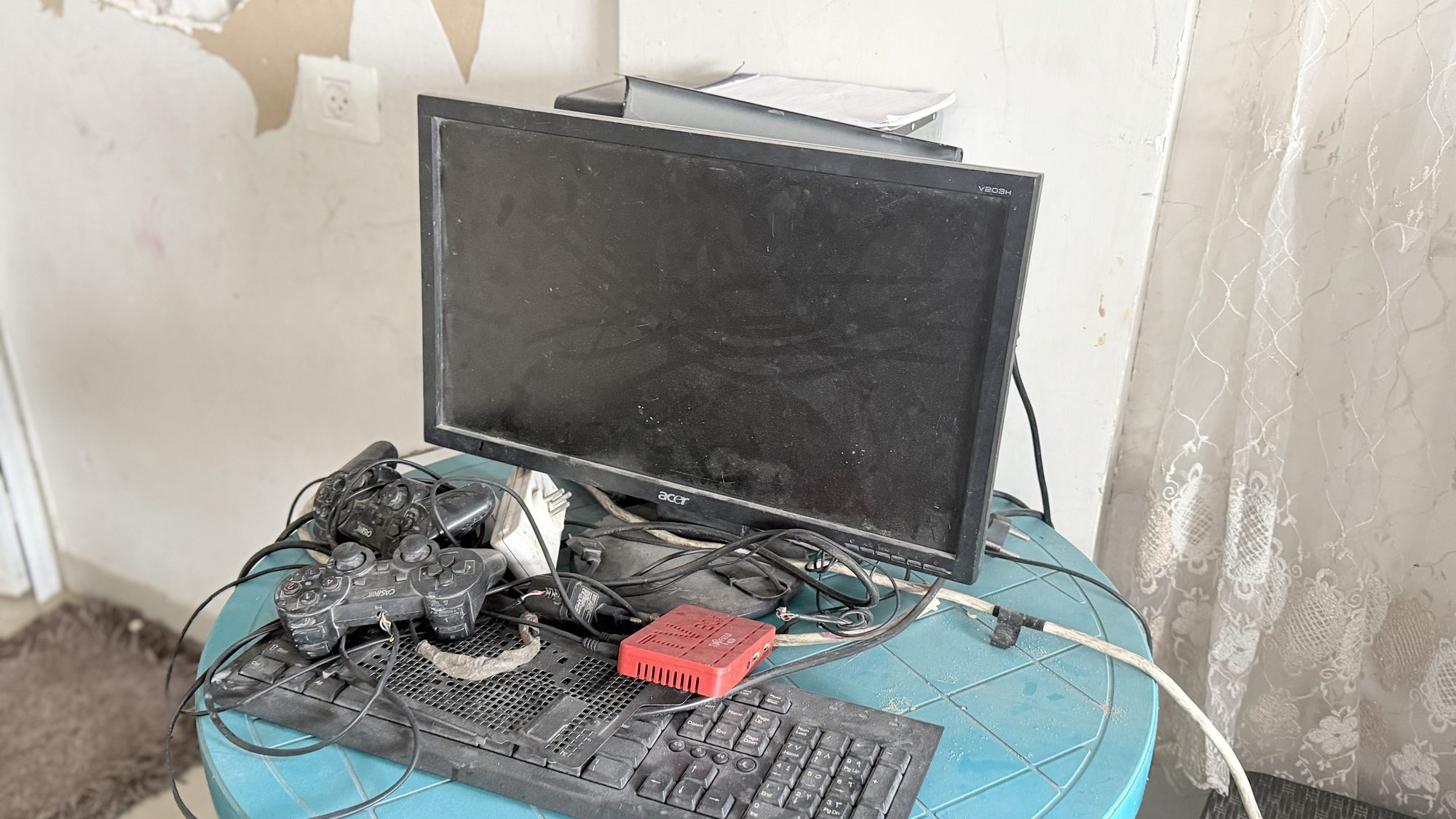
I’d like to study in person, or at least more often. The online lectures aren’t very engaging. There is an option to attend classes in person in Gaza City, but it’s a long trip and transport is hard and expensive. It costs about 50 shekels ($16) for a round trip.
My biggest challenge is studying online. I’m also responsible for many of the chores at home. When I’m not at the shop, I carry the water from a community kitchen.
Edited by Eric Reidy.


