


Share & more
Nearly four years after a peace agreement was signed to end the devastating war in Ethiopia’s northern Tigray region, armed conflict has resumed. While the hostilities threaten to destabilise the broader Horn of Africa, they also obscure an equally catastrophic food crisis unfolding in the drought-hit region.
The fragile post-war period proved to be a textbook example of an unsustainable peace. In the diplomatic rush to celebrate the "silencing of the guns" in 2022, international mediators largely overlooked the unresolved structural collapse, persistent territorial occupation, and ongoing deprivation facing Tigray’s civilian population.
Hundreds of thousands of people displaced from western Tigray remained unable to go home, leaving an estimated 44% of the region’s prime cultivable land inaccessible. Farmers who managed to return to the northwestern, central, and eastern zones found their farms and communities devastated.
Rebuilding efforts proceeded with virtually no safety net, undermined by sweeping reductions in international food aid, persistent federal cash and fuel constraints, and acute shortages of essential agricultural inputs and medical supplies.
Drought and crop failure
Then came the climate shock. The early Azmera rains (April to the end of May) ceased nearly a month prematurely, disrupting seed germination and causing long-cycle cereal plantings to wither in the soil across multiple woredas (municipalities).
The still-active El Niño weather pattern has dealt a fatal blow to Tigray’s fragile agricultural recovery. The Tsidia Spring harvest rains (September-November) arrived more than five weeks late this year across the eastern and southern zones, interrupted by dry spells lasting over a month in some areas.
According to regional multi-agency assessments, over 252,500 hectares of planted crops have been scorched, 140 districts are facing catastrophic conditions, and more than 3.5 million head of livestock face starvation and disease as seasonal pastures and water tables vanish.
With the September harvest failing and livestock-to-grain terms of trade collapsing, 3.9 million people – more than half of Tigray’s population – required immediate emergency food assistance, according to a September humanitarian overview by the Tigray Disaster Risk Management Commission (DRMC), a copy of which was shared with The New Humanitarian.
“Many households experienced complete crop failure,” the report warned. “Without continued rainfall, even minimal production cannot be expected.” With people’s ability to cope exhausted by the scorched earth tactics of the last war, and the lingering impact of the 2020-2023 drought, there is increasing nervousness over the potential for famine.
A renewed major conflict is the final blow. Media accounts attribute its beginning entirely to a ground offensive launched on 23 September by the newly formed anti-government coalition, the “Alliance for Survival”, but that overlooks the sustained federal aerial campaign that was already underway.
Airstrikes hit targets across Tigray, including school grounds in the Degua Tembien-Samre corridor south of the regional capital Mekelle, internally displaced persons (IDP) hosting sites in Sheraro, and a food aid convoy in the northwestern zone.
Heavy government airstrikes also battered the Raya corridor around Alamata, 180 kilometres from Mekelle, on the eve of the coalition's ground push against government positions in the neighbouring Afar and Amhara regions.
Fighting blocks humanitarian access
One of the first casualties of the renewed combat has been basic access. Coalition forces seized control of Tigray's regional airports in Mekelle, Shire, and Axum. Simultaneously, regional telecommunications were severed.
While both sides traded blame over who switched off the connections, the operational consequence was total: Telecommunications and internet access across Mekelle and surrounding areas went dark.
Federal authorities also moved to freeze bank accounts linked to Tigray, although this measure was largely symbolic: An acute pre-existing physical currency deficit had already forced the local economy entirely onto mobile financial networks, which the telecoms outage instantly paralysed.
For 10 days, Mekelle was cut off from the outside world. Humanitarian operations across the region, largely coordinated from the regional capital, ground to a halt. Without telecommunications, fuel, or cash to pay people to load, unload, and drive trucks, the aid pipeline locked up.
After the drone strike that hit the food aid convoy in the northwest zone organised by Catholic Caritas Ethiopia – Adigrat, it was too risky to transport aid anyway. The federal government never acknowledged the attack, and offered no assurances that humanitarian assistance would be protected.
The dynamics shifted abruptly over the first weekend of October. As federal forces launched mechanised counter-offensives and advanced toward Mekelle, coalition forces vacated administrative buildings and police stations in the city.
For roughly 24 hours, an acute power vacuum gripped Mekelle. As night fell on 4 October, widespread lawlessness erupted. Armed groups – reportedly largely composed of inmates released amid the sudden abandonment of a nearby prison – looted government buildings, post offices, art galleries, and aid facilities.
The attacks targeted the infrastructure of the region's humanitarian response. Looters ransacked the offices and storage depots of the DRMC – the regional governmental agency tasked with coordinating lifesaving aid.
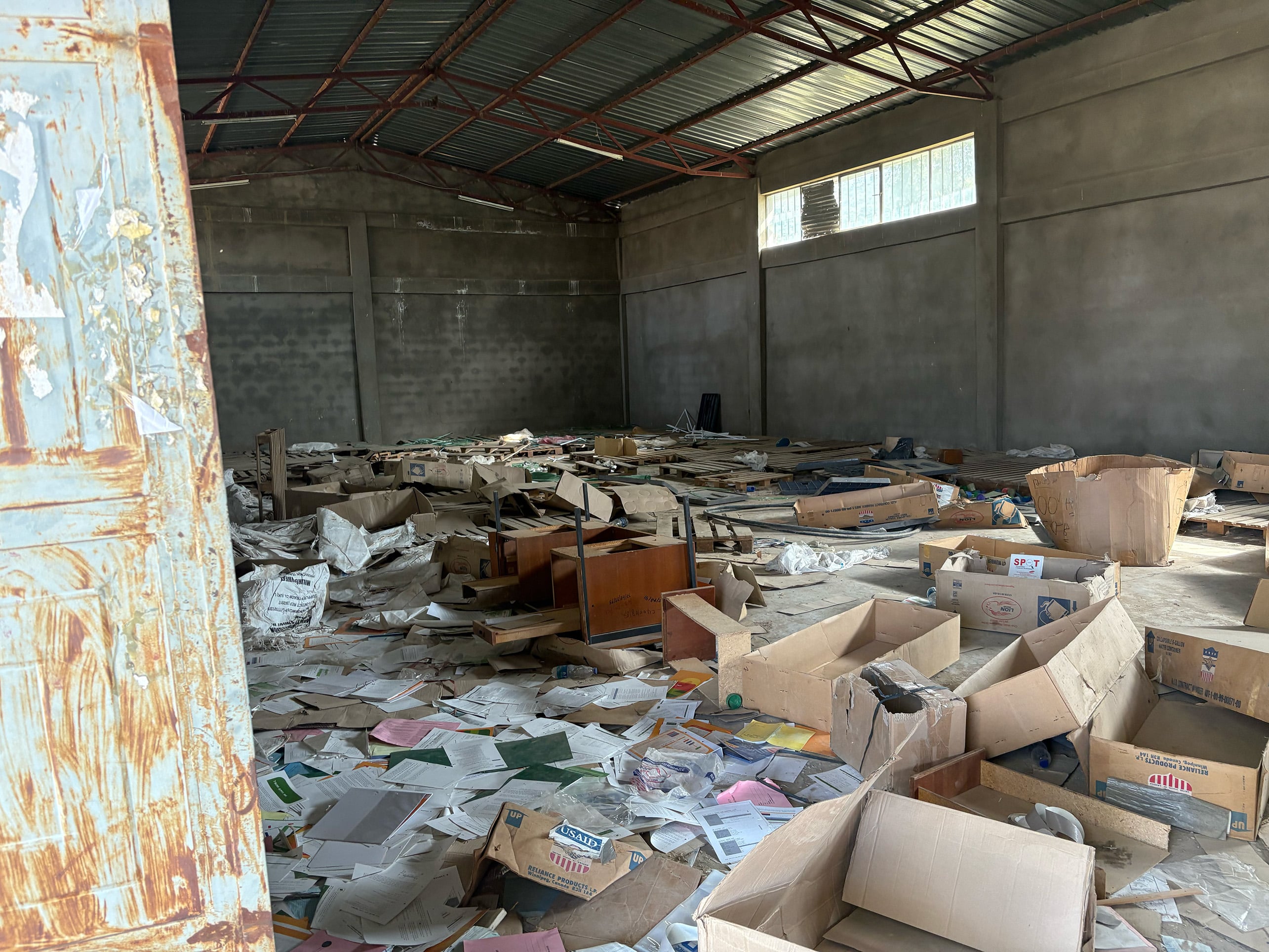
The headquarters of the Organisation for Social Services, Health and Development (OSSHD-Ethiopia) was likewise stripped of around 60 computers and tablets, some $1 million worth of non-food items, nearly all of their vehicles, and tens of thousands of dollars worth of medical equipment for their clinic in Mekelle.
According to an aid worker in the city, who asked not to be named to speak freely, the looting would not have happened if Tigray had law enforcement institutions that were beholden to the communities they served rather than the ruling TPLF party, which is now at war with the federal government.
The political affiliations of all police and security forces in Mekelle meant they were forced to flee with the TPLF leadership to avoid reprisals. The aid worker also criticised the religious clergy in Mekelle for failing to use their voices or influence to dissuade or condemn the looting and lawlessness.
Humanitarian pause needed
The OSSHD has been operating in Tigray for more than 30 years and provided a wide range of services to many of the roughly 900,000 displaced people in the 31 IDP camps across the region. Without vehicles and essential field equipment, they can no longer provide protection services – including for children – or monitor new arrivals fleeing the conflict.
They were also caring for around 7,000 children at their clinic in Mekelle who were either living with family members who were HIV+ or had contracted the virus themselves. The OSSHD is now no longer able to provide medical treatment, cash support, or psychosocial care to them.
Until the equipment and vehicles they lost are replaced, all OSSHD work has effectively been halted.
Unlike other aid organisations, REST-Tigray and World Vision’s warehouses were spared – two of the three agencies responsible for food distribution in the region. The third major food provider, Catholic Caritas Ethiopia – Adigrat is safe for now, but the war is literally on its doorstep.
However, due to aid cuts by international donors, food distribution now targets only people who are displaced, and still misses a large portion of IDPs. This leaves around 3.2 million people in need without food assistance – trapped also without physical safety or essential medicines.
That dire situation could potentially improve if the 460-kilometre humanitarian corridor between Mekelle and Semera, in the neighbouring Afar region, remains open. It was the primary supply route for the aid response in the previous war, and, according to the humanitarian analysis hub ACAPS, was functional as of 4 October.
If the route remains safe, a surge in aid is possible and could make the difference between life and death for millions of civilians in Tigray who have absolutely nothing to do with this conflict.
To get aid to those who urgently need it, a humanitarian pause would have to happen immediately. Food, medicine, and fuel would also need to be able to freely flow into Tigray, along with cash.
Edited by Obi Anyadike.


