


Share & more
As a soldier at the height of Colombia’s civil war, Fabio Castiblanco used to hunt down guerrillas in a notoriously dangerous area of Medellín known as Comuna 13. He played a part in the “false positives” scandal in which thousands of innocent people were killed and officially recorded as guerrilla fighters in a government scheme to inflate casualty statistics.
Two decades later, he is trying to make amends for his crimes during those troubled times, when confrontations raged between state security forces, paramilitaries, and the Revolutionary Armed Forces of Colombia (FARC), the country’s largest rebel group.
In 2022, Castiblanco started the “Fundación Equipo Restaurador Sanando Heridas” (Restorative Team Healing Wounds Foundation) in a poor neighbourhood of Medellín. His organisation, made up of nearly 100 former soldiers from Medellín’s 4th Brigade, works in the very community where they once committed their crimes.
The New Humanitarian met him at the once-abandoned lot his foundation spent months converting into a community garden. It now produces corn, cabbage, peppers, yuca, potatoes, and herbs for those who live in the neighbourhood.
“We’re here to offer healing to people we wronged and to build peace,” Castiblanco said. “We don’t deserve forgiveness,” he added. “But many here in the community have offered it to us regardless.”
A surge of fighting and forced displacement in Colombia has raised concerns about a new trajectory of rising violence, but the challenges the country has faced in transiting out of and coming to terms with its 53-year civil war are often overlooked, despite being fundamental factors in today’s conflicts.
Since the Colombian government signed a historic peace deal with the FARC in 2016, the country has striven to become an example of transitional justice, incorporating ideas from other countries riven by civil war and acting as a laboratory for new peace processes.
The results have been mixed, but one component of restorative justice as part of peacebuilding is bearing some fruit: the emergence of community-based programmes to foster reconciliation.
Rebuilding trust in Comuna 13
During the 1964-2016 Colombian civil war, state forces routinely committed severe human rights violations: extrajudicial killings, illegal surveillance of civil society, torture of suspected rebel sympathisers, and sexual violence against communities where the FARC guerrillas operated. Juan Manuel Santos, Colombia’s president at the time of the 2016 peace accords, put the number of victims and displaced people at more than 8 million.
A system intended to provide restorative and transformative measures for the victims was established as part of the 2016 peace accords, including a transitional justice mechanism called the Special Jurisdiction for Peace, better known as JEP.
“We began [informally] doing social work, trying to do what the victims asked us for their communities.”
One of the JEP’s main tasks has been to implement reparative programmes in which perpetrators who tell the truth and acknowledge their criminal responsibility can face lower sentences in exchange for doing community service in conflict-affected areas: for example, repairing infrastructure, clearing landmines, or working in crop substitution.
Convicted of human rights violations and imprisoned between 2010 and 2013 for his role in the targeted killings of civilians, Castiblanco was released early after meeting the JEP’s conditions and offering to work directly for and with the people he and his fellow soldiers harmed.
“We began [informally] doing social work, trying to do what the victims asked us for their communities,” he said.
In addition to the community garden, they have restored the nearby community centre, building a kitchen and refurbishing the premises.
Comuna 13 – an area of more than a dozen shanty towns that sprung up in Medellín due to the massive internal displacement in the surrounding rural areas – became a longtime target of the security forces in the 1990s and early 2000s. Years of neglect and lack of state presence also allowed gangs with historical roots in right-wing paramilitary forces to establish a de facto government in the area, acting as a parallel authority.
Those criminal structures, which have long benefitted from deep ties to politicians in the region, are currently involved in negotiations with the federal government to disarm and disband as part of President Gustavo Petro’s floundering “Total Peace” plan.
According to a 2023 report by Colombia’s National Prosecutor’s office based on interviews with local residents, the communities in Comuna 13 still face dire living conditions, although some improvements have been made in terms of basic services, infrastructure, and education. The lack of reparations to the victims and openness about the crimes committed against them has also caused distrust and damaged the social cohesion of the community, the document says.
It is these challenges that Castiblanco’s foundation seeks to address.
“We are improving the material conditions of communities we harmed,” Freddy Zapata, an ex-soldier and member of Castiblanco’s organisation, told an audience with the JEP in January. “But perhaps more importantly we are rebuilding trust and taking the first steps towards repairing a social fabric damaged by conflict and state institutions.”
The members of “Fundación Equipo Restaurador Sanando Heridas” work every Sunday at Comuna 13 from 7am to 3pm on projects that change week to week, before providing a community soup for the neighbourhood that gives them a chance to informally interact with locals. Victims of conflict or their relatives can also make appointments to speak individually with them and ask questions.
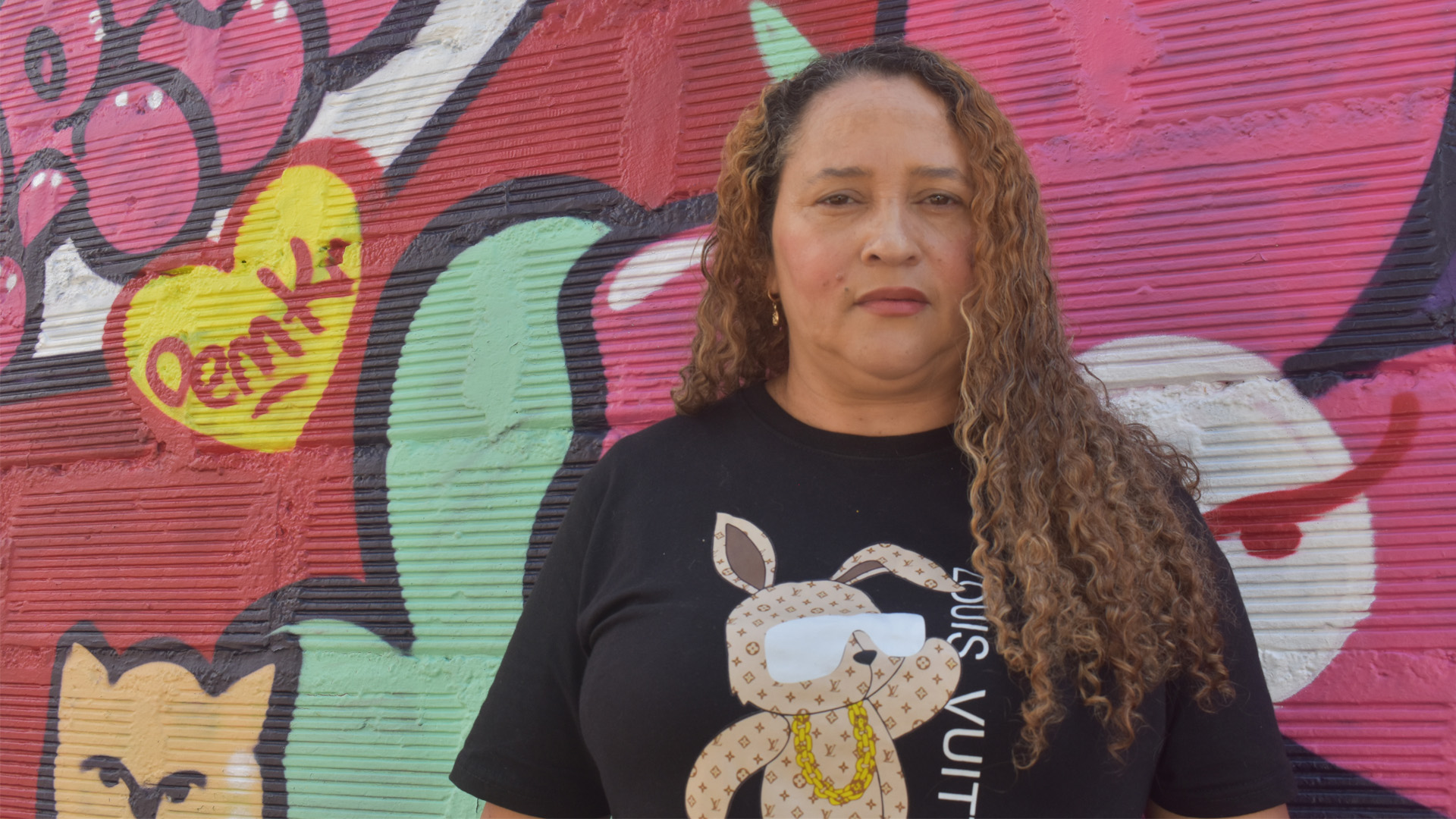
Julieta Correa, a resident of Comuna 13, has seen first hand the impact of the foundation’s work. The father of her child and her brother-in-law were both killed by security forces as part of the “false positives” scandal. Her family also had to flee the region for 10 years because they were receiving threats against their lives.
She now represents an informal “council of victims” in the neighbourhood where Castiblanco’s organisation works, advocating for reparations and greater opportunities for communities affected by conflict.
“It was difficult when [the foundation] arrived. But it was quickly apparent that their goal really is to build a holistic peace, and make reparations as best they can,” Correa said. “They’ve been very good to the community. And seeing that in action made it easier for me to think of them as friends.”
Overcoming trauma
The foundation’s first construction project, “building bridges” (both literally and figuratively), was funded completely by money from the members’ own pockets.
Castiblanco – who lives off the military pension he still gets despite his crimes – has since formalised the foundation, legally registering it with the state and keeping detailed records of its activities, including the hours logged by individual ex-soldiers, and spending.
This has allowed the foundation to receive funding from some private donors, and the JEP has started monitoring their work and sending personnel to help with engineering and psychological counselling for their construction and social projects.
“The goal of projects like [Castiblanco’s] is to provide [informal] introduction [of the offenders to the victims],” Paula Andrea Muñoz, a psychologist for the JEP in Medellín, told The New Humanitarian. It is a novel approach, as official JEP reconciliation meetings mostly occur in carefully controlled courtroom hearings.
“The decision to heal has to be a conscious decision, and it isn’t easy.”
Muñoz explained that rather than direct contact with the individuals who may have killed their loved ones or displaced them personally, Castiblanco’s foundation gives victims the chance to confront other members of the paramilitary and state security forces they belonged to.
“The greatest obstacle for victims is forgiveness. Some never manage it, but the majority find healing in doing so,” she added.
Some critics, however, claim that restorative programmes and the JEP processes allow fighters from all sides of the conflict to escape with relative impunity for serious crimes. Additionally, more than seven years after its creation, the JEP is yet to impose any sanctions or arrests, although it’s expected to issue its first sentences by the end of the year.
Castiblanco understands such criticism and accepts that it may take a long time for Colombia to recover from its deep wounds. “When people do forgive us, it doesn’t mean an end to the process; it is just the beginning,” he said.
For Correa, the woman whose partner was killed, there is undeniable value in this kind of restorative peacebuilding effort.
It was her decision to work with Castiblanco’s foundation. As they planted crops and carried out construction projects last June, she directed workers and helped prepare lunch for the crew, for residents, and for victims who wanted to speak with the ex-soldiers.
“The decision to heal has to be a conscious decision, and it isn’t easy,” she said. “But we can choose to live the rest of our lives with that trauma and pain, or we can try to overcome it.”
Edited by Daniela Mohor.


