


Share & more
The US decision to block oil shipments to Cuba has added a new strain to a longer erosion of the state's capacity to sustain everyday life, threatening to turn the country's chronic fragility into a full-blown humanitarian collapse. As healthcare, food systems, electricity, and public services deteriorate rapidly and simultaneously, Cubans are left with few avenues for formal support.
Years of systemic mismanagement, increasing repression, and labyrinthine bureaucracy – including measures targeting NGOs providing assistance – and a decades-long US embargo, had already forced Cubans to rely mostly on remittances and local community support networks to subsist.
But President Donald Trump’s latest geopolitical moves in early January, attacking Venezuela, abducting President Nicolás Maduro, and suspending and intercepting all Venezuelan oil shipments to Cuba, have deprived the island of its main fuel supplier.
An executive order on 29 January declaring a national emergency against "the unusual and extraordinary threat" that, according to the United States, the Cuban government poses to national security, has also led to a halt in oil imports from other suppliers, such as Mexico and Russia. The already precarious living conditions on the island have deteriorated further. Rolling blackouts are becoming longer and longer, paralysing basic services. Experts say that if no new fuel shipments arrive in March, the country could reach what they call the “zero hour” – the total depletion of fuel reserves – and fall into the worst economic crisis since the Great Depression of the 1930s.
Maria Elena Rodríguez, a retired teacher from Pinar del Río, Cuba’s westernmost province, told The New Humanitarian by phone that she has never experienced such hardship.
“Nothing compares to what we are living today,” she said. “Things were very hard in the 90s, during the Special Period (the economic crisis that followed the Soviet Union's collapse). We struggled to get food and transport, but at least medicines were available.”
Compounding an already worsening crisis
Fuel has been scarce for years in Cuba. Power cuts have been routine, particularly since mid-2024, when the country descended into a full-scale energy crisis that caused several nationwide blackouts. Aging power plants, chronic underinvestment, and limited domestic oil production have pushed the electric grid to the brink of collapse.
Until the oil shipment blockade, these power cuts lasted 12-14 hours. Now, they can go on for more than 20 hours. Food spoils. Water pumps stop. Hospitals switch to generators – if any fuel is still available.
This only compounds a long-running humanitarian emergency that had been intensifying since the COVID-19 pandemic, marked by shortages of basic food and medicines. Currency devaluation, a drop in productivity, and the decline of key economic sectors such as sugar production and tourism led to the severe impoverishment of a population growing ever more disillusioned with the unfulfilled promises of Fidel Castro's 1959 socialist revolution.
Inequality rose, and by 2021, the economic outlook was dire enough to spark a series of violently repressed mass demonstrations known as “the 11 July protests”.
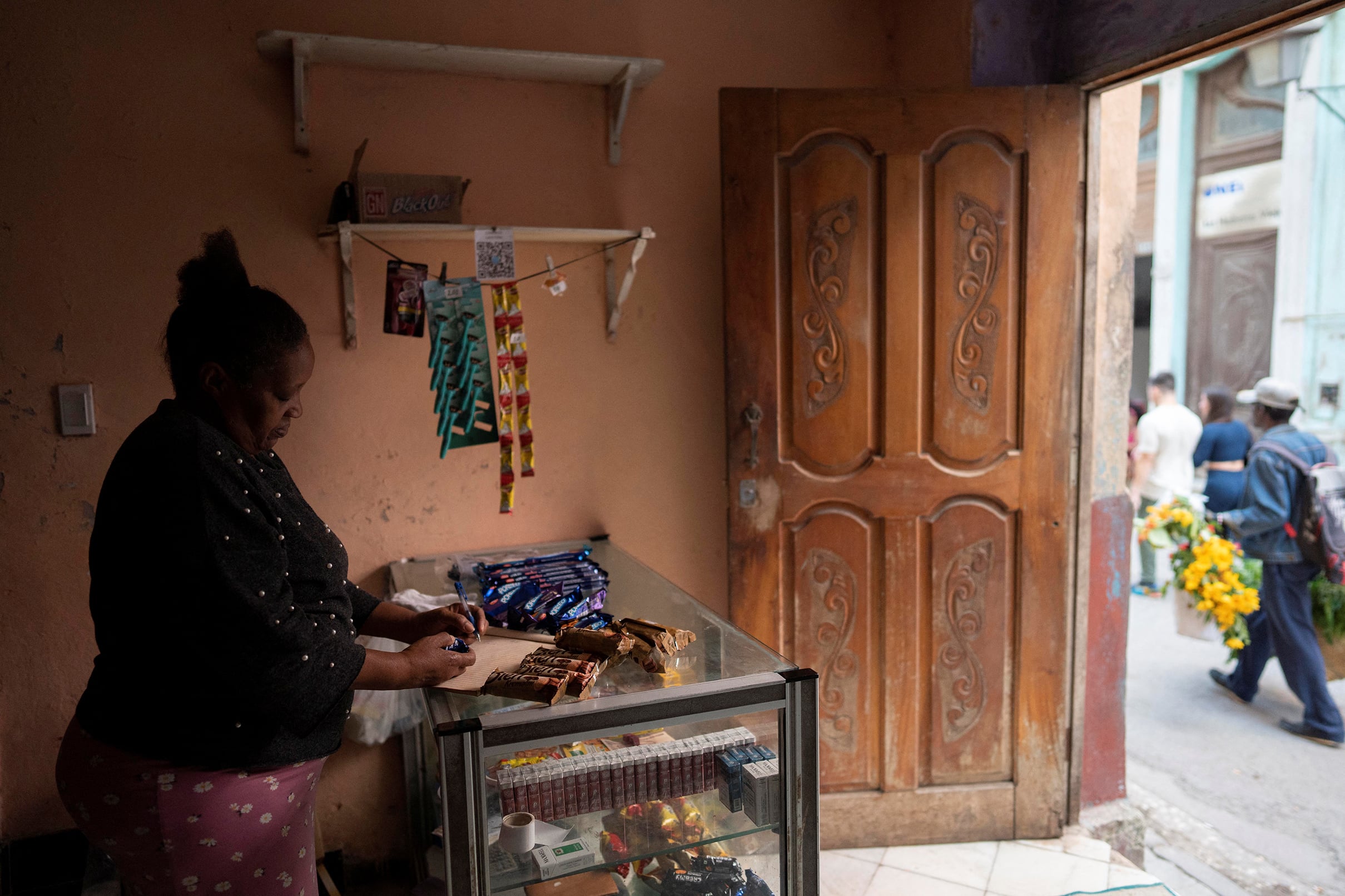
Amid rampant inflation and a semi-paralysed economy, President Miguel Díaz-Canel, appointed in 2018 by his predecessor Raúl Castro, acknowledged recently that Cuba’s GDP had decreased by 4% in the first nine months of 2025 alone. According to official data, an average state salary is around 6,500 Cuban pesos a month (around 4,000 for pensioners) – less than $13 at the informal exchange rate. As of February 2026, the price of a carton of 30 eggs was over 3,000 pesos.
Rodríguez said she is now used to skipping at least one meal per day: “Sometimes I just don’t want to cook with coal. I am an asthmatic, and the smoke is very bad for me. Sometimes, I don’t have anything to eat, and the scarce food I find gets rotten after several hours without refrigeration.”
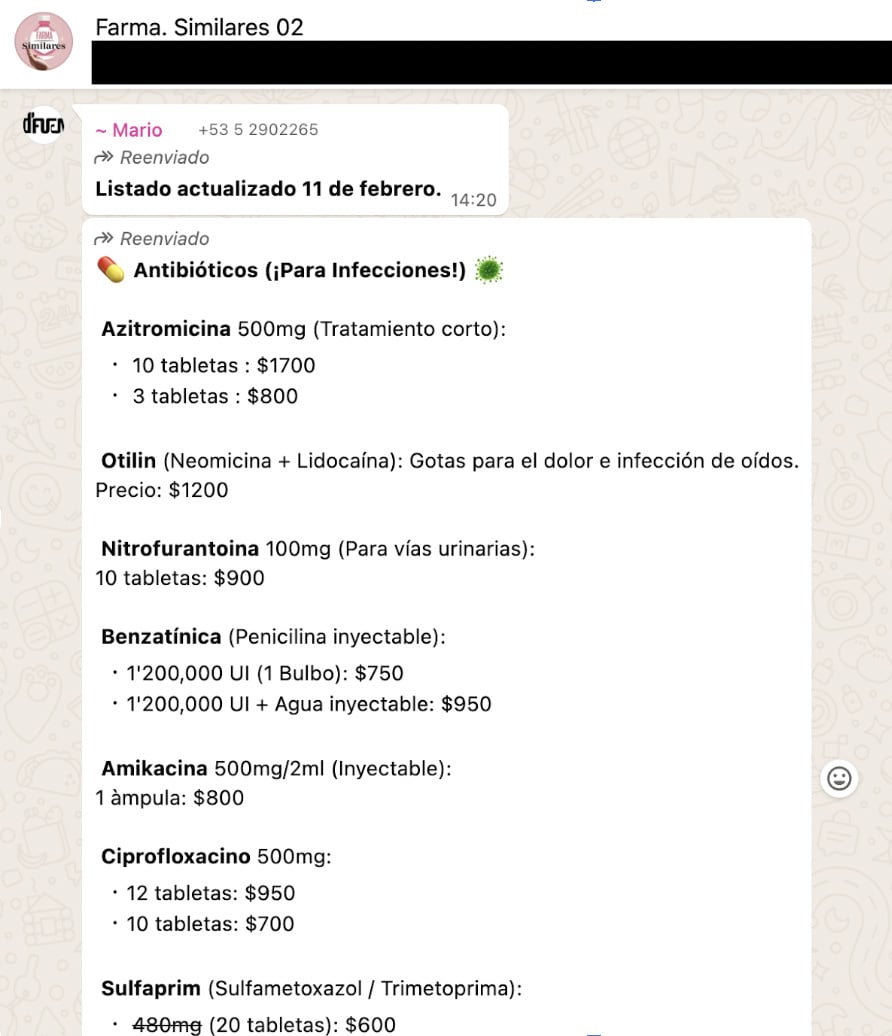
As essential systems falter, many families struggle to secure food. They rush to complete basic tasks and to store water in buckets in the few hours with electricity. In the streets, uncollected garbage accumulates, spreading disease. Meanwhile, Cuba’s healthcare system is under severe pressure. Families need to bring their own supplies to hospitals, and patients rely on chat groups to buy medicines that are unavailable in state pharmacies on the black market, but at a price 50 times higher than their official cost. Since February, health services have been prioritising emergency care, mother-child health, and cancer treatment.
Many see leaving as the only solution. Between 2021 and 2025, more than one million of Cuba’s estimated 10 million people left the island, although some estimates are even higher. Remittances now sustain many households, funding food, medicine, and small-scale informal commerce.
Cubans’ mislabelled “resilience”
For years, constrained livelihoods in Cuba have been dismissed as developmental challenges or as collateral geopolitical damage from US sanctions rather than the chronic humanitarian crisis that they are. At the same time, Cubans’ coping mechanisms have been too often romanticised as expressions of creativity or resilience rather than survival strategies.
Armando Chaguaceda, a Cuban political scientist and lead researcher of the Gobierno y Análisis AC (GAPAC) think tank in Mexico, said “the situation in Cuba is, first and foremost, the responsibility of the Cuban government”, but added “it is also the responsibility of the international community… that has tolerated the continuous deterioration”.
“They have contributed to the country’s de-civilisation,” he told The New Humanitarian.
Cubans have a long history of informal solidarity networks that fill critical gaps left by the state.
Flavia Fonseca is a resident of Santiago de Cuba, the island’s second largest city, which was devastated by Hurricane Melissa in late October. The Category 5 storm caused significant damage to housing, infrastructure, and the already fragile electricity grid.
“We really need all the help we can get,” she said. “I have lost my house, everything.”
After Melissa, a group of Cuban artists and influencers based in Miami mobilised and delivered direct aid to affected families through a solidarity campaign. Well-known figures from the Cuban diaspora established collection points in Miami to gather essentials for communities devastated by the storm.
In Cuba, this kind of citizen-led support goes well beyond the response to hurricanes. Katherine Gavilán coordinates Red D Ayuda Humanitaria, an initiative born from the learnings of “Solo el Amor” (Only Love, in English), a now-closed network of citizens that processed about 5.5 tonnes of donated medical items, hygiene supplies, and food, reaching about 100,000 Cubans in need during the pandemic.
“We never stopped collecting aid,” said Gavilán. “What began as a response to a specific request to support friends and colleagues has now evolved into a coordinated transnational network."
Red D Ayuda Humanitaria has raised around €2,000 since October 2025 and imported over 400 kilos of medicines from Spain. “More than 300 volunteers outside and inside Cuba contribute in different ways, from fundraising and logistics to outreach and coordination,” Gavilán added.
The network has built partnerships and alliances with more than 10 other initiatives to expand its reach, but the lack of financial, legal, and logistical infrastructure has forced it to suspend larger-scale shipments that required greater coordination and resources.
The Cuban government makes it almost impossible for this kind of initiative to obtain legal backing, so Gavilán is trying to create an organisation in Spain “to apply for and manage funds, design a more sustainable operational system, and potentially compensate for time and logistical costs”.
As the crisis deepens, the offers to help increase, but it is getting harder for people to assist.
“Authoritarian controls, repression of independent initiatives, and bureaucracy make the work of community groups and informal support networks even more difficult.”
“In the current context, it is more complex because shipments from companies abroad have stopped,” said Marleidis Muñoz, a Cuban exile in Peru trying to provide aid. “We have collected supplies and medicines that we have not been able to send, and we are looking for ways to do so.”
Muñoz is a part of a group of 50 exiles who collect money on a monthly basis to purchase food and medicine packages and send them to Matanzas, a city to the east of Havana where volunteers prepare meals to help vulnerable elderly people.
Airlines have suspended flights to Cuba, so several initiatives are exploring maritime shipping routes using private logistics companies. But this requires funding many groups don’t have.
Grassroots efforts face other challenges too.
“Authoritarian controls, repression of independent initiatives, and bureaucracy make the work of community groups and informal support networks even more difficult,” said Muñoz. “There is no mediation of any kind by the state or by any international institution.”
The demographics of the island have also become a challenge. As birth rates decrease and migration spikes, Cuba’s population is aging rapidly – 25% of Cubans are over 60 years old – and there are few young people able to lead or sustain community efforts. “Loneliness is increasing, and caregivers, often elderly themselves, are exhausted,” said Muñoz.
A trickle of assistance
International aid has been generally limited on the island.
UN agencies have some presence, and NGOs like Oxfam International, CARE, and the International Red Cross/Red Crescent movement have delivered emergency assistance following hurricanes and other disasters. Their responses, however, fall short compared to the magnitude of the needs.
To address the current emergency, several governments have stepped forward with humanitarian support.
Mexico dispatched two large batches of aid, while Chile announced a $1 million contribution in assistance to be routed through multilateral partners to ensure transparency. Spain will do the same through the UN.
Allegations that Cuba’s government intercepts aid goods have been reported, as well as claims that it resold around 60% of the subsidised oil from Venezuela despite the fuel crisis.
The US is also sending around $9 million of aid through the Catholic Church. And civil society and international activists organised a flotilla to bring essential supplies to Cuba via sea routes – an initiative decried by part of the diaspora for including figures close to the Cuban government and failing to denounce its repressive rule.
But scant humanitarian aid and informal coping strategies are not a sustainable solution and leaving remains the only viable option for many. As one 24-year-old engineer in Havana who preferred not to reveal his name out of fear of government retaliation put it: “My long-term plan is to finally receive an email announcing that my student visa to enter Spain was approved.”
Edited by Daniela Mohor.


