


Share & more
A controversial law that treats harsh punishment as a remedy for insecurity in two South Sudanese states has failed to stem conflict and led to a spate of human rights abuses, according to activists and local community leaders.
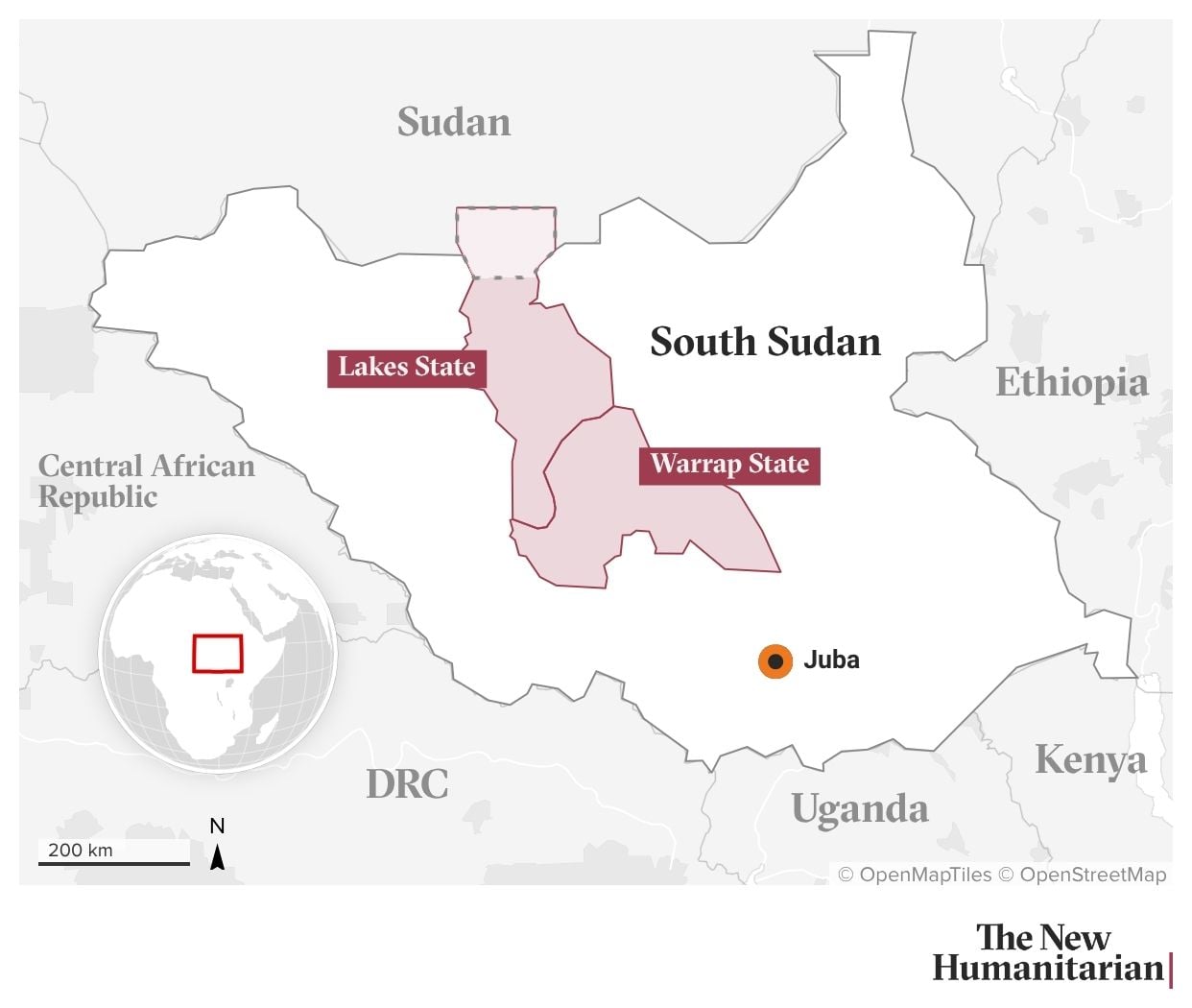
The so-called Green Book legislation was passed by lawmakers in Lakes state in 2022 and Warrap state in 2024, authorising execution by firing squad for offences including cattle raiding, murder, forced marriage, rape, and kidnapping.
The law gained some grassroots support as the two states experienced particularly high levels of violence in recent years. Advocates argue that it has successfully targeted criminals and contributed to drops in violent crime at different periods.
Critics, however, say the law violates constitutional guarantees of fair trial, legal representation, and the presumption of innocence, while doing little to address key drivers of conflict between and within communities.
UN human rights investigators have documented extrajudicial killings over minor offences, while activists say the law is applied unfairly, with people who have connections to political leaders sometimes escaping punishment.
“When you look at the implementation of the Green Book, it is too selective,” said Daniel Laat Kon of the Community Empowerment for Progress Organization (CEPO), a civil society group. “There are some people that are being exempted when they have committed a crime.”
South Sudan has experienced high levels of conflict since gaining independence from Sudan in 2011. The worst violence occurred during a civil war between 2013 and 2018 that cost an estimated 400,000 lives.
A post-conflict period followed a peace deal and unity government involving the ruling SPLM and opposition SPLM-IO. But local militias and self-defence groups were neglected by the peace process, and continued to fight in many parts of the country.
Now, the peace deal is unravelling and civil war is returning, all while localised conflict continues to flare. Caught in the violence, many are desperate for something that might stop the bloodshed, even when it means sacrificing basic rights.
“When this law was made, it was made… out of anger,” Kon told The New Humanitarian. “It was not made because the people need it, but there was no alternative for them.”
“Patently unlawful”
Lakes and Warrap are neighbouring states in central and northern parts of South Sudan. Community leaders there described conflicts over land boundaries and theft of cattle as some of the primary threats affecting their communities.
Just last month, for example, at least 60 people were killed and 50 injured in Tonj North county in Warrap state, after a mobilisation of armed youth. It was one of the deadliest incidents of localised violence this year in South Sudan.
Kon said cycles of cattle raiding, revenge killings, and mass displacement have become so severe in recent years that many affected people decided to support a law that could protect them, “no matter how bad it was”.
Yet Juol Nhomngek, a former parliamentarian and member of the SPLM-IO, said local politicians have used the Green Book legislation “from the beginning” to settle scores and entrench their power.
He said that officials in Warrap have removed community leaders who criticised the authorities, while in Lakes, those who opposed commissioners or the governor were similarly removed and opposition members arrested.
“The law has been abused against chiefs who have been questioning the authorities,” Nhomngek said. “[It has] given the executive overwhelming powers to make sure that they can do anything they wish without any accountability.”
Kon said the law’s selective application has encouraged further crime. “If people who have committed heinous crimes are seen having a relationship with authority, or they have used their money to go free, then other people will do the same,” he said.
A report last year by a UN commission that is mandated to investigate human rights violations in South Sudan documented a range of abuses committed under the Green Book.
The commission accepted that “a popular demand to curb intracommunal violence exists”, but found that the resulting gross human rights violations “are patently unlawful under the Transitional Constitution and international law”.
One documented case involved seven civilians found dead in May 2024 at a military base on the outskirts of Kuajok, the capital of Warrap. Some had been accused of crimes covered by the Green Book, while others were relatives of the accused.
The commission also documented the execution of Lual Ngong Thor. A member of the Dinka Kuac group, Thor was detained at the same base following allegations of crimes against Dinka Aguok made by an Aguok state security adviser.
“By using the Green Book to deny justice and target one side in intracommunal conflicts, thereby obstructing the peaceful resolution of disputes, officials are fostering injustice and marginalisation, which are likely to drive further conflict,” the commission stated.
Since the commission’s report, Nhomngek, the former parliamentarian, said there have been fewer cases reported of extrajudicial killings. But he attributed this to fewer investigations by rights groups rather than a decline in the abuses themselves.
He said regular confrontations between civilians and security forces in Warrap and Lakes suggested growing anger “among the civilians because of the way they are being handled”.
“Right now, there is very little peace”
Some community leaders in Warrap and Lakes said the Green Book laws have helped curb violence and restore some relative, periodic calm in the states and along a volatile border between them.
Others, however, attributed reduced violence to grassroots peace efforts by communities and local and international organisations. They said people have sat down together to resolve their disputes through dialogue.
“The reason there was a little peace and stability is that people sat down to talk amongst themselves,” said Panyon Dut Kok, a community leader in the Rumbek region of Lakes.
Kon of CEPO similarly argued that reduced conflict in Warrap and Lakes has not been the result of harsh government decrees but of sustained grassroots and civil society diplomacy.
"We don’t see the Green Book bringing stability, but the community itself," Kon said. “Most of these peace dialogues were conducted by peace partners with the objective to have peaceful resolutions, and when their peace is resolved, they maintain it."
Community leaders who spoke to The New Humanitarian described the Green Book’s rough justice policies as a superficial fix that does little to address the deeper sources of instability within their communities.
Nyinathuai Aguek, a traditional leader from Tonj East county in Warrap, said that while “everyone is afraid” of the Green Book, it had done little to prevent violence, as the major outbreak in Tonj North last month showed.
“The government owns the weapons, and it’s the same government that sells weapons to civilians.”
Aguek said a key problem unaddressed by harsh justice is the way local authorities confiscate weapons from young people, only for them to acquire new ones either from politicians or government soldiers.
“We don’t know why people sell guns to civilians,” Aguek said. “Is it because they don’t have salaries, or because they are struggling and can’t afford to put food on the table for their families?”
Kok, from the Rumbek area, shared a similar view, arguing that civilians now have access to more weapons than soldiers. “The government owns the weapons, and it’s the same government that sells weapons to civilians,” he said.
The proliferation of firearms has undermined peace dialogues and committees set up to resolve local disputes in Lakes state, Kok added. Despite wide-ranging outreach efforts, “right now”, he said, “there is very little peace”.
Unbalanced disarmament
Some community leaders said that when the South Sudanese army does carry out disarmament operations they are often violent and target one community rather than applying the process equally.
Such operations take place because ruling elites want to exempt their own communities and allied militias from disarmament, or because they want to target communities seen as disloyal or supportive of the political opposition.
"People who have been disarmed have become vulnerable, and people who have not been disarmed come and kill and raid the livestock of the disarmed community,” said Gummal Kuol who belongs to a peace committee in Warrap.
Malou Jok Bol, another prominent community leader in Warrap, added that far from acting as neutral arbiters of conflict, politicians often intervene in local disputes to advance their own interests.
“The criminals are not strong… what makes them is because some intellectuals and politicians rally behind them," Bol said. "The government is the one that disarmed and rearmed the community”.
Community leaders also argued that while peacebuilding efforts have brought progress, a lack of development support leaves young people with few alternatives to activities such as cattle raiding.
Kok, from the Rumbek region, said communities have unsuccessfully called on peace organisations to build roads that connect states and help the government provide wells, police stations, and hospitals.
Summarising the economic pressure contributing to conflict, Kok said: “There is hunger, and sometimes hunger drives people to steal or loot people’s property, and this sometimes leads to death.”
For all its tough laws and harsh punishments, South Sudan’s Green Book offers no lasting solution to violence, community leaders agreed, unless the government tackles the political and economic factors driving it.


