
Share & more
Welcome to the first edition of The New Humanitarian’s What we’ve been reading list.
This is a collection of some of the fiction and nonfiction related (sometimes loosely) to our daily work that our team has dug into so far this year. As a good book always does, these have helped us dive deeper, challenged our thinking, opened our eyes wider, and often entertained us along the way.
Daniela Mohor, Latin America & The Caribbean Editor-at-large
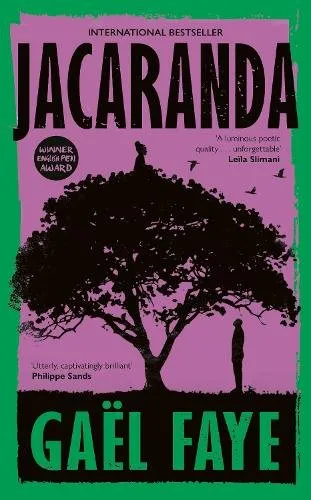
Jacaranda, by Gaël Faye
In this delicately written novel, Faye, who is French-Rwandan, explores the weight of intergenerational trauma and the cost of silence among survivors of the 1994 genocide (the event that sparked TNH’s founding). The book follows the story of Milan, a young man raised in France by a Rwandan mother who refuses to speak of her past, as he travels to Rwanda in search of his origins. Far from overwhelming the reader with darkness, Faye manages to touch upon fundamental issues – such as the responsibility of colonisers in sowing the seeds of conflict and the power of restorative justice – by surrounding Milan with nuanced characters who eventually help him unveil his family’s painful secrets.
Daniela Mohor, Latin America & The Caribbean Editor-at-large
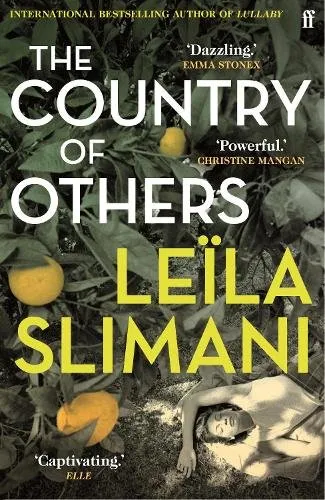
The Country of Others, by Leïla Slimani
Daniela Mohor, Latin America & The Caribbean Editor-at-large
The Country of Others, by Leïla Slimani
Inspired by the experience of the author’s grandparents, this novel is impeccably written and relentlessly paced. Slimani, who is Moroccan-French, tackles complex themes, from the tensions that shook her native country during decolonisation and women’s quest for freedom in a society characterised by extreme sexism to the identitary cost of migration. The story starts in 1946, when Mathilde, a young Alsatian woman, falls for Amine, a Moroccan who fought against the Germans in the French Army during World War II, and follows him to his country. The book dodges typical clichés about dynamics between the Global North and the Global South to explore the conflicting experiences of those caught in the middle. It is also part of a trilogy that is worth reading in whole.
Patrick Gathara, Senior Editor for Inclusive Storytelling
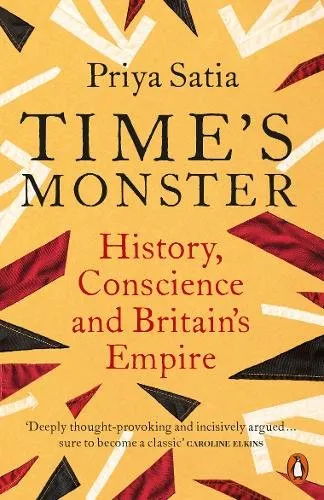
Time’s Monster: History, Conscience and Britain’s Empire, by Priya Satia
Patrick Gathara, Senior Editor for Inclusive Storytelling
Time’s Monster: History, Conscience and Britain’s Empire, by Priya Satia
What gripped me about Satia’s book was her account of history as an ethical framework, rather than a record of events. She explores the machinery by which ordinary, mostly decent, people made peace with the monstrosity of empire. Her argument revolves around the familiar phrase, “the right side of history” – the idea that history will render the ultimate verdict somewhere down the line. It’s a seductive deferral. If history is the judge, we are relieved of the burden and responsibility of making ethical judgments in real time. Satia shows how this temporal alibi was built into the discipline of history itself, and how it licensed – and continues to license – men who think of themselves as good to do unconscionable things.
Patrick Gathara, Senior Editor for Inclusive Storytelling
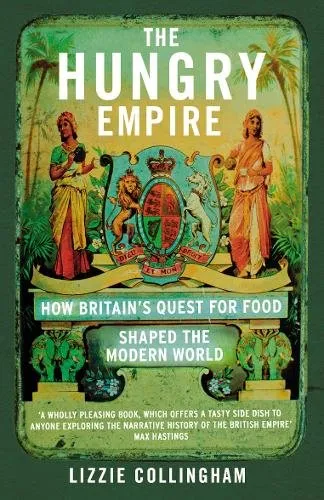
The Hungry Empire: How Britain's Quest for Food Shaped the Modern World, by Lizzie Collingham
Patrick Gathara, Senior Editor for Inclusive Storytelling
The Hungry Empire: How Britain's Quest for Food Shaped the Modern World, by Lizzie Collingham
Okay, maybe you're sensing a theme in what I’ve been reading, but if you’ve read my The Intrepid Humanitarian columns, this won’t come as a surprise. This book is a history of how empire and Britain's hunt for flavour transformed, and in some ways impoverished, tastes and diets around the world. As a Kenyan, I was fascinated by Collingham’s account of irio and ugali – two staple dishes – which demonstrates how what is usually thought of as traditional is in fact colonial. That’s the book’s deeper lesson: Colonialism didn’t just extract labour and land. It reshaped the very fabric of the societies it touched, right down to what people put in their pots.
Tammam Aloudat, CEO
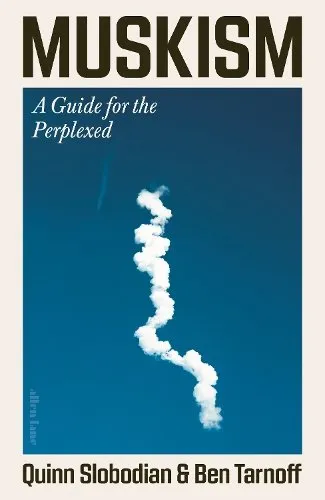
Muskism: A Guide for the Perplexed, by Quinn Slobodian and Ben Tarnoff
Tammam Aloudat, CEO
Muskism: A Guide for the Perplexed, by Quinn Slobodian and Ben Tarnoff
Muskism is not about an individual, it is about a system that is emerging and taking over. Slobodian and Tarnoff look at Muskism as a socio-economic system that has characteristics beyond the eccentricities of the man himself. Like Fordism a century before, Muskism has some rules: Economic fabulism, the invention of fantastical technofutures, and a “libertarianism” that does not aim to replace the state but fuse with it and sell it (and individuals) the techno-sovereignty it promises. Ultimately, the authors explain that Muskism aims to extend Musk’s Gigafactory model, where machines make machines for the whole of society, to the exclusion of its human subjects.
Tammam Aloudat, CEO
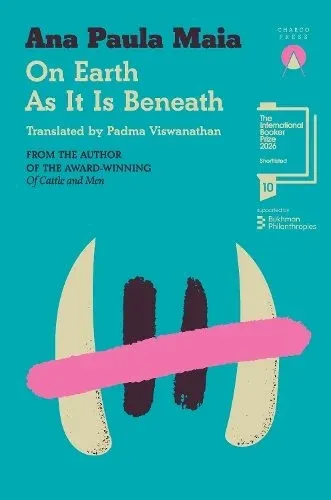
On Earth As It Is Beneath, by Ana Paula Maia, Translated by Padma Viswanathan
Tammam Aloudat, CEO
On Earth As It Is Beneath, by Ana Paula Maia, Translated by Padma Viswanathan
This is a novel about a penal colony built on indigenous land where people were enslaved and killed in the past. Instead of being rehabilitated, the prisoners, who have explosives attached to their ankles that blow up if they go beyond the wall, are stuck there forever as their humanity – and that of their warden and guards – decays. The camp is due to be closed, but the warden goes on with his monthly full moon ritual of hunting a prisoner. The chilling story sounds far-fetched, but Maia writes convincing and complex characters and believable storylines. It was difficult to put the book down before the last page.
Eric Reidy, Migration and Special Coverage Editor
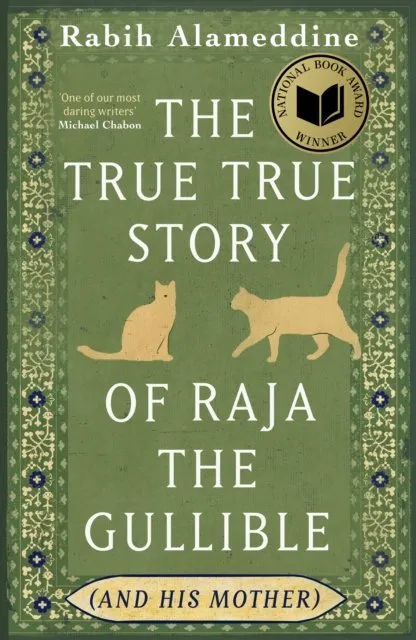
The True True Story of Raja the Gullible, by Rabih Alameddine
Eric Reidy, Migration and Special Coverage Editor
The True True Story of Raja the Gullible, by Rabih Alameddine
It’s always an interesting experience reading fiction based around events from recent memory. This novel reflects back on the 1975-1990 Lebanese Civil War, but it is rooted in some of the country’s more recent tribulations: the 2019 financial collapse and popular uprising that followed; the coronavirus pandemic; and the August 2020 Beirut port explosion. Despite the heaviness of those events, the book is a quirky, moving, and surprisingly heartwarming ode to the relationship between a son and his inimitable mother. Alameddine brings a roundness to his characters and humour to his prose that shows what is all too often flattened out in news coverage – the full humanity of people living through crisis after crisis.
Eric Reidy, Migration and Special Coverage Editor
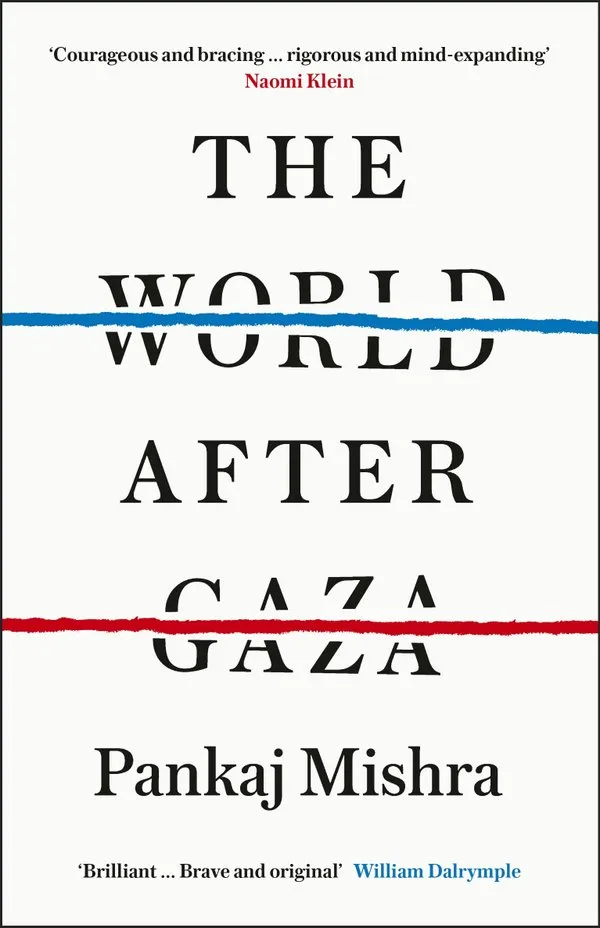
The World After Gaza, by Pankaj Mishra
Eric Reidy, Migration and Special Coverage Editor
The World After Gaza, by Pankaj Mishra
With Israel’s erasure of Palestinian life in much of Gaza ongoing, it’s difficult to speak of an “after”. What Pankaj Mishra really wrestles with is the intellectual histories that brought us to where we are now, with Western countries allowing and actively enabling Israeli genocide – from the misappropriation of Holocaust memorialisation to the failure to wrestle with the legacies of colonialism and slavery. Along the way, Mishra offers important correctives and illuminating insight to try to point a way forward. His perspective is all the more interesting as an Indian intellectual who grew up in a Hindu nationalist family sympathetic to Zionism.
Annie Slemrod, Middle East Editor
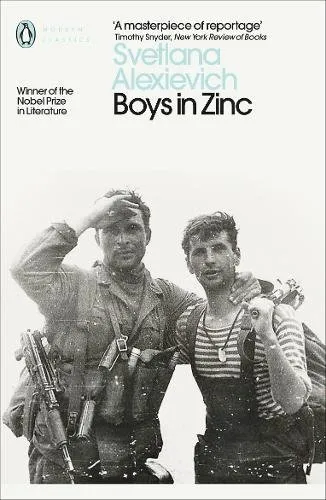
Boys in Zinc, by Svetlana Alexievich
This one is a re-read for me, first published in Russian in 1990, the title (also sometimes translated as “Zinky Boys”) refers to the zinc coffins used to transport the bodies of Soviet soldiers back from fighting in Afghanistan. It mostly consists of testimonials collected by Belarussian writer Svetlana Alexievich from people who had returned from the Soviet war in Afghanistan, or who were impacted by it in some way – soldiers, nurses, mothers, officers, sex workers. Some (but not Alexievich) call her style journalism, others oral history, and her methods and tendency to edit and stylise the words of the people she lets speak for themselves are not without its critics. Every time I return to read a passage or two, the book gives me something new to consider about what journalism is and can be.
Annie Slemrod, Middle East Editor
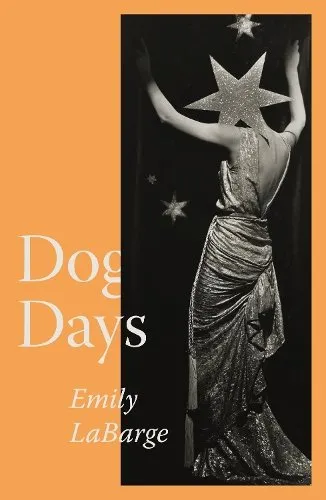
Dog Days, by Emily LaBarge
Emily LaBarge’s book starts with the true story of a trauma, when she and her family were held hostage at a vacation home in Christmas 2009. But what unfolds is not a traditional trauma narrative. In fact she unpacks the idea of the “good story”, the perfect victim, and of adding to “the world of Trauma Stories… demanded and peddled and normalised in so many spheres of contemporary culture”. This is not a story with a neat, healing ending. Instead, it is an exploratory journey of both a specific trauma and the concept of trauma through art, literature, psychoanalysis, and cinema. It asks if narrative can tell stories of trauma on people’s own terms – more complicated, fragmented, messy, and disjointed than the “good story” ever is.


