


Share & more
Nearly six months after a deal was struck to allow thousands of Syrians to leave the notorious al-Hol detention camp in a Kurdish-run zone and return to homes in government-controlled territory, only a few hundred have done so.
At its height in 2019, towards the end of the fight against the so-called Islamic State, al-Hol held nearly 74,000 people, including both supporters and victims of the group.
Kurdish authorities, who control a large swathe of northeastern Syria, including al-Hol, have been allowing people to return to their territory since late 2020, subject to various security clearances, and around 12,000 people have gone back.
A new deal announced in late May between Syria’s transitional government and the Kurdish authorities introduced a “joint mechanism” to allow more Syrian families to leave the camp for the majority of the country they now control, since the December 2024 ouster of President Bashar al-Assad.
Now home to around 26,000 people, the detention camp as well as a nearby location called al-Roj, with some 2,400 people, has long been a conundrum for the regional and international community, with some countries reluctant to take their citizens back.
The camps are known for violence, grim humanitarian conditions, and fears that they remain hotbeds of extremism. This is particularly true for a heavily-guarded section of al-Hol known as “The Annex” where the Kurdish-run administration keeps women and children who are neither Iraqi nor Syrian, and are considered devoted to extremist IS ideology.
But despite what seems like increasing momentum – including a September conference on repatriation from al-Hol and other similar camps at the UN’s General Assembly in September – only around 360 people have been able to go home to parts of Syria that had been run by al-Assad.
Meanwhile, aid groups say they have few resources to support and help reintegrate even the limited number of returnees. And they are still waiting for progress that will allow thousands more to follow.
“Repatriation is the priority,” Jihan Hanan, co-head of al-Hol for the Kurdish administration (its military wing is the US-backed, Kurdish-led Syrian Democratic Forces), told The New Humanitarian. “We are aiming to return people to their countries, not just in al-Hol, but for all the camps inside northeast Syria. Everyone should go back home.”
According to September figures provided by Hanan, the majority of people in al-Hol are now Syrian (15,181 people), followed by Iraqis (4,868), and the rest (6,280) are from roughly 60 other countries.
‘It was like a prison’
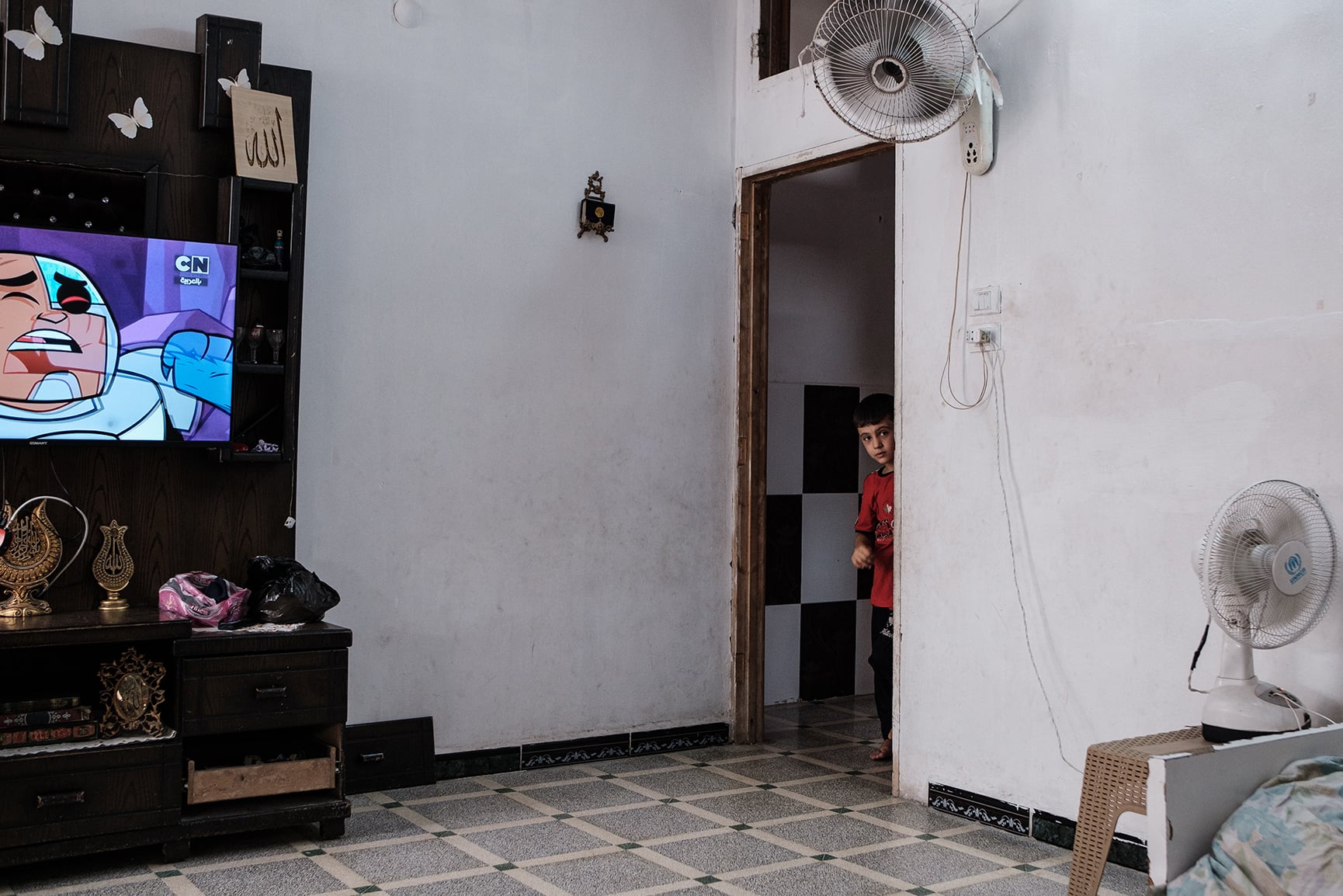
A month and a half after leaving al-Hol, 21-year-old Heba* watched as her six-year-old son, Ahmed, ventured out onto the balcony in her uncle’s Aleppo apartment. He was still getting used to the city view, having spent the better part of his life in the one-storey tented confines of the camp.
“You couldn’t leave the camp from anywhere. It was like a prison,” said Heba, who asked that a pseudonym be used because of security concerns but was comfortable using her son’s real first name. When she met with The New Humanitarian in July, Heba wore a loose black dress and headscarf – less conservative attire than the niqab, which covers most of the face except the eyes, and which she said she felt pressured to wear whilst in al-Hol.
Al-Hol, guarded by the SDF, is one of the most secure and restrictive camps in Syria. Although many residents are suspected of having an affiliation with IS – including the wives, children, and female relatives of IS members – most have not been charged with a crime or been brought before a court. Rights groups have labelled this illegal collective punishment.
Heba denies having ties to IS, although her movements since her marriage in 2016 – when she was just 12 years old – follow the routes of IS fighters up until the defeat (and mass flight from) the group’s last Syrian stronghold of Baghouz, around 300 kilometres south of al-Hol.
Born in Aleppo, Heba moved with her parents to the city of Manbij – which IS had taken over in 2014 – when she was eight. She says her parents were killed in airstrikes on Manbij in 2016, and she was married soon after they died.
In the years that followed, she says she and her husband were displaced multiple times by the fighting in Hassakeh, Raqqa, and Deir Ezzor. In 2019, Heba’s husband was killed in Baghouz, which was at the time under bombardment by the SDF.
Both IS supporters and victims fled Baghouz and the surroundings to al-Hol. Heba said she couldn’t get back to Aleppo after her husband was killed, so she fled with her grandmother and infant son to al-Hol. “At least the camp wasn’t being bombed,” she said. “We didn’t know we wouldn't be allowed to leave. I thought it would just be a month, until the situation calmed down. But it turned into years.”
On 15 June, Heba, her son, and grandmother – who is now 92 – left al-Hol for Aleppo. They were joined by 42 other Syrian families – the first group from the camp able to return to former regime-held Syria since the May deal. A second convoy left in late July with 36 families, followed by a third group of 12 families.
“Thank God, we’re in a house now instead of a tent. It feels unreal,” Heba said. “It has been a shock beyond words. Even now, I can’t believe that I’m out.”
Delays and restrictions
Calls to draw down al-Hol have grown louder following the early 2025 slash in critical US support, combined with political changes after al-Assad’s toppling. In February, the Kurdish administration in northeast Syria announced its aim to empty the camps of Iraqis and Syrians by the end of 2025.
But there is still no clear process that allows the vast majority of Syrians in al-Hol to return to government-controlled territory.
All of the roughly 360 Syrians who have returned have had at least one family member with a critical medical concern, according to Celine Schmitt, Syria spokesperson for UNHCR, the UN’s refugee agency.
In Heba’s case, that was her grandmother, who suffers from a range of health issues, including heart disease. Schmitt told The New Humanitarian that a “distinct procedure” determines eligibility for these releases, including authorisation from the Syrian government.
Even these returns have been contingent on the shifting political calculus between Damascus and Kurdish-led authorities, who have been in negotiations for months about the role of the Kurds and the SDF in a new Syria. The third convoy of returnees was delayed for over a month, as talks stalled and amid deadly clashes between the parties. It departed shortly after the SDF said it had agreed in principle to integrate its forces with the Syrian army.
The truth is that most of the recent decline in population has been driven by Iraq’s drive to bring back its own citizens: 7,517 people this year alone. In February, it announced it would bring back all of its nationals from al-Hol by 2027.
Iraqi returnees are first transferred to the al-Jeddah Community Rehabilitation Center (formerly known as Jeddah 1 camp) in northern Iraq. Rights groups have criticised the Iraq centre for its ill-treatment and torture of several detainees. Hanan said there are still roughly 2,000 Iraqis who are unwilling to return.
Meanwhile, repatriation of the over 15,000 Syrians still left in al-Hol is moving at a much slower pace. Hanan noted that while all Syrians who wanted to have returned to areas under the Kurdish administration, so far few have been able to return to government-run areas.
At the UN conference, UNHCR’s representative in Syria, Gonzalo Vargas Llosa, called on both the Syrian governments and “actors in northeast Syria” to cooperate to facilitate Syrian returns. Llosa also said that “if donor commitments materialise”, an estimated 4,500 Syrians could return in the next year to places such as Aleppo.
Schmitt noted that there has been “encouraging interest” from a handful of primarily-Western donors to support the IS detention camps and the return of its residents. She said this support would go towards funding the basic needs in al-Hol and al-Roj camps for a year, as well as “initial return and reintegration activities” for the thousands of Syrian returnees, including legal assistance, mental health support, and some support for shelter and livelihoods.
After return
As has been the case for those who left al-Hol over the past years for the Kurdish-run northeast, the hundreds of people who have gone back to newly liberated parts of Syria have not found it easy.
“Many international organisations have programmes for al-Hol, but when it comes to actually moving and supporting families, there is no one there in practice,” the director of a Syrian NGO called the Stabilization Support Unit (SSU), Mounzer al-Salal, told The New Humanitarian in his Aleppo office in late July.
UNHCR’s Schmitt stressed that returnees’ needs are immense. “Given the scale of needs and funding constraints, no returnee receives a full package of support immediately upon return. Resources simply do not allow for that,” she said.

The SSU runs a variety of humanitarian and development programmes in Syria, from hosting civil society meetings to facilitating returns from displacement camps around the country. The NGO currently has a grant that allows them to provide transport and other basic medical services for the al-Hol returnees, as well as some legal support and small housing cash allowances.
However, Salal noted that the aid was far from meeting the broad needs of returnees as they transition back into society. Schmitt said UNHCR is providing returnees one-time packages of core relief items, like dignity kits and ready-to-eat meals, as well as limited health and legal support in coordination with SSU and the Syrian Arab Red Crescent (SARC). But all aid groups are unable to do as much as they would like, given global funding shortages.
This is particularly troubling given that Schmitt described the al-Hol returnees as “highly vulnerable”, with 63% being female-headed households facing medical challenges. She also noted that trauma or other psychosocial issues could impact their re-integration.
Houssein Shlash, who is one of a team of six at the SSU working to support the hundreds of new al-Hol returnees, said the lack of work opportunities currently tops the list of concerns. Without income, he told The New Humanitarian, many returnees are unable to afford rent and are sharing spaces with their relatives.
Fourteen years of conflict and sanctions have devastated Syria’s economy, with an estimated nine out of 10 Syrians living in poverty and one in four jobless.
Paperwork, and bureaucratic challenges
Another challenge, Shlash said, is that many returnees do not have basic identification documents. This can create obstacles for school enrollment and in receiving basic healthcare.
Heba and Ahmed have no documentation at all. Heba said her identity documents were lost in the 2016 airstrike that killed her mother. Shlash and his team attended Ahmed’s school to assist in his enrollment despite his lack of paperwork, a process they have repeated for over 100 other child returnees.
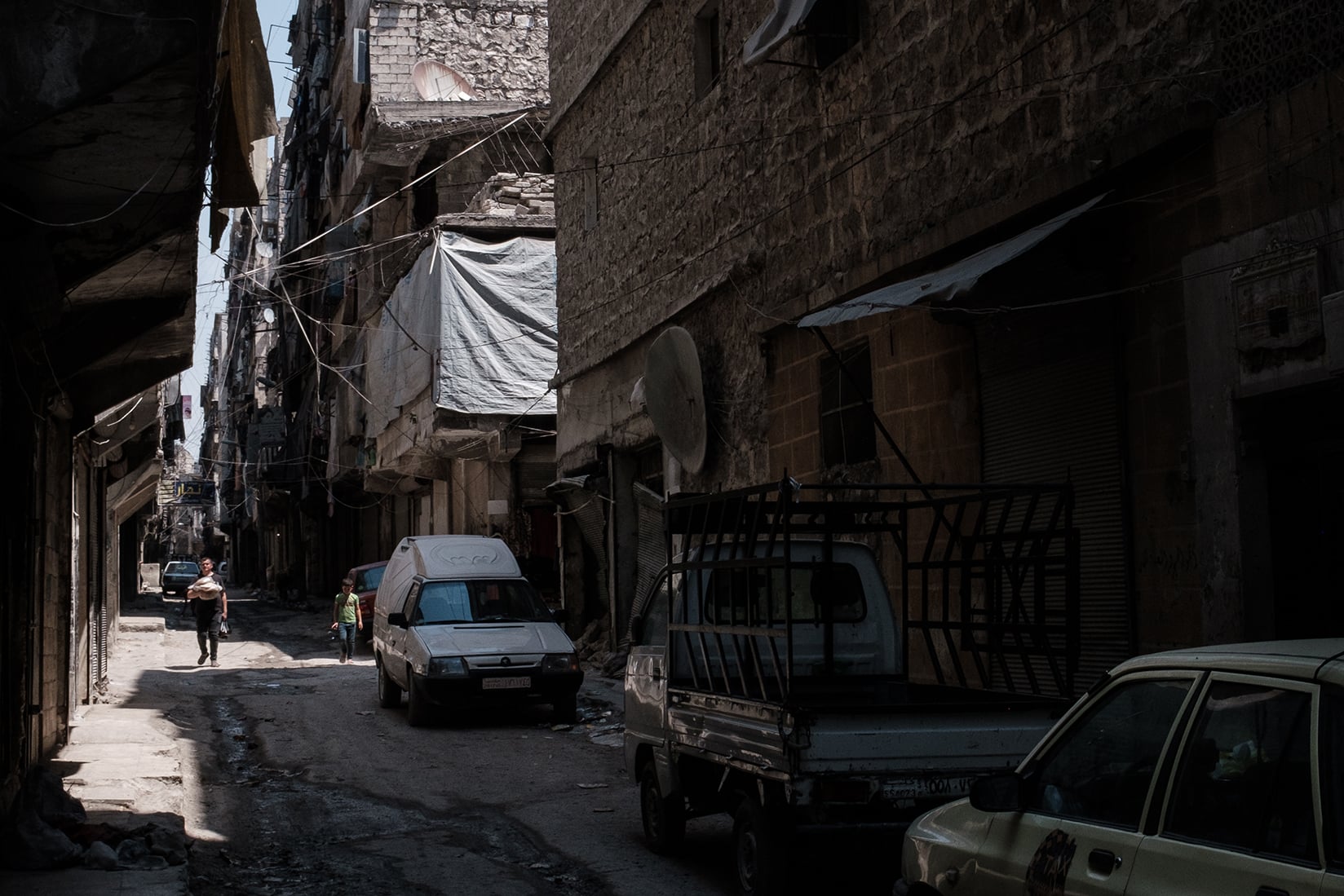
Since Ahmed started school in September, Syria’s Ministry of Education has attempted to ease the process of enrollment, allowing children to register without legal documents, as long as their parents commit to providing the required documents before their second semester.
SSU has a lawyer working on getting al-Hol families new documents, but Shlash said lengthy court wait times and other bureaucratic hurdles make this a slow process. Slash emphasised the need for education: He said that the majority of children coming out of al-Hol are unable to read or write, and the window for easy re-integration into formalised schooling closes in late primary years. Plus, with Syria’s public schools overwhelmed and under-resourced, Slash worried that it may be difficult for these children to find the support they need to catch up.
“[In al-Hol], there were only a few places where the kids could play and have a change of atmosphere, but no real schooling,” Heba said. A few months attending school for the first time, Ahmed told The New Humanitarian that he was getting used to life outside the camp, enjoying playing football with his cousin and other neighbourhood kids.
The SSU’s Salal said they hope to eventually help all Syrian families leave al-Hol. “The camp environment is unsuitable for human life, and it’s dangerous for them,” he said.
“Many of [those in al-Hol] are victims, not criminals,” he added. “But if we keep treating them as criminals, they will eventually become criminals... We must act quickly to support these families so they can be part of society again.”
*Additional reporting in al-Hol was provided by a Syrian journalist, who preferred to remain anonymous for security reasons. Edited by Annie Slemrod.


