

Share & more
With steady gloved hands and the confidence that comes from experience, Lama Haj Kaddour prepares the explosives she will soon use to destroy a cluster munition found by a farmer in the village of Abbad, in northern Syria’s Aleppo province.
Kaddour, who is 32, graduated from university with a science degree, and was forced to leave her home in rural Hama six years ago because of her activism against the regime of former President Bashar al-Assad.
After she was displaced to Idlib, in northwest Syria, Kaddour worked various jobs in the aid sector, eventually securing a role at The HALO Trust, one of the main organisations working on demining in Syria.
At first, she worked supporting mine victims, before training to do the risky and high-skilled fieldwork she does now.
“I’ve been working as a deminer for three years,” she explains, after conducting a controlled explosion to eliminate the cluster bomb. “I value this work, as I know how important it is to save lives and allow people to have normal lives.”

Kaddour recalls how her first clearance felt: “I was so proud we could do this, especially when I saw how happy the landowner was to be rid of this threat that had prevented him from growing anything.”
Most of the explosive remnants of war that Kaddour sees are highly dangerous cluster munitions, which al-Assad’s regime and its Russian allies dropped on their rebel opponents. She says her job can be scary, but this fear is also what keeps her safe – it makes her carefully follow safety protocols.
Her new skills and steady employment have meant a great deal to her family. “Now I’m like a source of safety for my family,” she says. “My children trust me, and they know I can protect them from any possible danger. This makes me happy.”
Kaddour is also proud that she and other women deminers have helped break gender stereotypes in Syria by working in a field dominated by men, which she says is “empowering on an economic and social level”.
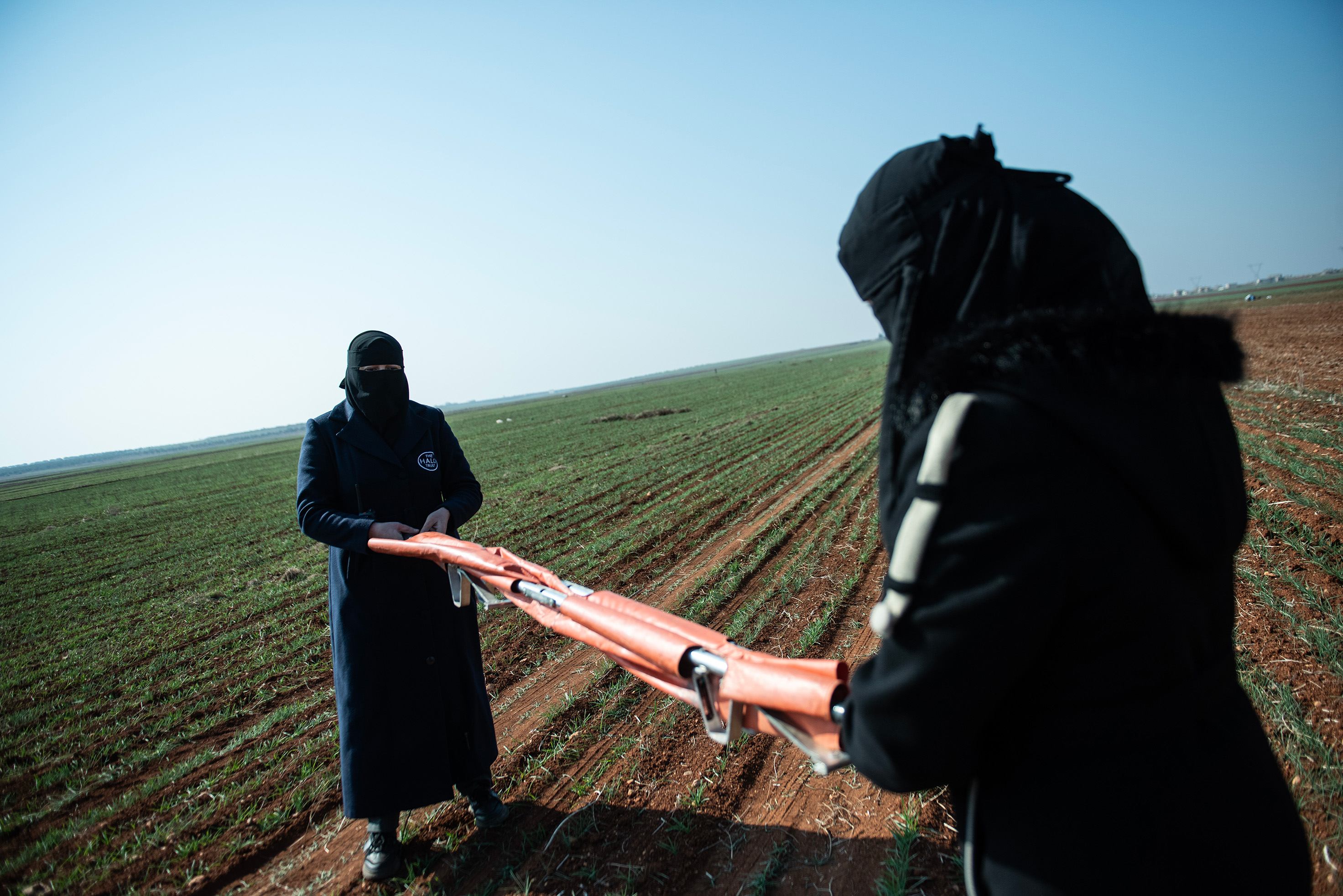
The months since the fall of al-Assad have been particularly busy for Kaddour and her colleagues. “When the regime fell, we knew how much of Syria was probably contaminated with remnants of war,” she says. “There are so few deminers in this country, so we have to work even harder to save lives and help people return safely.”
Once they have safely cleared the Abbad field, Kaddour and her team begin to pack up their equipment, preparing for their next stop. ”Every time we get rid of a threat, we gain more courage for the next one,” she says. “We will keep going as long as the country needs us.”
Edited by Annie Slemrod.


