

Share & more
Badr el-Din Mouhanna wanders around his old Damascus neighbourhood with sadness and shock in his eyes, as he sees for himself the destruction left behind by the weapons of Syria’s 14-year war.
“No building survived the brutal bombardment,” he says, in between long sighs, as he surveys the rubble that used to be Jobar, a thriving district on the outskirts of Damascus. The 60-year-old fled with his family in 2012, as violence broke out after early demonstrations against the regime of former President Bashar al-Assad, and he has not been back since.
Government forces eventually besieged Jobar, which saw some of the fiercest battles of Syria’s war. In 2018, civilians and fighters who remained were evacuated in a deal with the government and sent to rebel-held northwest Syria, and al-Assad’s forces prohibited entrance to the area.
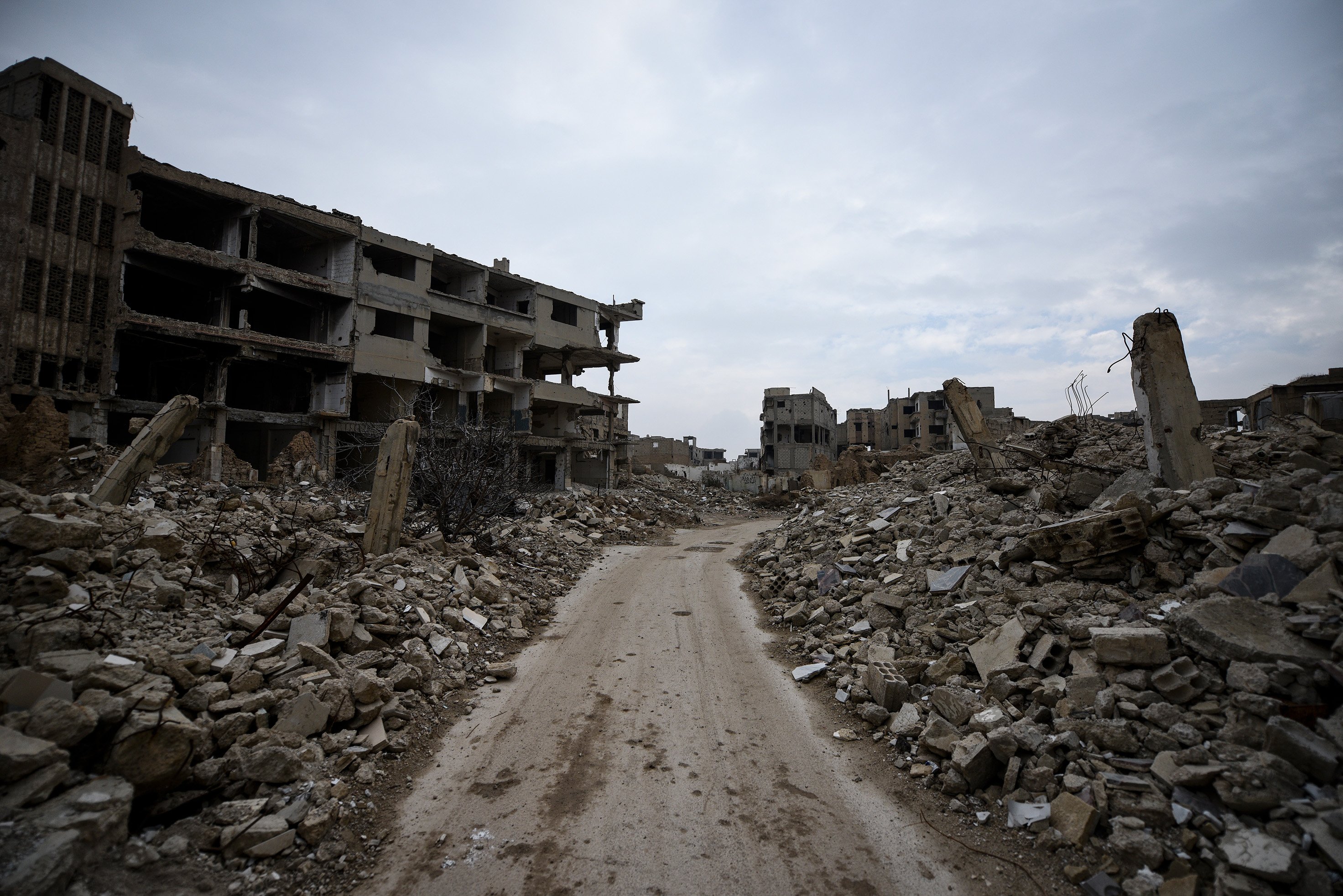
Now, former residents of the neighbourhood – once home to around 300,000 people – are cautiously returning to check on their homes and other properties. Mouhanna owned two homes here, as well as the Jobar’s traditional hammam, or public bath house. All three buildings have been destroyed, as has Jobar’s famous market.
Mouhanna, who spent the war with his family elsewhere in the government-controlled Damascus suburbs working as a carpenter, knew nothing was likely to be standing. But seeing it for himself is difficult. He’s also face to face with signs and graffiti that read: “Do not approach. Remnants of war.”
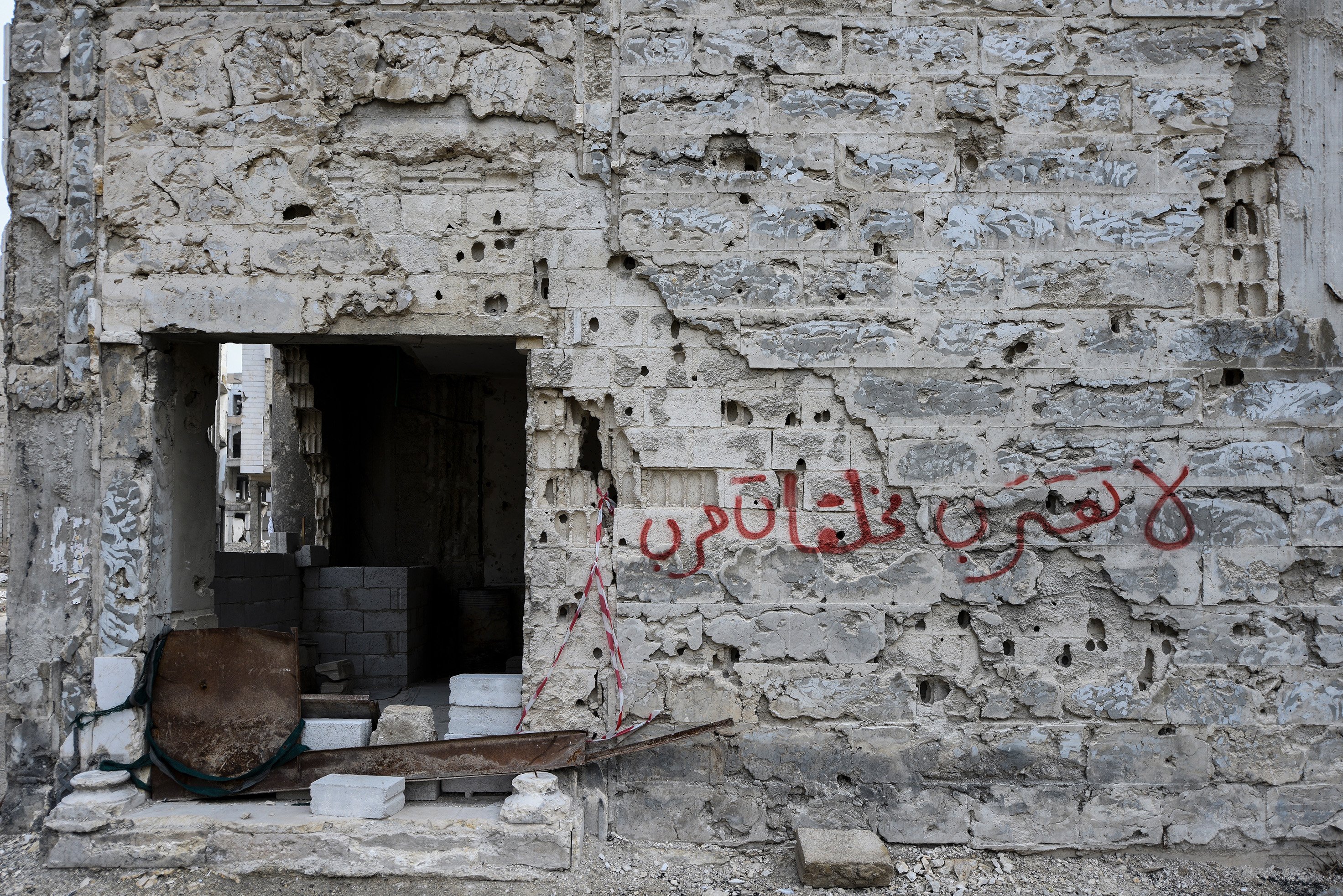
Given fierce street fighting and the government’s intensive bombardment, Jobar is considered extremely dangerous. Mouhanna did not visit until the transitional government announced the main roads were safe, and he says he is trying to be careful.
“I’m only walking where I know it is safe, and not going into any side streets or inside destroyed buildings, where the danger is greater,” he says.
Along with a few other Jobar residents, Mouhammed paces the few streets he knows are safe. No plans have been announced to remove the rubble or clear the mines, nor the other explosive remnants of war that he knows are there, unseen.
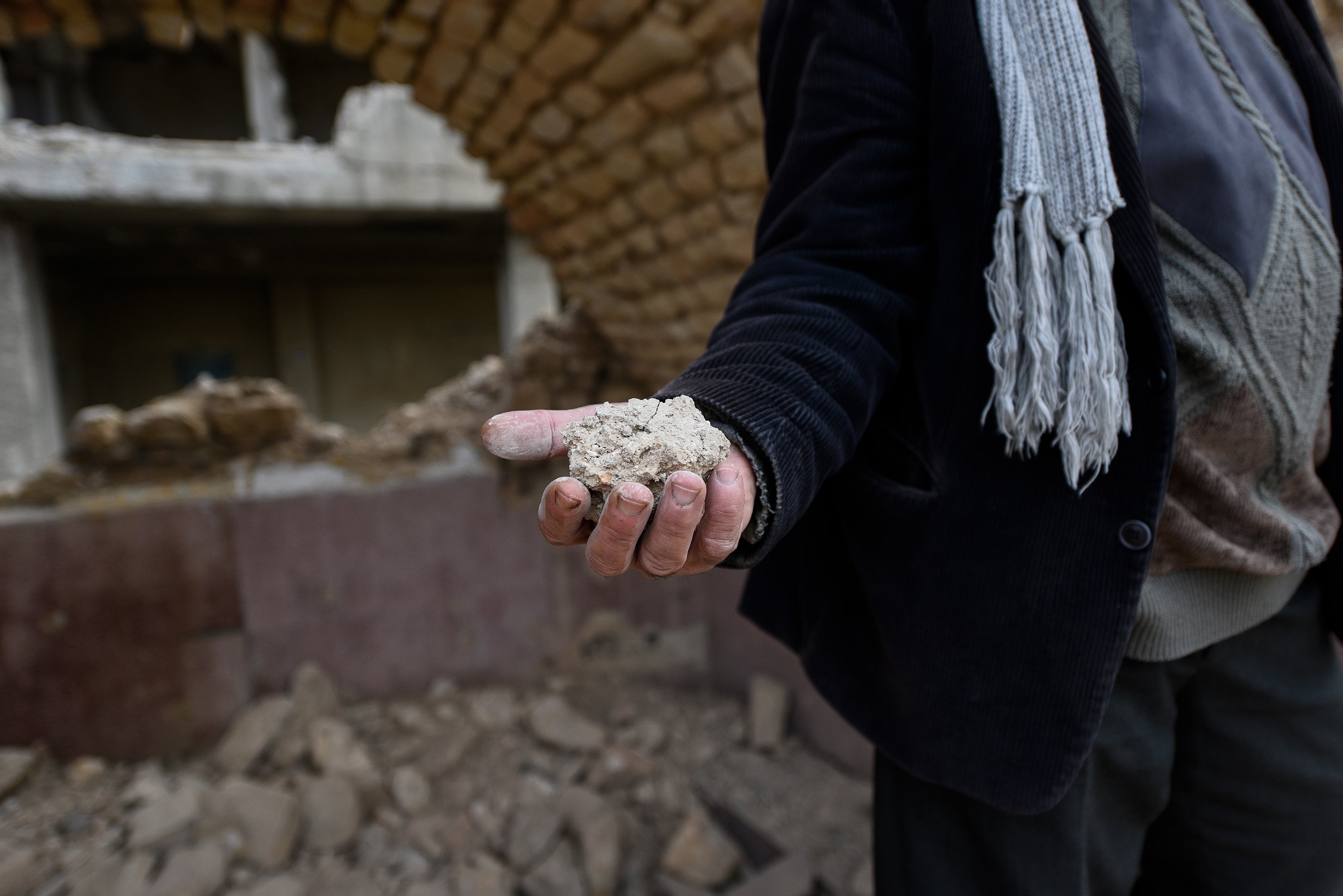
He is determined to re-open Jobar’s public baths, which are more than 200 years old, and have been passed down through his family. But when this will be safe or possible, he doesn’t know.
“I feel gloomy,” he says, seeing his homes, and the baths that used to serve more than 100 customers every day. “How can we rebuild all of this? And get rid of all the risks and threats? How long will it take? And how much will it cost?”
Edited by Annie Slemrod.


