


Share & more
Our editors’ weekly take on humanitarian news, trends, and developments from around the globe.
On our radar
Israel ‘may be causing the destruction of the Palestinian population’ in north Gaza
As Israel tightens its siege and intensifies its assault on northern Gaza, reports have emerged of Israeli forces entering shelters, separating men from women and children, and forcing people to move to the south of the enclave at gunpoint. Video footage has also emerged of long lines of Palestinians making their way through the devastated landscape of northern Gaza, heading south. On 6 October, Israel began a new assault on the north of Gaza, concentrated on the three northernmost cities of Jabalya, Beit Hanoun, and Beit Lahia, and ordered an estimated 400,000 Palestinians who had remained in the area to leave. In a 20 October statement reminding Israel that the International Court of Justice, the UN’s top court, has ordered it to take all actions to prevent genocidal acts, the UN’s human rights office said Israel’s actions “may be causing the destruction of the Palestinian population in Gaza’s northernmost governorate”. Israel’s campaign in the north has forced the World Health Organization to pause the final phase of a polio vaccination campaign in the area while worsening an already dire food shortage crisis throughout the enclave. In September, Israel allowed the lowest amount of aid and commercial goods into Gaza since March. “This sharp decline will profoundly limit food availability and the ability of families to feed themselves and access services in the next few months,” a new assessment by a group of UN-backed experts said, highlighting the continuing risk of famine in the enclave.
As more Israeli bombs strike Lebanon, donors promise more aid
As Paris hosted a conference this week to raise money for aid and military support to Lebanon, Israel’s bombing of the country – including strikes on the city of Tyre, the killing of three journalists in the border town of Hasbaya, and an attack outside a south Beirut hospital that killed 18 – is driving needs up even more. France said it had received $800 million in pledges for humanitarian aid and $200 million for military assistance, although it’s not clear how much of the money is really new or will go through UN-coordinated plans. A UN “flash appeal” for $425.7 million, launched on 1 October, is only 16.8% funded. More people need help in Syria too, with the number of people who have fled across the border now estimated to be 425,000. In addition to finding shelter and other basic needs, some parts of the country returning Syrian refugees face the additional pressure of arrest and forced conscription by the government. Inside Lebanon, the number displaced by the last year of violence now stands at 1.4 million, according to Prime MInister Najib Mikati. The UN’s count is around 810,000. For a good reminder that people who have had to leave their homes are so much more than just numbers, read this reflection by Zainab Chamoun on her family’s desperate flight from south Lebanon, and what she had to leave behind.
War’s terrible toll on women
This week, the UN Security Council held its annual debate on women, peace and security, overshadowed by the reality that the proportion of women killed in armed conflicts globally doubled in 2023. Sudan’s civil war has been particularly devastating. A new report, In Her Own Words: Voices of Sudan, chronicles not only the violence and displacement, but also the resilience of Sudanese women. It showcases the stories of 22 women – from students, to NGO leaders, to grandmothers – who describe the personal impact of the 16-month conflict. Many have taken on new roles – starting small businesses, setting up safe spaces for women, or opening classes – often with little or no support. Several stressed the need for psychosocial care for themselves and their children. The report includes recommendations on strengthening the capacity and funding for women-led networks to enable them to better shape both the humanitarian response and the peace process in Sudan.
Haiti's never-ending crisis
A new offensive by the Viv Ansanm gang coalition to take control of Port-au-Prince’s Solino neighbourhood – one of the last areas of the capital that remains outside gang control – forced at least 5,000 people to flee. The UN Secretary-General’s Special Representative on Haiti, María Isabel Salvador, warned the Security Council on 22 October that “the humanitarian situation is even more dire” than in July, with gang activities escalating and expanding, and access to essential services growing ever more limited. During the meeting, UNICEF’s executive director highlighted the fact that many of the 1.6 million women and children living in besieged communities are cut off from humanitarian aid. Meanwhile, political bickering between the Transitional Presidential Council and the prime minister is perpetuating the sense of political instability. As Haitians grow ever more desperate, voices seeking to turn a US-backed, UN-approved stabilisation mission – so far underfunded and ineffective – into a formal UN peacekeeping mission grow ever louder.
Putin flexes growing BRICS clout in Kazan
The 16th BRICS summit was held in Russia’s southwestern city of Kazan from 22-24 October, bringing together three dozen world leaders to “promote a multipolar world and foster an inclusive economic globalisation”, as Chinese President Xi Jinping put it. BRICS, which has expanded to include nine countries – representing nearly half the planet’s population and 37% of its GDP – is positioning itself as a counterweight to Western dominance. This was underscored this year by the fact that the gathering was hosted by President Vladimir Putin, whose regime the West has tried so hard to isolate since Russia’s invasion of Ukraine. On the sidelines of the summit, Xi and Indian Prime Minister Narendra Modi held official talks for the first time since 2019, days after the two countries agreed to resolve competing border claims that have led to frequent clashes: At least 20 Indian and four Chinese soldiers were killed in a 2020 flare-up of hostilities. However, it was not all smooth sailing at the summit as Brazil blocked the admission of Venezuela into BRICS, angering its disputed president, Nicolás Maduro, who had made a surprise showing to lobby for his country’s inclusion. It’s also unclear, as some observers noted, how far countries like Brazil and India are willing to use the grouping as a vehicle for confronting the West. UN Secretary-General António Guterres, meanwhile, met Putin on the sidelines in Kazan, reiterating his position that the invasion of Ukraine was against international law and urging the Russian leader to bring an end to the conflict.
Duty of care under the spotlight at AidEx
The AidEx trade show rolled through Geneva on 23-24 October, offering the latest temperature check for a sector that’s feverish with worry about the state of the system. Part trade exhibition, part talk shop, the annual conference features panel discussions and exhibits touting everything from tents and medical supplies to armoured vehicles. Multiple sessions focused on duty of care to aid staff, reflecting growing attention to a once-ignored topic and the record levels of aid worker killings (propelled by Israel’s destruction of Gaza). “Has it ever been this dangerous to be an aid worker?” one panel asked. Elsewhere, a heavy concentration on finance produced many questions, and fewer answers, about how to prioritise amid slashed budgets, and where partnerships with private funders might fit in. The humanitarian tradition of staging discussions without any local NGOs at the table was alive and well. And in a GPT world, no aid conference is complete without a couple of sessions on AI. It’s all part of a string of introspective meetings to hit Geneva this month, from Grand Bargain discussions to the executive meetings of the UN’s refugee agency, UNHCR. The theme continues in the coming days with the 34th International Conference of the Red Cross and Red Crescent, which is focused in part on upholding international humanitarian law.
Weekend Read
What's the NCQG? For COP29 and the climate crisis, it's 'the answer to everything'
A look at the key sticking points behind setting new climate finance targets.
Four letters, NCQG, will dominate COP29 negotiations. Here’s why they’re all-important to climate-vulnerable countries and to humanitarians.
And finally…
Teenage Idlib siblings nominated for global peace prize
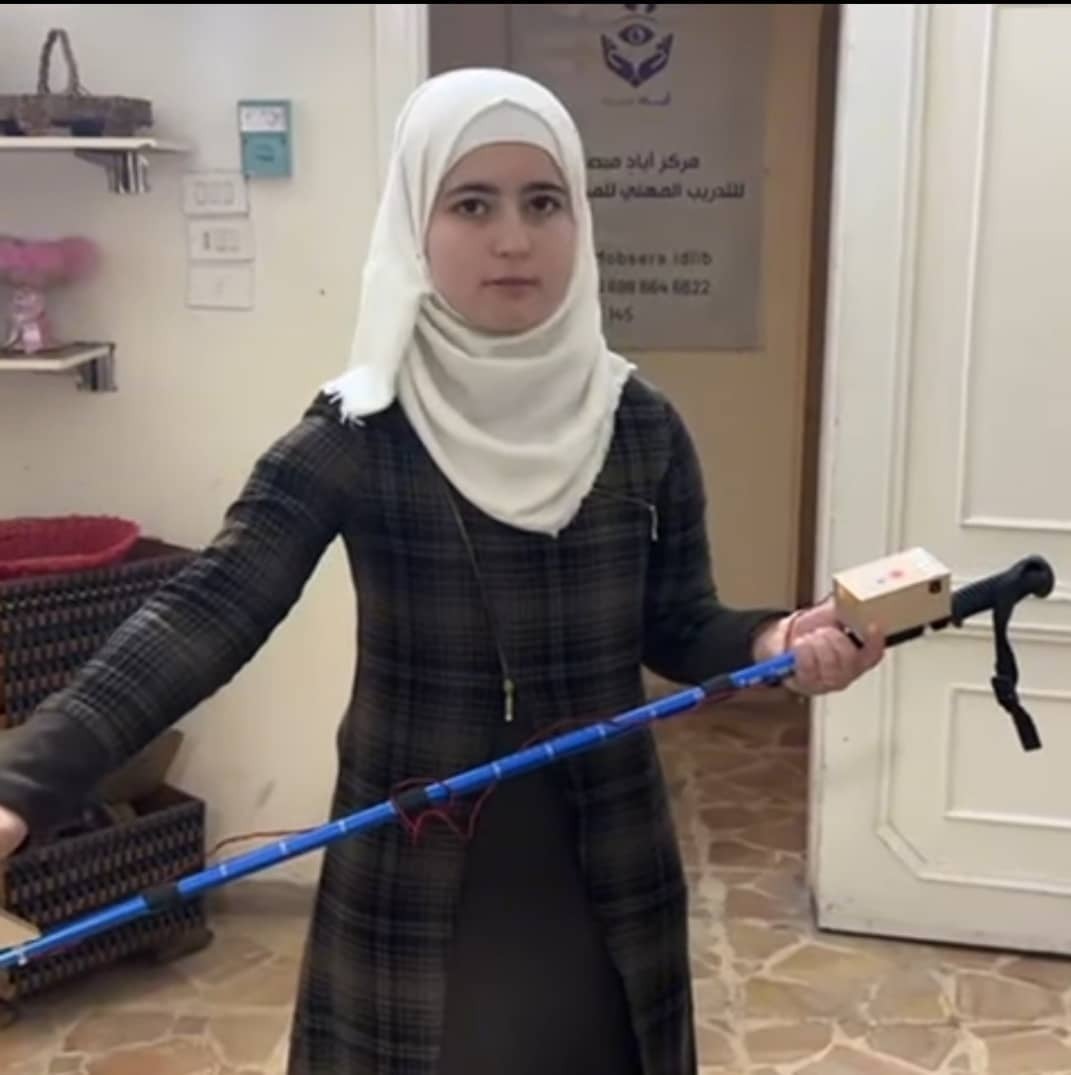
Sana (15) and Ahmed al-Zeer (17), two teenage siblings from Idlib in northwest Syria, have been nominated for the International Children’s Peace Award for their innovations to help children in crisis. Sana and Ahmed are the only nominees from Syria and, along with one young person from Lebanon, are the sole nominees from the Arab world – out of 118 nominees worldwide. Among Sana’s creations is a smart cane for the blind, which has sensors and other alert mechanisms to aid visually impaired individuals. Ahmed, meanwhile, invented a smartphone app to help children and adults with diabetes manage their diet and medication. Awarded annually to a child who stands out for fighting for children’s rights, the prize includes a statuette, a study and care grant, and access to a €100,000 fund that invests in winners’ work. Past winners include Pakistani education activist Malala Yousafzai and Swedish environmental activist Greta Thunberg.


