


Share & more
Jaqué, Juradó, Bahía Solano. The towns are like an archipelago starting on Panama’s Pacific coast and continuing down into Colombia. Impoverished, isolated, and far from the beaten path, they are unlikely – and dangerous – places for the effects of US President Donald Trump’s harsh migration policies to land. But for several months last year, that’s exactly what happened.
Between April and September 2025, hundreds of people who found themselves stranded in Mexico when Trump effectively ended access to asylum at the US southern border crossed through these towns as they retraced their steps toward South America.
The rapid emergence of the route – and its equally rapid drop-off – highlight how policies enacted in Washington can throw migration dynamics in an entire region into upheaval. In effect, these fast-changing fluctuations in US migration deterrence have exacerbated humanitarian crises in communities thousands of kilometres away, exposing migrants and asylum seekers to dire living conditions and the risk of death – all while aid groups, hobbled by budget cuts, struggle to respond.

What happened to the 300,000 asylum seekers stranded in Mexico by Trump?
Hundreds of thousands of people fleeing crises were left in limbo on day one of Trump’s second term. Fifteen months later, where are they?
The Pacific route was one of several that emerged early last year for people returning to South America, including another on Panama’s Caribbean coast. But the Pacific route was cheaper and attracted the most vulnerable migrants, drawing particular concern from aid organisations. The region it traverses is one of wide beaches surrounded by dense jungle. On the Colombian side of the border, where Juradó and Bahía Solano are located, the area has long been affected by the country’s multifaceted and long-running armed conflict.
“These are areas where we have no capacity to intervene, nor does the state,” said an aid worker, who asked to speak anonymously due to security concerns. “These are geostrategic routes and rear bases for the conflict in Colombia, not only for the trafficking of narcotics, but also of arms and other goods.”
Both the Pacific and Caribbean routes emerged because people returning from Mexico were trying to avoid crossing the Darién Gap. Over one million people traversed this gruelling and lawless stretch of jungle connecting Colombia and Panama on their journeys towards the US between 2022 and 2025. The route was particularly dangerous on the Panamanian side, and those who made it across reported witnessing deaths from accidents and assaults, robberies by armed groups, and sexual violence.
Most of those returning to South America have been Venezuelans, but people from Peru, Ecuador, Chile, and elsewhere have also joined the movement. The new routes intended to circumvent the Darién proved dangerous in their own right, with reports of shipwrecks and people often being stranded in remote areas with little support.
Small towns overwhelmed
On the Pacific coast, Jaqué was the final stop in Panama. People returning to South America arrived by buses or boats that ferry cargo from Panama City, and then boarded similar vessels to continue by sea to Juradó and Bahía Solano in Colombia.
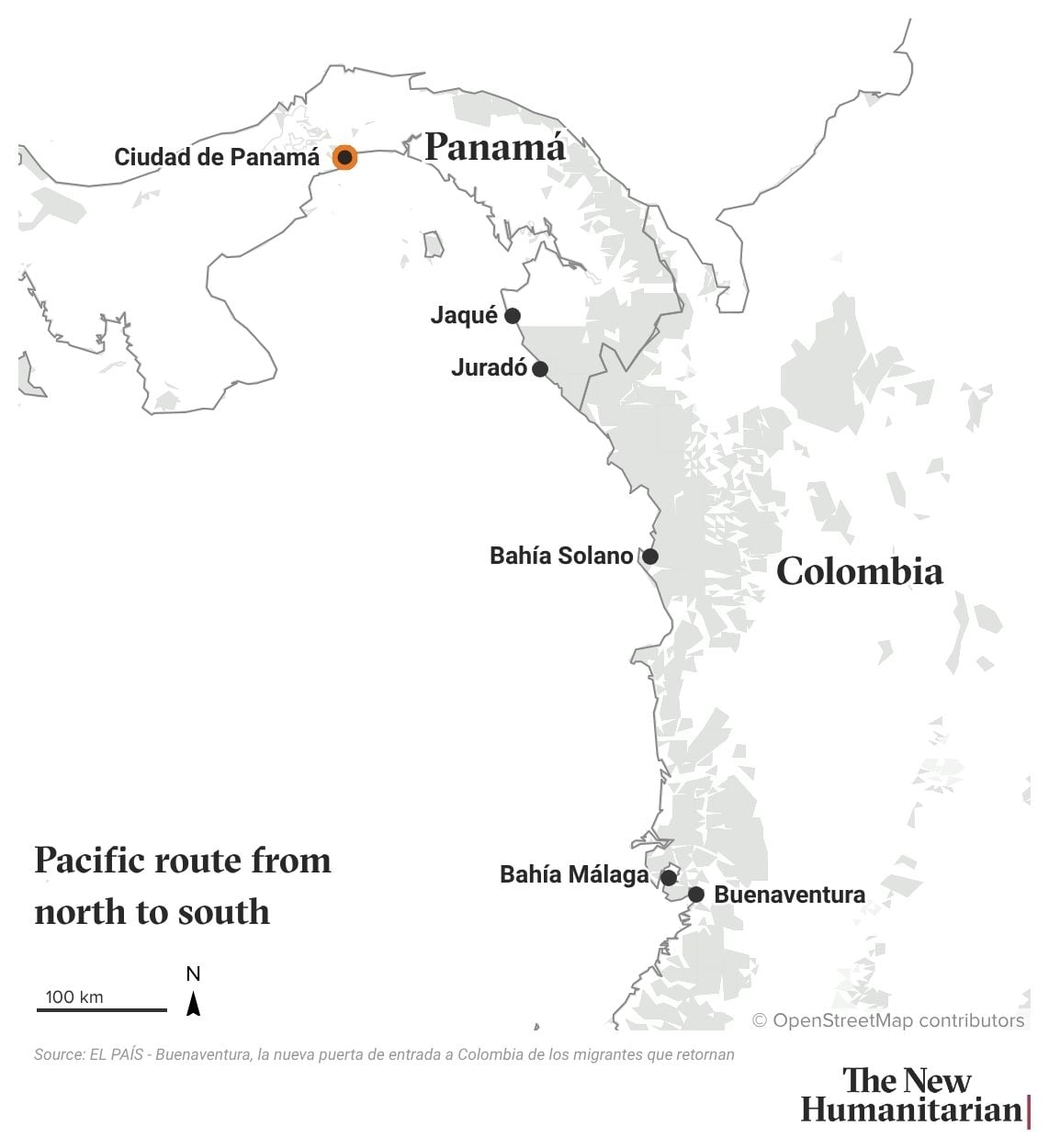
In April 2025, local authorities in Juradó and Bahía Solano began to request support from Colombia’s federal government and NGOs due to the number of people arriving. Official data only records 288 migrants arriving in Juradó and Bahía Solano between April 2025 and March 2026, but local authorities and NGOs told The New Humanitarian the real number was much higher.
During the peak months, Juradó, a community of around 8,000 mostly Afro-Colombian and Indigenous people, hosted dozens of migrants at any moment. Due to budget cuts, aid groups said some of the most vulnerable migrants and asylum seekers passing through the region were left without any kind of humanitarian assistance.
People on their way south mostly stayed in makeshift tents on the beach, in public parks, or on the streets. The municipality did not have the resources to provide them with shelters, food, or other supplies, and no aid group had a steady presence in the area. What support existed came from local residents who helped however they could, providing mats, food, or a place to sleep.
Santiago Ernesto Alba, a researcher at Action Against Hunger in Colombia who visited Juradó last July, told The New Humanitarian the town could go up to a week without receiving potable water due to inadequate infrastructure. Many migrants passing through suffered from gastroinestinal diseases. Skin conditions were another common issue.
Other aid workers and local officials explained that many of these migrants – including pregnant women, young children, and people with chronic diseases – had been travelling for months and hadn’t been able to access health services for long periods. Children were exposed to the risk of sexual exploitation, and fearful mothers spent nights in Juradó in a house arranged by migration authorities for protection.
The situation quickly got out of hand, according to Jeison Mosquera, a priest whose church gave what basic assistance it could to those arriving. “There isn’t much we can provide. This is a very poor community, and we have no institutional support from the federal government,” he told The New Humanitarian.
Bahía Solano, the next town on the route – where people had to reach if they wanted any kind of medical care – is another three hours south by boat. However, boats can’t leave every day because of the weather, and many migrants don’t have the money to pay for maritime travel further south, forcing them to stay in Juradó for days if not weeks.
Even though departures from Panama dropped off last June, Bahía Solano remained overwhelmed until September.
“We receive no resources from the national government to address the needs of migrant populations,” Carlos Cardona, a representative of the mayor’s office, told The New Humanitarian. “The few resources we marshalled were from the public sector; citizens here donating supplies. We could not address medical needs and were strained to provide even basic aid like food and shelter.”
Colombia’s dangerous port
From Bahía Solano, the only way to reach the interior of Colombia is by sea: There are no roads in most of the northern department of Chocó. That means another sea journey to Buenaventura – a strategic departure point for the trafficking of Colombian cocaine. Once there, people try to leave the city as quickly as possible due to the lack of institutional support and the notoriously high rates of violent crime.
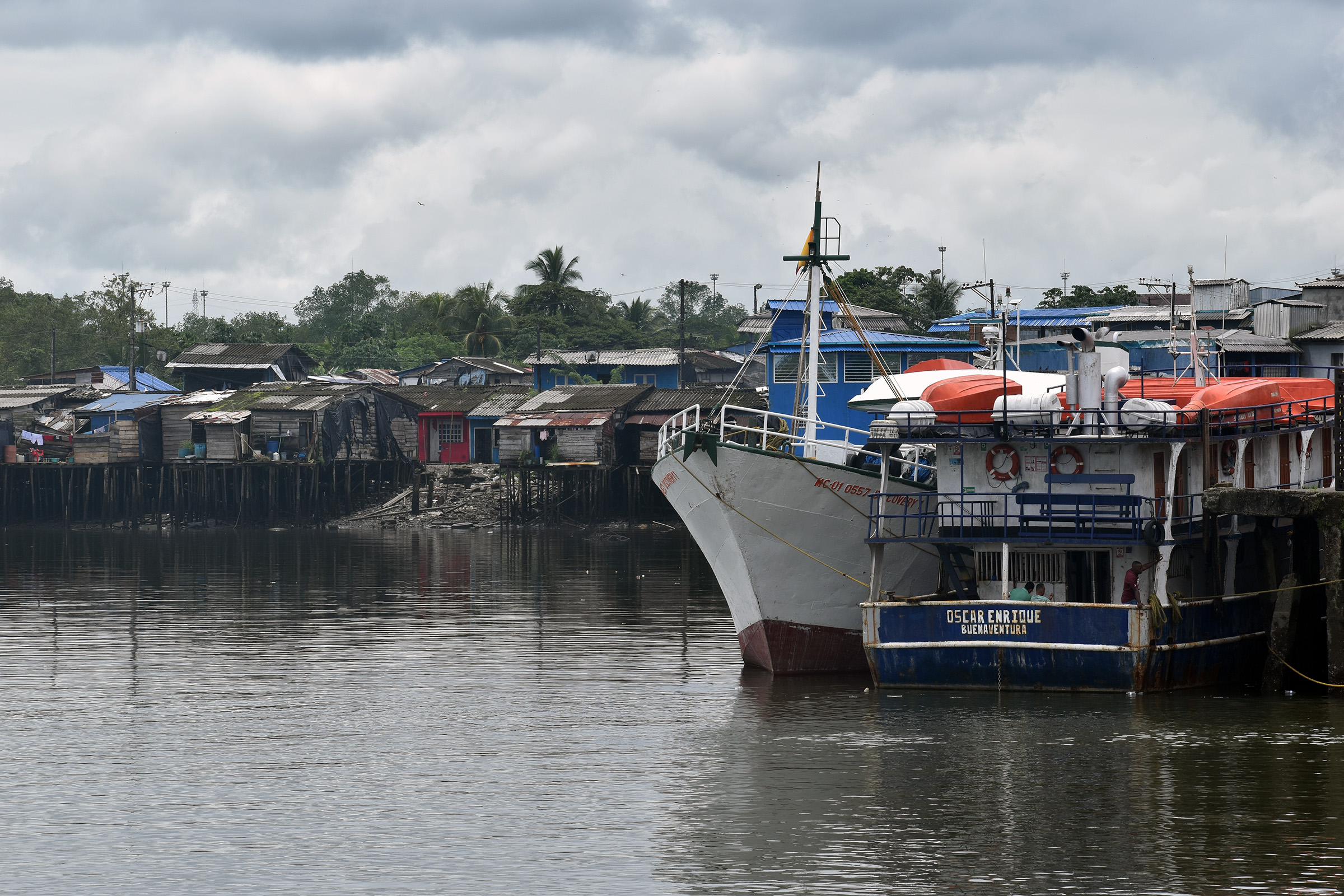
The few international organisations present in Buenaventura, as well as local community aid groups, said the few migrants they were able to talk to were heading to Medellín. From there, most either intended to continue north towards Venezuela or to head further south to Ecuador, Peru, or Chile. Some hoped to stay in Colombia.
According to the Buenaventura Ombudsman's office, the city registered the arrival of 3,400 migrants from different places in 2025, but it stressed that the number is likely underreported and that those who were returning were even harder to track.
“These are just the people we know about,” said Jesus Alberto Sandoval, a representative for the Ombudsman’s office. “Many of the people arriving are doing so invisibly.”
Migrants often don't bother checking in with authorities or the few aid groups that still maintain a presence in the region because they know that asking for aid is useless, Sandoval explained. “The cuts to USAID and the severe drop in numbers of those headed north meant the NGOs all left,” he said.
Some private civil groups have worked with the municipal government to create a mesa de ayuda (board of aid), but several volunteers told The New Humanitarian they don’t have the resources to provide concrete services to migrants.
Buenaventura is also contested territory between several of the warring groups in Colombia’s armed conflict – unlike the Darién region on the Atlantic coast, which is firmly controlled by one armed group – and there was an uptick in violence last year, making it even more dangerous for migrants.
Local NGOs, the UN’s refugee agency (UNHCR), and city officials told The New Humanitarian that migrants warned each other of the dangers in the city. As a result, people who arrive head directly to the bus terminal to leave for other destinations.
Vanishing in the jungle
The route through the Darién was treacherous, but, after a time, it settled into a semi-formalised system that allowed people migrating, the authorities on both sides, and aid groups to know what to expect. In comparison, the new Pacific route was entirely unpredictable.
“In the Darién, [people] knew that there are checkpoints where they have to pay to continue, but here they can be extorted at any time, which further depletes their resources,” said Alba, from Action Against Hunger.
Alba said boats aren’t necessarily managed by smugglers. Often, local boat captains carrying goods from one town to the next take advantage of the migrants, offering to take them for a price. “In Jaqué, I heard they even charged migrants five dollars to bring them to shore, and if they didn't pay they could leave them in the open sea,” he added.
Some migrants were abandoned on beaches in the north of Colombia by unscrupulous boat captains.
“When they reach Juradó, many people get lost. There is a strong presence of armed groups. It’s not something people talk about, but in conversations with officials they say there’s a mafia element involved in the transportation of migrants.”
Simon Tomasi, regional manager for Latin America and the Caribbean at the Mixed Migration Centre (MMC), told The New Humanitarian that his team had run into a few migrants in Medellín, Colombia who had taken the Pacific route. “They spoke of extortion and physical violence from the smugglers,” he said.
“We have also heard that some people were disembarked in random beaches last year, and there are even rumours of smugglers who pushed migrants into the sea when there was a risk of control by the coastguards. They were left to die,” he added.
Other aid workers said they knew of migrants who had reached Medellín from Juradó and Bahía Solano via dangerous overland jungle routes that are used for drug trafficking. They feared many others had disappeared taking those paths.
“When they reach Juradó, many people get lost,” said one aid worker, who asked for his name not to be disclosed for safety reasons. “There is a strong presence of armed groups. It’s not something people talk about, but in conversations with officials they say there’s a mafia element involved in the transportation of migrants.”
“While the Pacific maritime route is less dangerous than the Darién in terms of terrain, migrants arriving to the Chocó region aren’t familiar with Colombian conflict dynamics,” said David Felipe García Herrera, a press officer with the Norwegian Refugee Council (NRC) in Colombia. That, he added, makes them vulnerable to exploitation by armed groups in the region.
Warnings, and a lesson
Mosquera, the priest in Juradó, believes the number of people taking the Pacific route dropped off because people who took it warned others coming behind of the difficulties. “The networks migrants use to communicate, such as on social media or in WhatsApp groups, have disseminated how difficult this path is,” he explained.
The Panamanian government also started formalising the Caribbean route that goes from Colón and nearby towns, such as Miramar, to Colombian villages, including Acandí, Capurganá, and Necoclí. These towns are known to migrants as they were points of departure to the Darién Gap on their way to the US. Mosquera also believes US attempts to criminalise migration have rippled through the region as Trump continues pressuring Latin American countries to crack down on informal routes.
One boat captain in Juradó, who asked to be identified only as Frasier, explained that US strikes on alleged drug-smuggling boats in the Pacific ocean near Juradó also disrupted the route, as well as deep sea fishing. “No one wants to go to Panama or too far out [from the coast],” he said. The boat strikes, which began in September and have now claimed a reported 185 lives both in the Pacific and the Caribbean Sea, amount to extrajudicial killings, according to legal experts and rights activists.
For Alba, there are several lessons to take from the surge and decline of this route. “It demonstrates the instability of migration flows and the necessity of strengthening infrastructure, institutions, and monitoring capacities to prevent humanitarian consequences for migrants and local populations,” he said. “This is especially important given the current volatility of migration dynamics due to geopolitical changes.”
Reporting for this article was supported by the Fund for Investigative Journalism.
Edited by Daniela Mohor and Eric Reidy.


