

Share & more
To many people, the Sudanese city of El Fasher – where I was born, raised, and spent my professional working life – is now a place synonymous with hunger and death.
For 500 devastating days beginning in May 2024 it was besieged by the Rapid Support Forces (RSF), the paramilitary group battling Sudan’s army. Cut off from food and basic necessities, we endured months of crippling hunger.
Then, on 26 October 2025, the worst-case scenario unfolded. The city’s defences fell, and RSF fighters burst through. They began a campaign of slaughter that ended with thousands, if not tens of thousands of deaths, and vast numbers taken captive.
A year on from those crimes – which UN investigators have called genocide – the catastrophe is still far greater than I can comprehend. This is the first time I have written about it since 26 October, and I am certain that I have not yet processed things.
What is clear is that I cannot reduce what happened to a story about resilience or the ability to begin again. That is because behind these words are people who were killed, families that were separated, and those whose situation remains unknown.
After a year of waiting I have many friends whose fate I have not learned about. They are people I used to speak with constantly until news suddenly stopped. Whenever I open my phone, I still hope to find a message or a call that will end this suffering.
The situation is the same for almost all of the hundreds of thousands of people who lived in El Fasher, and who have now dispersed across different villages, cities, and countries. They are all seeking to find out whether their loved ones are still alive.
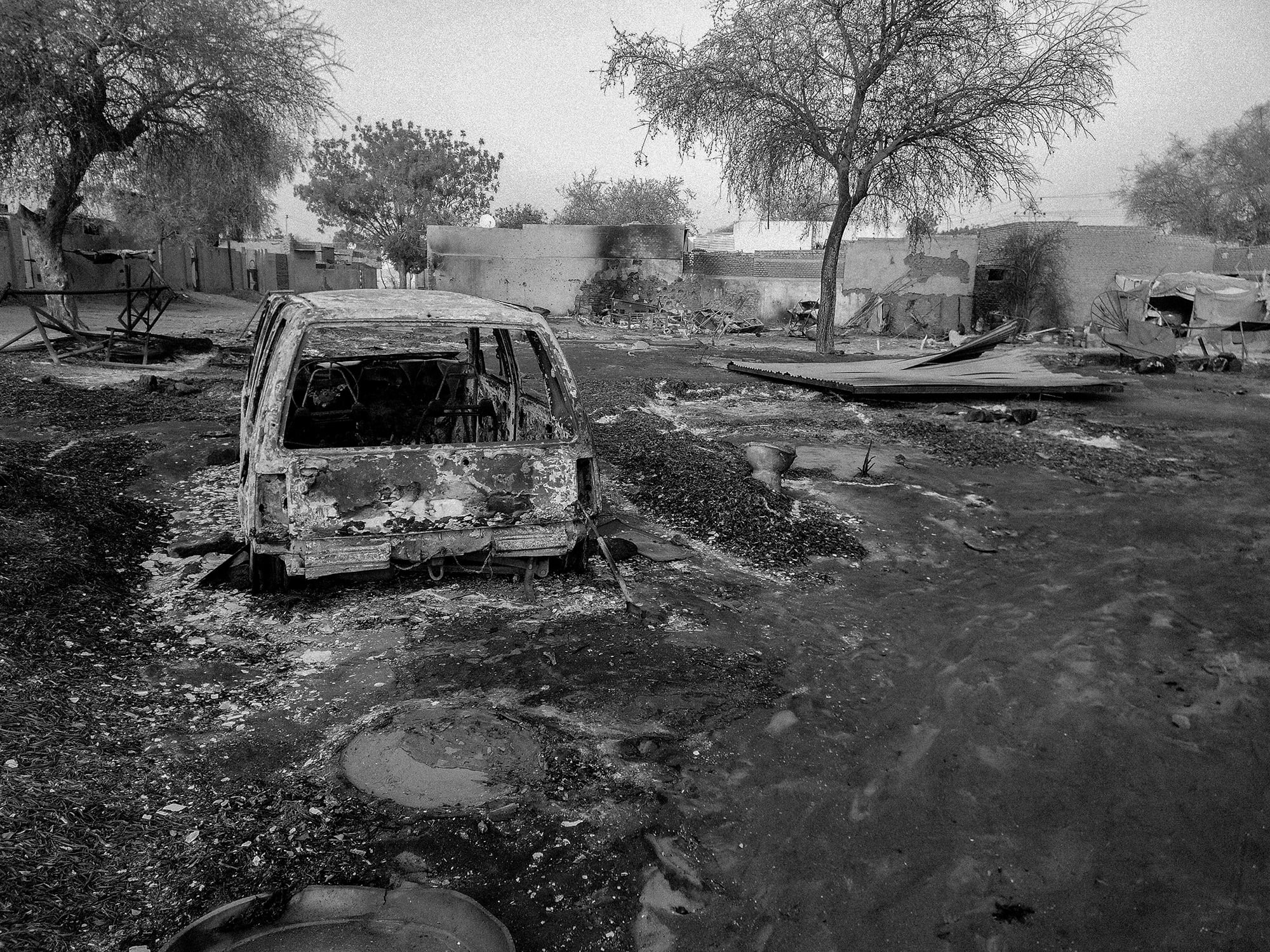
Meanwhile, the situation inside RSF-held El Fasher for the roughly 70,000 people remaining is deplorable. According to reports we receive, they are facing hunger, disease, harassment, and death. There are few aid organisations helping them.
At the same time, however, I have come to see a complex truth: that as much as we must fight to preserve the memory of what happened and ensure the horrors are not erased, we must also fight against the idea that this is all El Fasher was, or ever will be.
Though I endured and documented much of the RSF siege as a journalist, my El Fasher remains a place of immense social and cultural richness, not just a place where massacres took place.
Before we were forced to leave, the city was set apart by its social diversity, which made it resemble a miniature Sudan. It was a city of interconnected worlds, with people from all over the country.
Despite that diversity, everybody lived in familiarity and harmony. People loved one another and shared in each other's joys and sorrows. They held social life so sacred, that the entire city was like one family.
Cassette tapes and a hotel home
The capital of North Darfur state, El Fasher has a deep history. For hundreds of years it was a centre of political power and Islamic scholarship under the Darfur Sultanate. It was a place where the Kiswa, the cloth that covers the Kaaba in Mecca, was made.
When I think about El Fasher, though, I most often go back to my youth and the precious time spent with my late father, may God have mercy on him, who was a prominent figure in the city.
My father’s friends were a microcosm of Sudan as a whole, coming from all over the country. Tribal identity meant little to them – father’s friends had no idea what tribe he was from despite knowing him for decades.
Our was a microcosm of Sudan too – a de facto hotel, where people from all over the country would come and stay. Sometimes we hosted people we didn’t even know. They were just strangers who needed a place to stay for two to three nights.
It was my father’s kindness that meant our house was used this way, but also the long tradition of solidarity and hospitality that people show in Darfur, especially to strangers and travellers.
Outside our house, my father established the first cassette-recording and distribution business in Darfur, which he founded in 1979. It was a destination for people engaged in art and culture, and became something of a landmark throughout Darfur.

Famous singers from Sudan would send their cassettes to my father to copy and distribute. He built a massive library, and from a young age I would run there as soon as I finished school, joining visitors drinking tea and chattering away.
For my university studies, I moved from El Fasher to the capital, Khartoum, where I studied computer science and information technology. It was a field that my father had instilled an interest for in me.
Throughout my studies though, I would wait for the holiday period with a longing that nothing could ease except returning to my city and to the community that I loved and that loved me back.
After graduating, I chose to return and work in El Fasher. My exposure to music had given me an interest in art, and from there photography and filmmaking. I wanted to use them positively in a way that would contribute to peacebuilding in Darfur.
I helped establish a company that contributed to enriching Darfur’s digital landscape through trips to villages and displacement camps in cities across Darfur. We formed a network of young people interested in the same field.
Sadly, God decreed that my father would pass away, and, as the eldest son, the responsibility for managing his business fell upon my shoulders. By this stage the business had evolved from music distribution into printing and stationery.
My photography work started to take backstage as family responsibilities increased, but my love for El Fasher was a constant. Nothing the RSF did last year can take that away from me.
Surviving the siege
As important as it is to tell these personal stories of El Fasher before the war, we cannot shy away from the reality of what befell it last year at the hands of the RSF, which is supported heavily by the United Arab Emirates.
Sometimes, I fail to find the right words for what I experienced. After all, I am chronicling events not just as a witness, but as a victim. I lived through the conditions I was documenting, watching my city change each day, and my family and friends dying.
The tragedy began when the war between the army and the RSF started in April 2023. I woke up as I would on any ordinary day, drove my mother to her office at the ministry of education, and then headed to the printing shop.
As I arrived at my office, I heard the sound of gunfire, and people running in every direction. Initially, I did not pay much attention as we are accustomed to this kind of event, but as news spread of other clashes in Khartoum, we realised that it was war.
Our neighbourhood was located near a camp belonging to the RSF, so my mother, my siblings and I decided to move to my aunt’s house, which is located in the centre of the city.
Tragically, on the fourth day of the war, the house was struck by three bombs while many of my family, friends, and neighbours were inside. Five were killed and 15 injured, including myself and my younger brother.
At that point, I decided that I had to document everything that was happening. I took my camera, dusted it off, and began a new chapter. My love for this place and its people was my primary motivation.
As the RSF began taking over all of Darfur, El Fasher became one of the last cities standing. Army soldiers, local armed groups, and ordinary residents who took up arms fought hard to prevent the group from taking over.
In response, the paramilitary force encircled the city and subjected it to a long and punishing siege. Residents were left eating animal feed to survive and doctors began operating in underground shipping containers to escape shelling.
I evacuated my family and everyone I could to safe areas, such as neighbouring Chad, which my mother chose as her destination, and Kosti, the city in southern-central Sudan where my aunt’s family decided to go.
But I remained behind, volunteering at times alongside doctors to treat the wounded, and at other times documenting what was happening to the city. On many days, I was simply trying to survive.
Soon, I became the last person in my neighbourhood alongside a dear friend. During those dark days, he was my only companion. I would go to his house for breakfast each morning and stay through the day, drinking coffee and talking.
Our company helped us endure the isolation, but it could do nothing to stop the shelling from intensifying or the thieves who came at night to loot what remained in the homes of those who had fled.
The situation continued for many months, until I too decided to leave. It was the decision I consider the most difficult I have made in my life: leaving my homeland, while my friends and family faced RSF shells, which claimed their lives every day.
I arrived in Uganda after a journey fraught with danger that lasted 21 days and was marked by interrogations, detention and demands for ransom by the RSF. But it was not more difficult than the situation of my friends and family who stayed.
Some chose to work in community kitchens to provide food, and others volunteered with doctors. Still more took up arms to defend the city and make sure this pure place would not disappear.
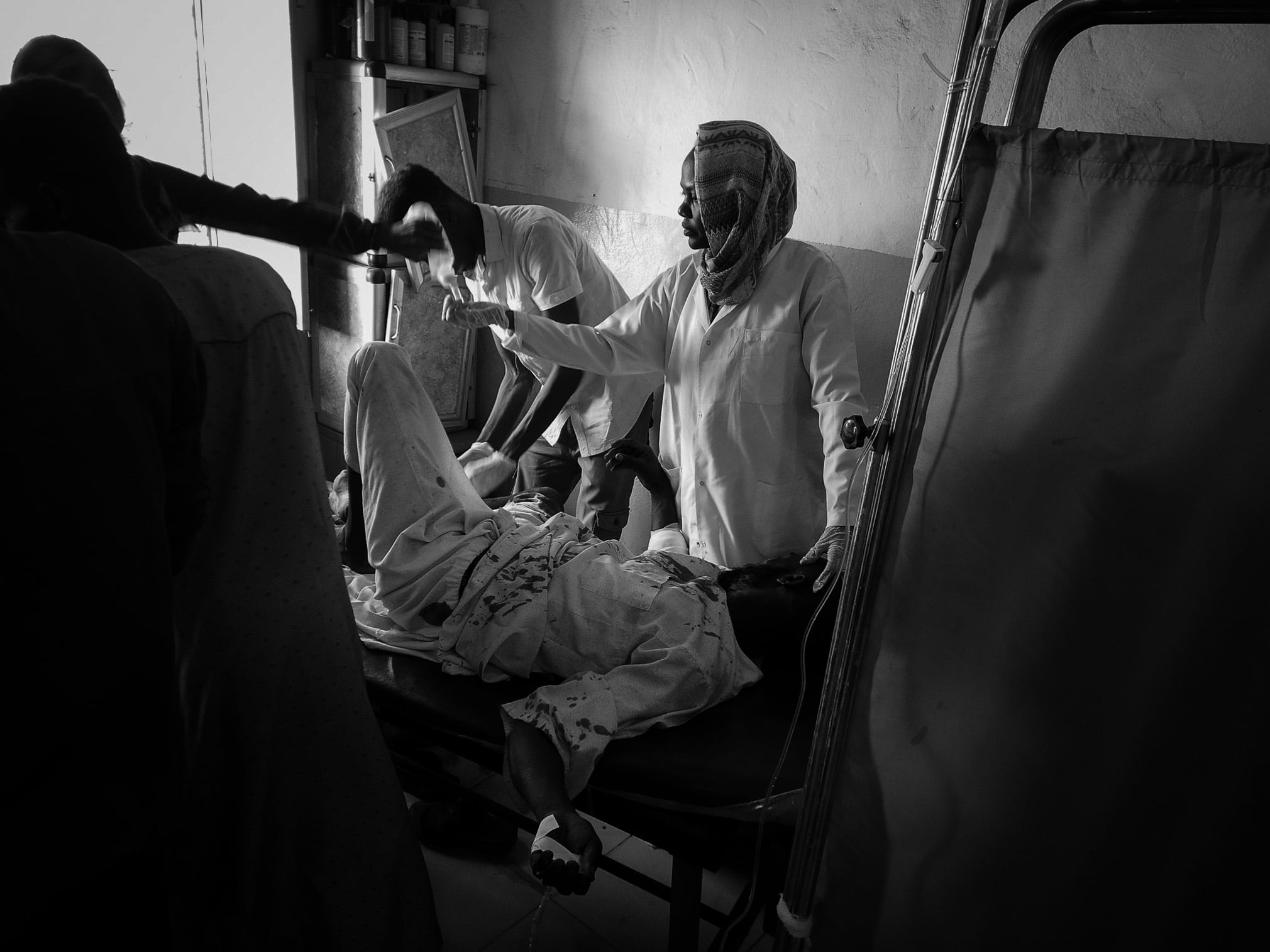
Between hope and fear
From Uganda, I remained closely connected to the situation, following what was happening hour by hour. I received bad news day after day, until I could barely remember who had died and who had remained alive.
Ahead of the invasion on 26 October, the RSF had been building trenches around the city to prevent people from escaping. When they finally took control, these berms became death traps.
RSF fighters filmed themselves carrying out hideous atrocities, and news quickly spread of thousands of civilians being kidnapped for ransom. Those who couldn’t pay were killed.
For those outside of El Fasher, the earth had closed in on us and turned into hell. We became addicts whose drug was hearing news about our families. We were searching for anything that could confirm their whereabouts.
Some news was good. I had a friend who worked as a doctor at the only hospital that stood firm throughout the siege. After a week, I received messages from him on an unknown number. He told me he had miraculously escaped and was hiding in a village.
My paternal uncle who had also remained in El Fasher throughout was missing for many days, but after a long period of anxiety, I learned that he was safe. He had walked tens of kilometres on foot until exhaustion and illness overcame him
Absence in this form does not give you a clear ending. It leaves you suspended between hope and fear, unable to accept the worst possibilities or to stop waiting for new information.
I have not, however, heard from my dear friend who stayed with me in our neighbourhood. One of his relatives said an RSF fighter had called from his phone demanding a ransom. They agreed to pay, but the phone was soon switched off and could not be reached again.
A whole year has now passed, and I am still longing for news about him – even news of his death, so that I may be able to mourn. So many of my friends are going through the same process.
Absence in this form does not give you a clear ending. It leaves you suspended between hope and fear, unable to accept the worst possibilities or to stop waiting for new information.
I am also thinking every day about the journalist Muammar Ibrahim. He was arrested on the day El Fasher fell and transferred to prison in Nyala, in South Darfur. I had spoken with him three days earlier, and did not imagine it would be our last conversation.
Last week, I received news that Muammar's health had deteriorated, and his life was in danger. It is difficult for me to comprehend this. How can a journalist reporting the suffering of his people become a prisoner and be thrown behind bars?
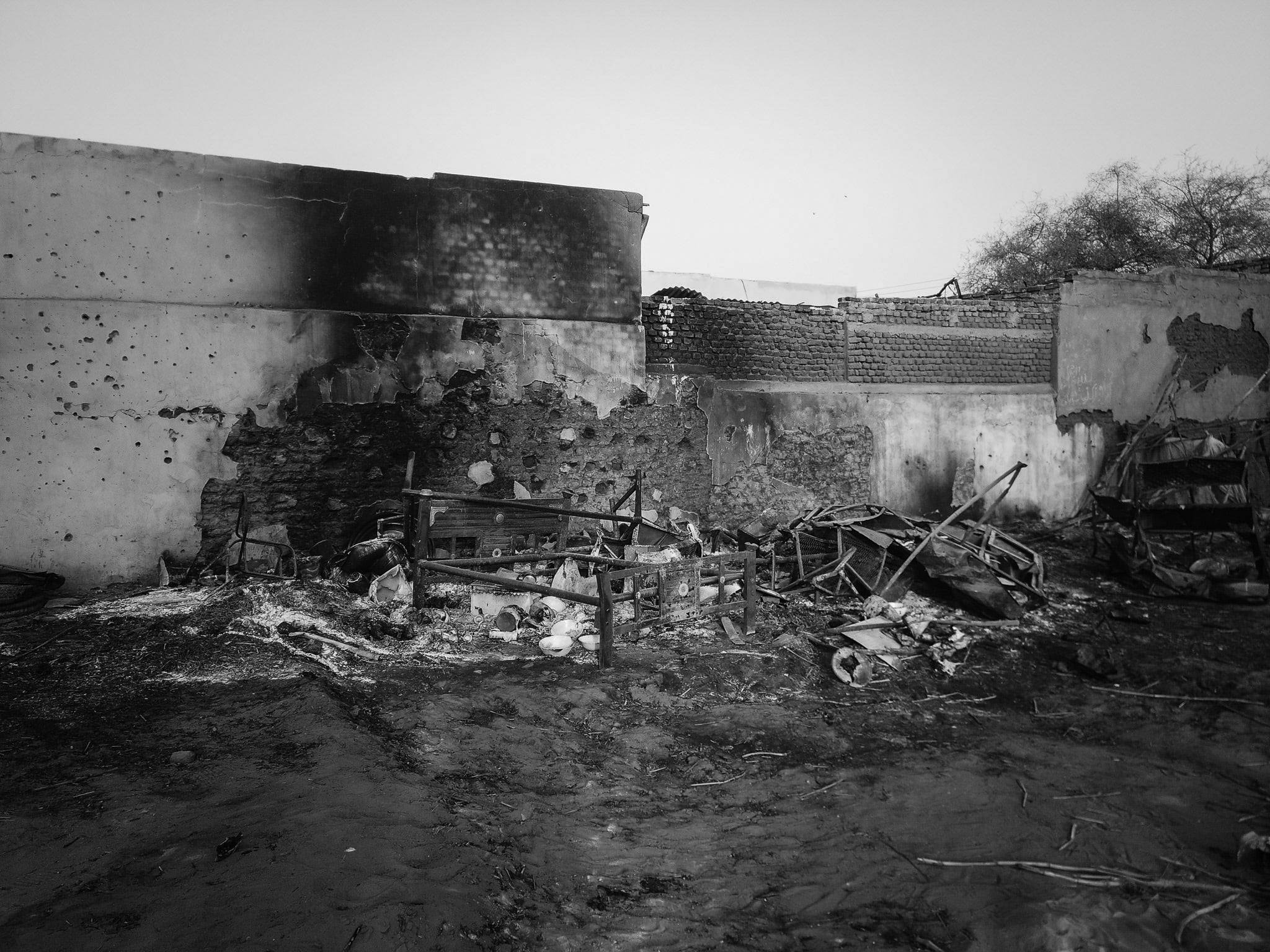
An irreplaceable city
For the tens of thousands of people still trapped inside El Fasher, getting reliable information about what they are facing remains painfully difficult. They don’t have access to the internet or the satellite-based Starlink network.
What we do know is that those who remain live under constant RSF surveillance, and that some have been killed by fighters. Others have been made to work for the RSF uncompensated, either collecting dead bodies or cooking for fighters.
Although a small number of aid organisations have been operating in the city in recent weeks, according to Amnesty International their freedom to operate is severely restricted.
Humanitarian assistance has been largely denied to El Fasher since the siege began in 2024. Aid groups can provide relief to displaced people in Tawila, to the west of the city, but have been unable to reach those who have endured so much for so long.
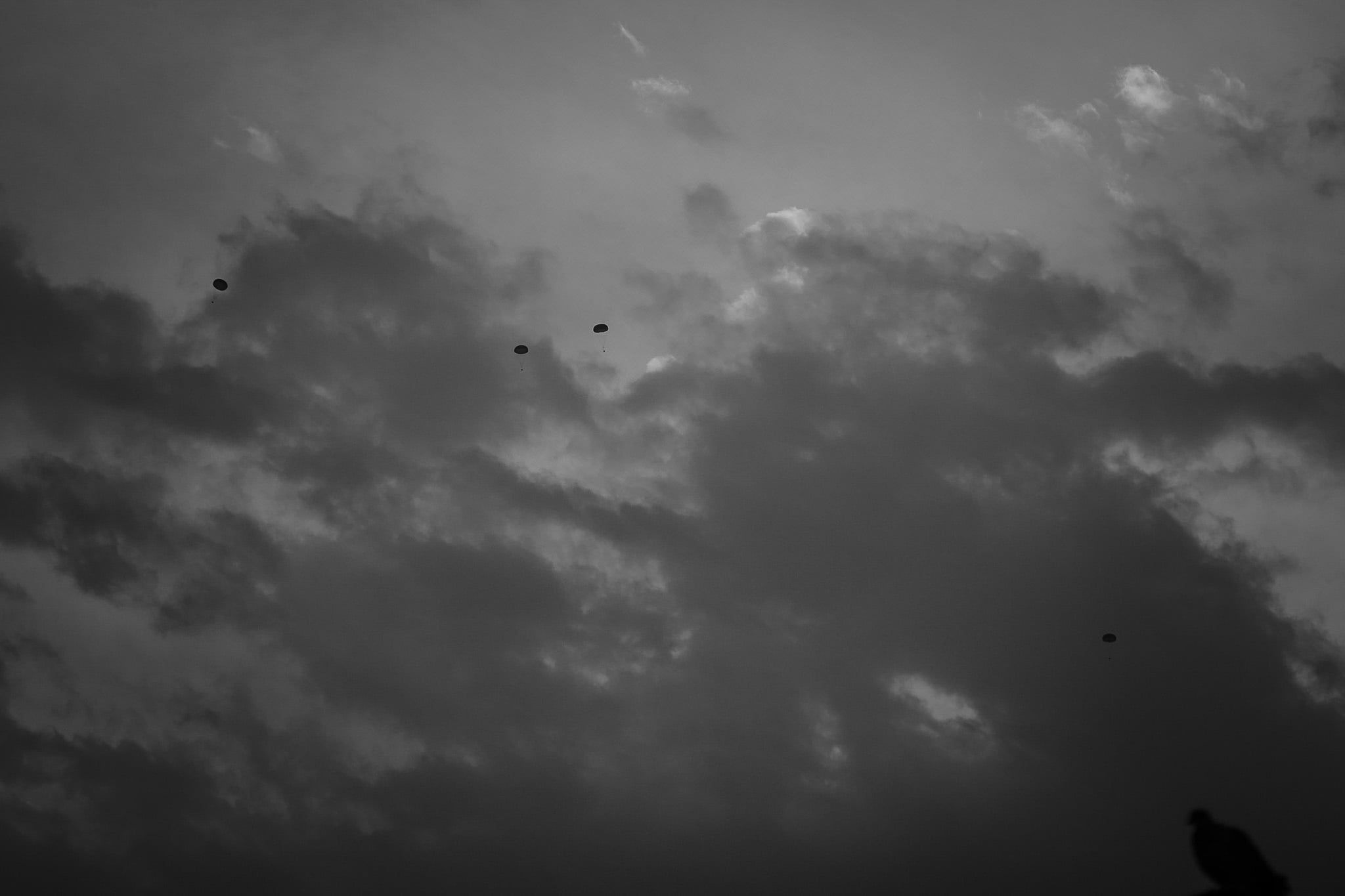
I do not know when I will return to El Fasher, nor what awaits me there if I do go back. All I know is that a big part of me remains inside the city and that it is not a place that can be replaced by anywhere else.
For those uprooted and scattered, as time passes, communication between us decreases. This is not because we have forgotten one another, but because each person is trying to find their way forward.
For a long time after the fall of El Fasher, I felt unable to work or write. The subject is deeply personal to me and cannot be separated from my identity, my family, and my friends.
In the end I had to continue documenting what was happening because writing and photography are the only forms of resistance I know. They are the only way I know how to keep people’s names and stories present in a world that moves on quickly.
But there are absences of friends and family that my writing and images cannot provide answers for. We are continuing to live but it does not mean that our loss and grief has become any easier to carry.


