


Share & more
I am a Palestinian mother and journalist, 36 years old. I write these words from the heart of hunger and fear in the devastated Gaza Strip. Since this war began on 7 October 2023, we have not lived like human beings. All we do is try to survive, day-by-day, hour-by-hour. Nothing is certain – not food, not water, not safety. Even tomorrow is not guaranteed.
Since Israel launched its new military operation earlier this week, whatever hopes we still had of this war ending have been crushed. Despite ongoing ceasefire negotiations in Qatar, Israel is intensely bombing and carrying out ground incursions in both the north and south of the Strip. We feel like we are trapped in a never-ending nightmare where our lives and our children’s dreams are being stolen before our eyes, while the world remains silent.
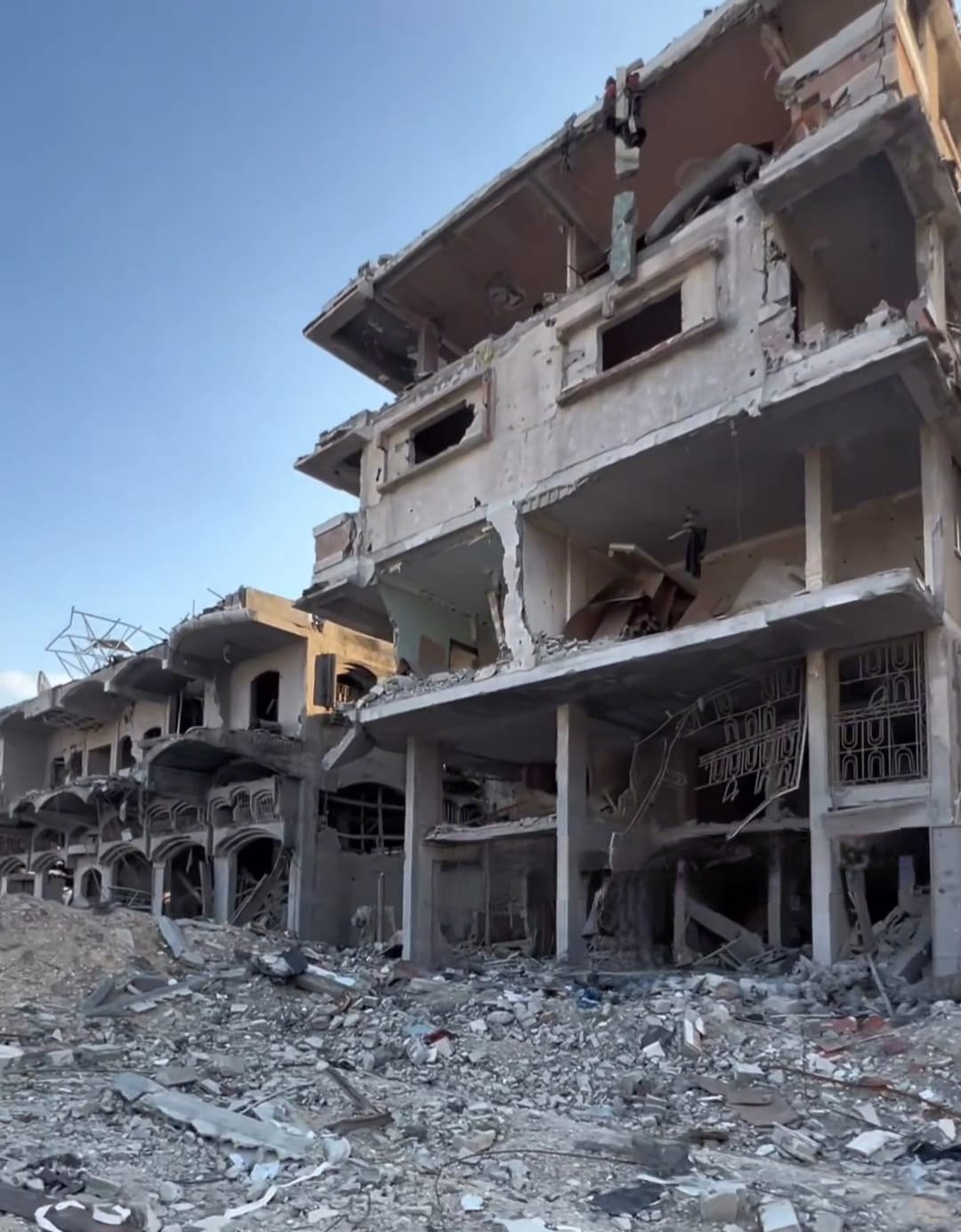
Together with my husband and our five children, I live in what is left of our crumbling home in a neighbourhood in the west of Gaza City. The building our apartment was in belongs to my extended family. Before the war, we had three bedrooms, two living rooms, and a beautiful kitchen where I enjoyed my hobby of cooking and making delicious desserts. In November 2023, the building was struck by Israeli bombing, completely destroying our apartment and making the building structurally unsound.
Today, I live on the ground floor of the building, haunted by the constant fear of it suddenly collapsing. But we have nowhere else to go. There is no safe place, no alternative housing available for us to take refuge in.
Every day, we hear the bombing around us, and I try not to break down in front of the children so they can stay strong. But even if we survive the bombing, I don’t know if we’ll survive the hunger. We haven’t tasted a piece of meat since the beginning of March, when Israel decided to halt the entry of goods and aid into Gaza following its decision to end the ceasefire it had agreed to with Hamas in January.
Not a single apple or banana has entered our home. Bread has completely disappeared from our lives after all the bakeries in Gaza shut their doors. It’s been almost a month since the UN agency for Palestine refugees, UNRWA, announced that its stockpile of flour had run out. To feed our children, we have had no option other than grinding leftover pasta we had stockpiled into a kind of flour. We turn it into something resembling bread and eat only one meal a day.
This week, Israel allowed the first aid trucks to enter Gaza in nearly three months. But the number is so few – nowhere close to enough to meet the desperate needs of people here. And none of this aid has actually reached Palestinians yet. The entry of this aid is also a prelude to Israel’s plan to take control of aid distribution in Gaza and turn it into a tool of political and military control.
My children ask me: “Mama, why is this happening to us?” And I have no answer. I can’t find words to ease their suffering, because I myself don’t understand how we are being punished this harshly just for living here, just for being Palestinian.
Chasing water
Sometimes at night, as we huddle together under a thin blanket inside our home, one of my children is jolted awake by the sound of a drone passing overhead or a nearby explosion. I quickly pull them into my arms, whispering that everything is okay, while my heart races with fear. Inside, I scream. But I cannot show it. I am a mother, and I am supposed to be the source of reassurance – even in hell.
Every day, we spend several hours searching for water. My children run after water trucks with empty containers – just so we can drink. Sometimes they succeed in filling them, and other times they come back empty-handed.
I tell them, “See you later.” But my heart whispers, “Maybe I won’t come back.”
I wash my children’s clothes by hand, piece by piece, and hang them on a rope between two wooden poles planted in the sand near the house. When strong winds blow, some clothes fly away, and I run after them. Everything here requires double the effort just to appear normal – and nothing in this life is normal.
Amid all these heavy responsibilities, I carry another one: being a journalist writing for many international media outlets, since Israel refuses to allow foreign journalists into Gaza.
Every morning, I say goodbye to my children as I head out to cover a new story. I tell them, “See you later.” But my heart whispers, “Maybe I won’t come back.” I kiss them, hug them tightly, and walk away carrying my small bag that holds a notebook, pen, phone, and sometimes a piece of dry bread.
I find myself faced with two painful choices: to stay by my children’s side and try to protect them amid escalating bombings, or to go out and work because a new massacre needs to be documented or a testimony must be relayed. I wonder what I should be in this war – a mother or a journalist?
Holding on to memories
Before 7 October 2023, my life – though difficult – was more stable. Al-Nasr, the neighbourhood where we live, was a lively working-class area full of life, despite the poverty and blockade Israel has imposed on Gaza since 2007.
Every morning, I would wake up to the sound of my children getting ready for school. I prepared breakfast for them and made sure to kiss each of them before they left. Then, I began my day as a journalist. Sometimes I went out to cover a community event, to interview a mother who lost her child to cancer, or to write a report about the electricity crisis or the rising cost of living. But I always returned home in the evening, cooked dinner for my kids with my own hands, and helped them with their schoolwork.
Today, my neighbourhood has been reduced to rubble, and I no longer know what happened to my neighbours. Life here has turned into a battle for survival.
At times, I felt tired trying to balance my roles as a mother and a journalist, but I never felt torn. I could choose the right time for each role. Journalism, to me, was a way to defend my children, my community, and the truth – without feeling, in every moment, that I was putting my life on the line, as I do now during the war. Today, all journalists feel they are under threat of being killed in Israeli airstrikes.
Before the war, my community was simple and close-knit. Neighbours shared homemade meals as a gesture of goodwill, and I would often meet with other women in a small courtyard in the middle of the neighbourhood. We talked about rising prices or someone’s wedding. There was life. There was a sense of relative safety, and a belief that tomorrow, despite all the challenges, was still possible. But today, my neighbourhood has been reduced to rubble, and I no longer know what happened to my neighbours. Life here has turned into a battle for survival. Everything has changed, but I hold on to the memories – they are the only things that remind me we once lived like other people.
A narrow escape
Now, we have not had electricity for over a year and a half. No refrigerator, no washing machine, no light. I can only charge my phone if I find someone who owns a small solar panel. That’s why I walk about two kilometres every day to reach one of the few places that still have internet and solar-powered electricity, so I can charge my phone and laptop and do my work as a journalist.
The “Thai Restaurant” in western Gaza City was one of these places. It got its name from a dish of Thai-style fried chicken breast and vegetables that it was famous for serving before the war. The restaurant, which had reopened during the ceasefire, was one of the last ones still operating in Gaza, resisting the return of siege and war. It only served a few slices of pizza and hot drinks, but to me, it was a haven for work and connection. I would go there at least twice a week. The last time was on 5 May.
Two days later, Israeli warplanes bombed this restaurant and a nearby local market. At least 33 people were killed in the attack, and around 100 others were injured. When I heard the news, I was at home. I froze in place. I thanked God over and over that I wasn’t there that day. Had I been, I would be dead now – just like the dozens who were simply trying to live.
Amid all of this, I continue to work. I write about mothers who have lost their children, about children selling sweets on the streets instead of going to school, about hunger, cold, and the harsh displacement that has stripped people of their dignity. But I do not only write about them – I write about myself too. I am one of them. I am a mother who has lost the ability to comfort her children. A journalist who has lost faith that her voice will reach a world that refuses to see.
Every night, I go to sleep wondering if I will wake up. And every morning, I tell myself: I must write. I must document. Because my story, and the story of my children, and the story of every mother here, deserves to be told.
Edited by Eric Reidy.


