

Share & more
There’s a sardonic expression you often hear from displaced Sudanese people trying to find a new home after the war: “Ma fadl ela nater al gamar”, translating roughly to “The only thing left is for us to fly to (or reside on) on the moon”.
Tougher global visa rules for Sudanese, among many other nationalities, have isolated those trying to start over after escaping the war between the Sudanese army and the paramilitary-turned-rebel Rapid Support Forces.
In the last three years, Sudanese passport holders have been banned from entering the US, students have been prohibited from studying in the UK, and Australia’s parliament has passed legislation that grants the government power to block visas.
Life has been tough too in the neighbouring countries where the majority of Sudanese refugees live: Egypt has deported tens of thousands of Sudanese, while Ethiopian visa rules have left Sudanese there imprisoned and impoverished.
Other countries further afield such as Vietnam and the United Arab Emirates have also intermittently been suspending the issuance of visas for Sudanese nationals.
Put together, these physical restrictions raise a moral question: Who is granted immediate access to movement around the world, and who must continuously prove their right to belong?
We grew up believing that colonialism divided the world into borders, but the reality is deeper. Neo-colonialism created entrenched mental divides that go beyond borders, dividing people into two groups: Who is allowed to belong on Earth and who isn’t.
The scholar Mimi Sheller describes this division as a “differential mobility regime”. It is a system designed by colonial histories that creates a global passport hierarchy, attaching unequal access to mobility and resources.
Who is granted immediate access to movement around the world, and who must continuously prove their right to belong?
For Sudanese, these hierarchies are not something abstract. There is a strange feeling that comes with holding a Sudanese passport. Pride in everything Sudan has made us to be. But grief that almost every basic human right becomes a fight.
To many, being Sudanese is a nationality. But to the Sudanese displaced by war, it has become a combination of denied visas, interrogations at airports, endless embassy visits, preposterous immigration fees, and the fear of deportation.
My experience of displacement since the war – described in the vignettes below – has been one of comparative advantage. It has been shaped by access to education and opportunities that many other Sudanese don’t have.
Yet it has also been defined by border controls and instability that have forced me to move from one country to the next. And along the way I have encountered endless stories that have made visible what Sudanese people are facing every day.
For personal and security reasons, I cannot share all of the details around my journey over the past three years, nor the reasons why I had to leave each location. But I can share below fragments and stories that left a huge impact on me.
They helped me understand what Ma fadl ela nater al gamar really means.
First stop – The US
My journey began in the US, where I decided to take a PhD offer. I was frustrated by the 2021 military coup in Sudan, which dismantled the efforts of the Sudanese revolution, and disturbed by warning signs of a possible war.
Those signs proved correct. In 2023, straight after accepting the offer, conflict broke out in Sudan, and I began my long journey of navigating displacement and the question of belonging.
For Sudanese students and professionals like myself, the US once represented a place of safety. Many made real sacrifices trying to secure a job or opportunity in the country when the war started.
Before getting a scholarship, a friend of mine, Ibrahim, learned English during heavy fighting, and amid electricity, water, and internet cuts. On the day he submitted his application he went onto the rooftop for the internet and almost got hit by a drone. Moving to the US, he said, was a “miracle”.
Yet today, the security of Sudanese in the US has been dramatically diminished, with travel bans and the threat of detention and raids by ICE agents that snatch people off the streets.
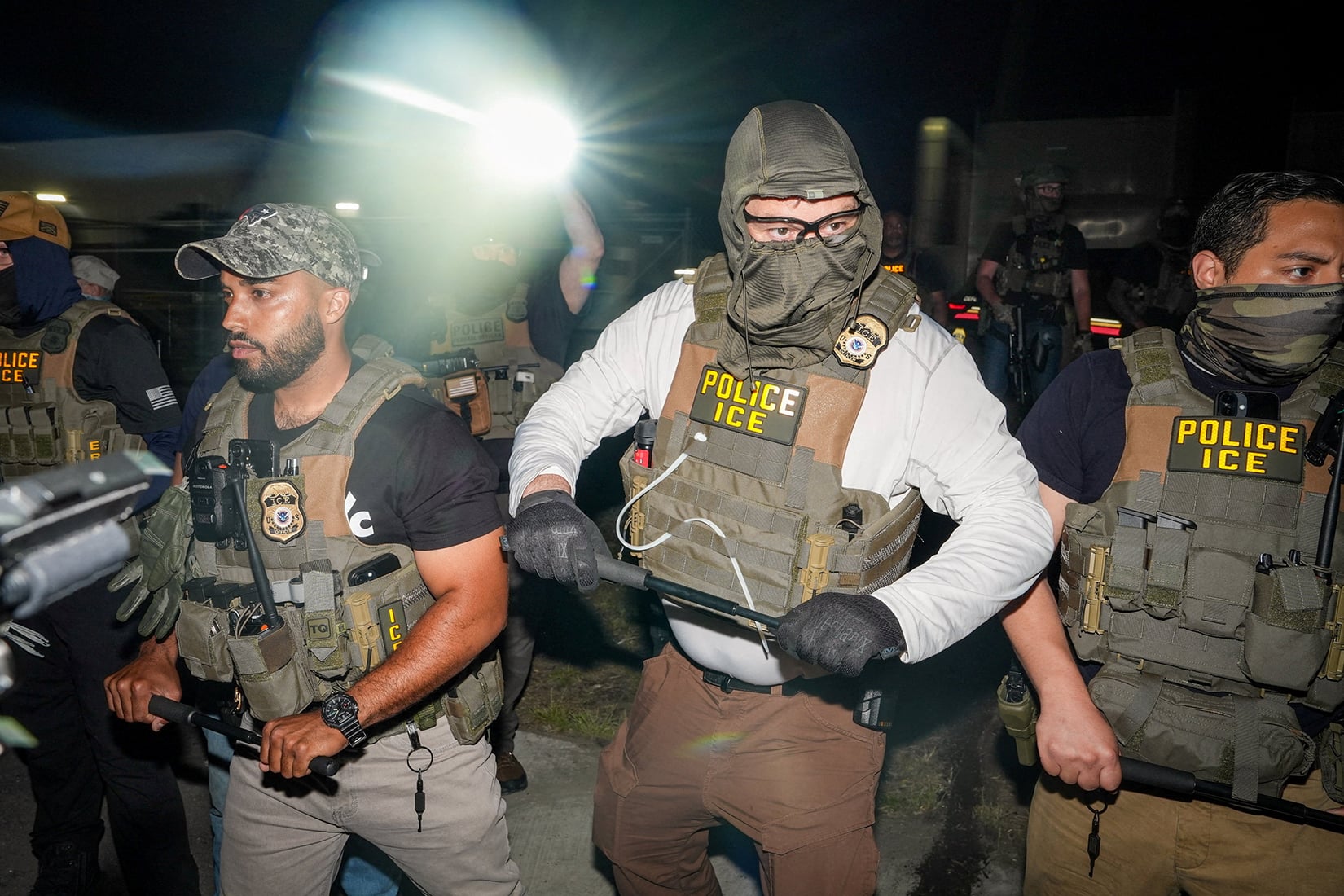
Living under Trump as a Sudanese international student, I found myself reducing my normal daily routines. I was hesitant to go to the gym, supermarket, or on simple walks. I would always share my location with friends in case something happened.
My fear only deepened after a Sudanese doctor in my social circle went missing for several weeks. We later found out that he had been detained by ICE agents and deported.
These stories became frequent and left me and many others reluctant to stay in the country. Many wanted to leave even if it meant being stateless and entering another period of uncertainty.
I had countless conversations with Sudanese academics, doctors, students, UN officials, and corporate professionals, who asked themselves if remaining in the US was worth living in fear and humiliation, with no ability to leave and re-enter.
Yet despite our rough circumstances, to complain, or to even consider leaving the US came with survivor’s guilt. To escape a war zone already makes you one of the lucky ones. When others have been denied the possibility of leaving, do those who escape have the right to complain or leave?
That question followed me to Egypt, my next destination.
Second stop – Egypt
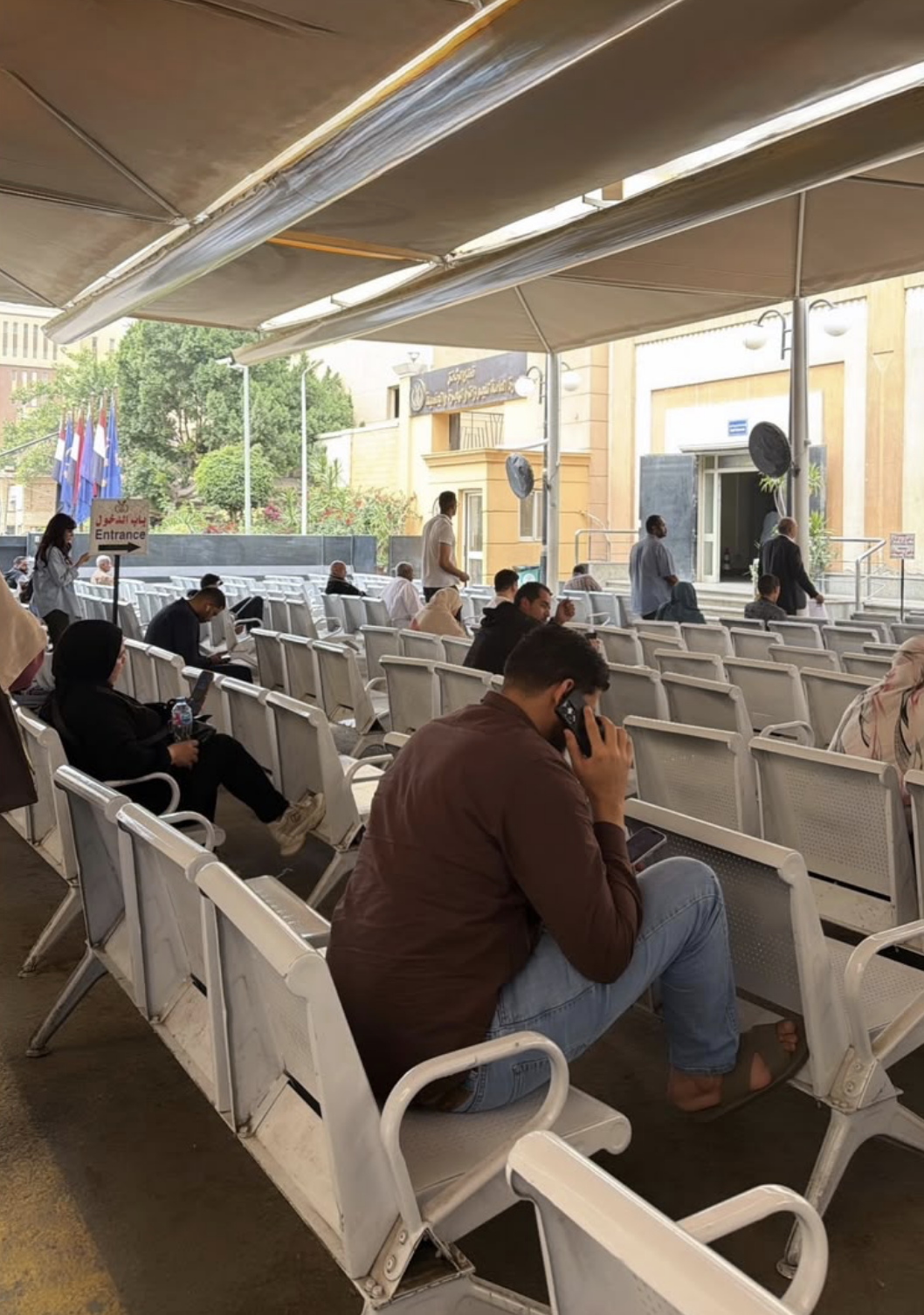
Egypt shares strong ties and a deeply connected history with Sudan. It is home to millions of Sudanese migrants and refugees, yet since the war it has not been a hospitable place.
Visas for Sudanese are so hard to get that many pay a bribe that can be as high as $3,000. Others use smugglers to enter, risking dangerous mountain passages and detention along borders.
Inside Egypt, many Sudanese lack valid residency permits, and are under constant threat of deportation. Tens of thousands have been ambushed in public spaces, homes, offices, and even at weddings. They are then sent back to Sudan, or kept in squalid detention centres, where dozens have died.
On one occasion, while anxiously waiting for my own temporary permit at the Abbasiya Immigration Office – every refugee’s nightmare – I helplessly witnessed innocent Sudanese refugees being detained and handcuffed.
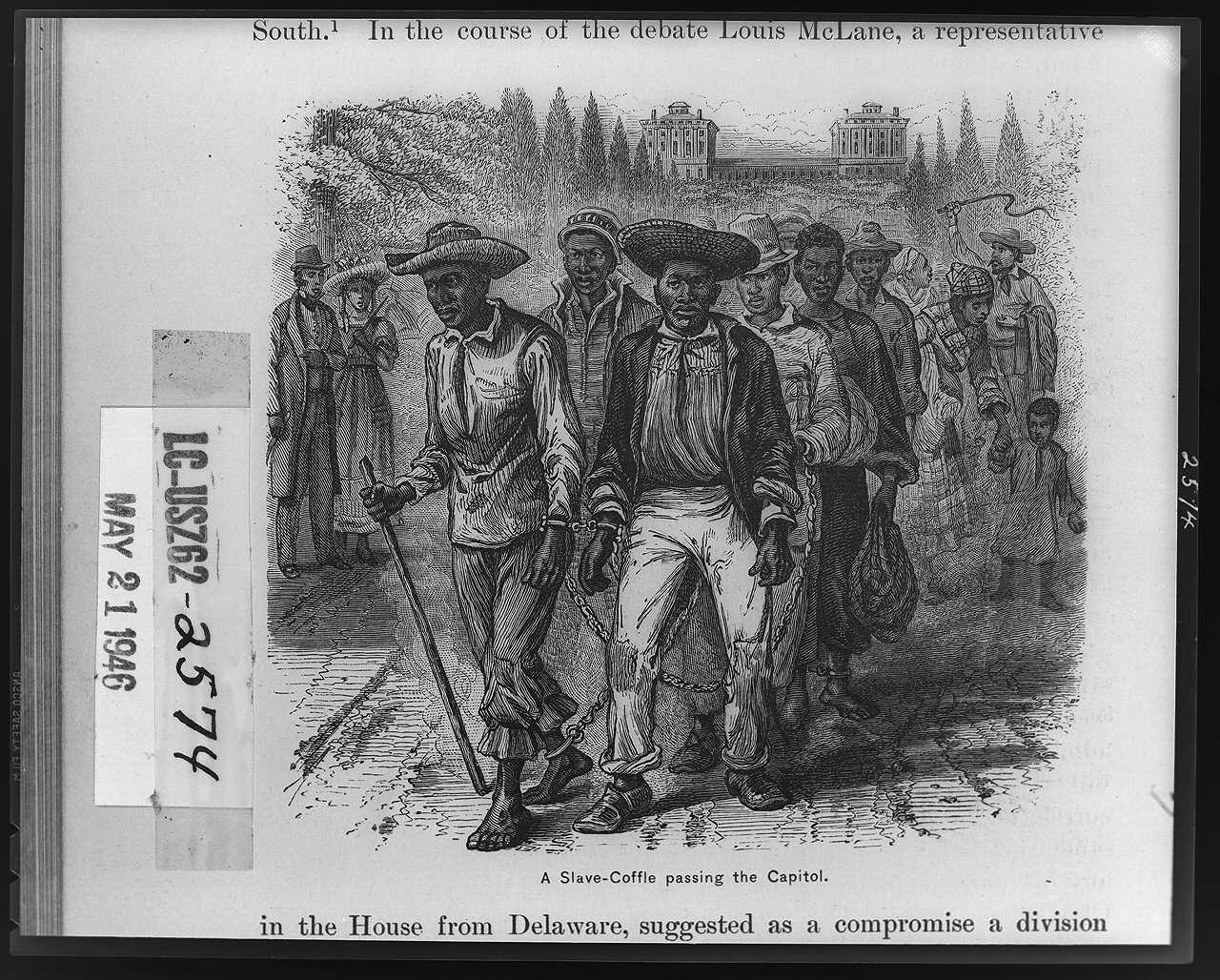
The rows of randomly selected men evoked the famous 19th century image, ‘A Slave-Coffle Passing the Capitol’. It shows enslaved Africans being marched in handcuffs and shackles, stripped of control over where they were being taken.
At the immigration office, I also witnessed a young Sudanese woman desperately begging for a fee waiver because she could not afford to pay another $25 to renew her permit. “I’m a refugee, what do I do!” she desperately yelled.
With frequent police raids, a rise in the death toll of detained Sudanese, an increase in anti-blackness, and restrictions on work permits, the common consensus I received from many Sudanese in Egypt was that it might be better to return home.
That was certainly the view of Ja'far, a 55-year-old displaced man. I met him at a Sudanese social gathering in Cairo where people would come together to discuss politics and trauma, and to conceptualise our new reality.
Ja’far used to work as a teacher in the Sudanese city of Kosti, where my father is originally from. Looking for answers for my own family, I asked him about his experience in Egypt. “I can’t survive here, and I can’t survive in Sudan,” he said. “So I would rather go back and get killed in my own soil and land.”
Once again though, there was survivor’s guilt to contend with. I recall having a conversation over the phone with Ahmed, a medical doctor in Darfur and my father’s friend. He told us he had not been able to see his wife and children in Egypt since the beginning of the war because of the unaffordable bribes.
A former neighbour of ours told me something similar: “My mother was sick and I could not afford paying for the bribe to enter Egypt,” she said. “Soon after, she passed away and I never got to say goodbye.”
Third stop – The UK
After Egypt, family ties brought me to the UK, the third stop in my search for somewhere to call home. Reconnecting with family and friends I had last seen in Sudan before the war was heavy. Reunions felt incomplete, missing the loved ones who never made it out alive.
Like many other countries, opportunities for Sudanese to rebuild in the UK were narrowing. It left me feeling pessimistic about a future there, and conscious that each day would become yet another fight to belong.
Most notably, last year the UK suspended one of the few available humanitarian pathways for Sudanese: refugee family reunion, which was available to the spouses and children under 18 of existing refugees.
A former colleague of mine, Osman, and his partner of 41 years, Zahra, were directly impacted. At the beginning of the war, Osman got stuck in the UK and had no option but to seek asylum. Zahra and the rest of the family remain in Egypt.
Previously the couple would have been covered by family reunion, but not any more. “These are the last years of life,” Osman told me one day over coffee. “They should be happy years together, but instead I am living it apart from my wife and kids.”
Tighter visa restrictions, meanwhile, began closing off educational opportunities for students looking to pursue education in the UK. This year, Chevening scholarships for high-accomplishing Sudanese students have all been revoked.
“These are the last years of life. They should be happy years together, but instead I am living it apart from my wife and kids.”
I was recently invited by the Sudanese Scholars, a UK-based grassroot advocacy collective, to a court hearing at the Royal Courts of Justice that is challenging the Home Office's decision to block visas for Sudanese students.
In the invitation they wrote that only 120 Sudanese students had applied for asylum in the UK since the start of the war. They noted that thousands of students from other countries had applied for asylum over the same period with no consequences.
This is not a comparison of humanitarian struggles, as all suffering should be recognised. Rather, it highlights the disproportionate and targeted policies towards certain citizens over others.
In this case, these policies deny Sudanese the fundamental right of education, further limiting their ability to rebuild their lives after so much loss.
Fourth Stop – Malaysia
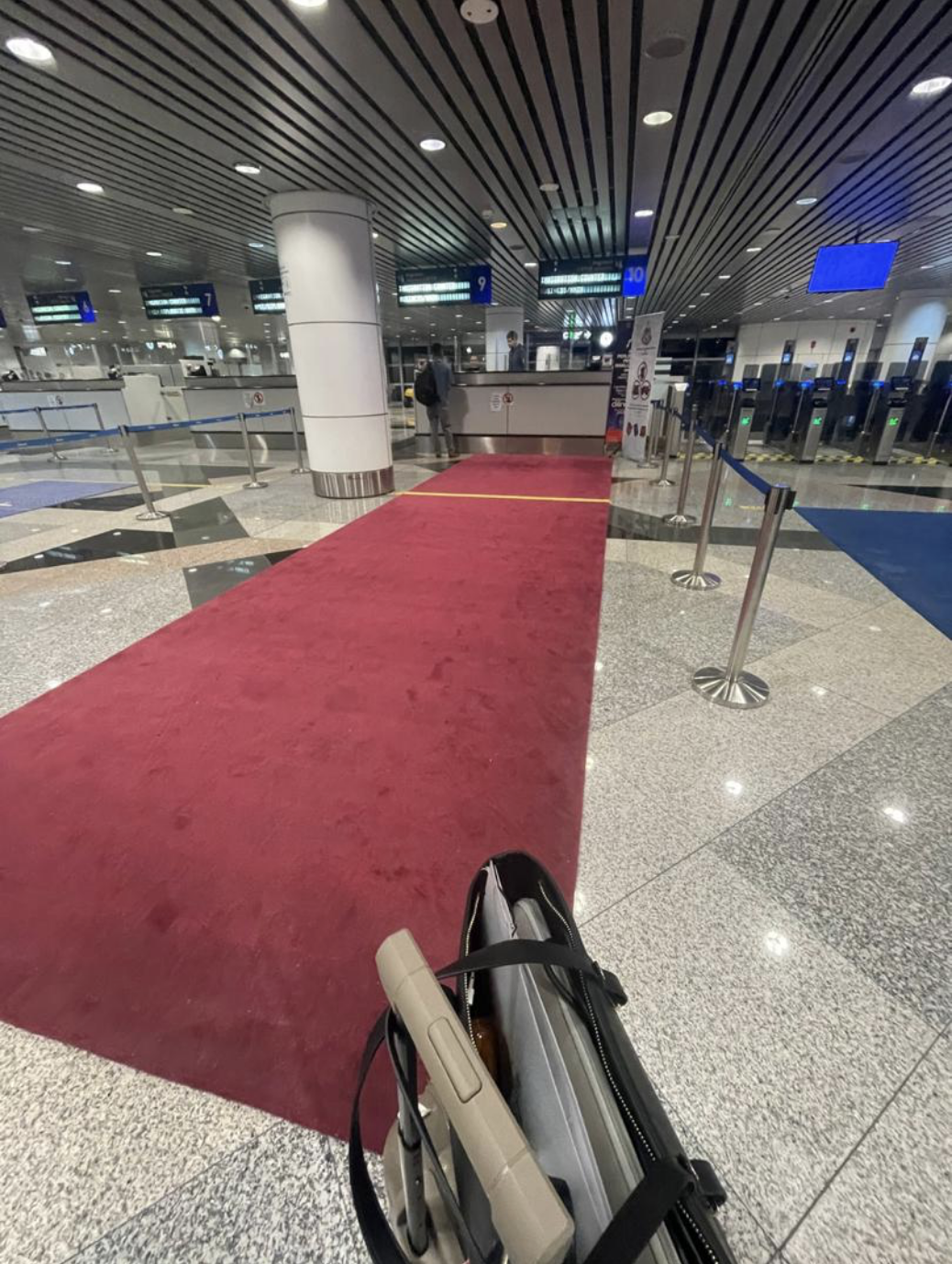
On my first day in my forth destination – Malaysia – I witnessed a young Sudanese person experience a psychotic episode in the centre of Kuala Lumpur, the bustling capital city.
Worried about the person’s situation, I sought advice from the founder of a local organisation that supports international students who are facing mental health challenges.
She told me that over the past month, three Sudanese students had died by suicide, and that cases of post-traumatic stress disorder leading to psychotic episodes were at an all-time high.
Though Malaysia has shown more flexibility on visas for Sudanese, it does not formally recognise refugees under domestic law. As a result, refugees are not permitted to work, study, or move around Malaysia without the fear of detention.
All of this has increased the financial pressure facing individuals and families who fled the war. And it has led to a great deal of uncertainty about what the future holds for Sudanese in Malaysia.
It is not just Sudanese facing these challenges. I started researching and found that in 2024 alone, the Malaysian government detained 12,000 migrants and refugees, 1,400 of them children.
In detention centres, refugees and migrants are exposed to physical abuse and psychological harm. That's especially the case for Sudanese detainees who, unable to return home, get stuck in a legal limbo.
While scanning through Sudanese social media spaces where people gather to support one another, I came across cases of travellers seeking support after being detained and stranded in Malaysian airports for weeks. After being refused entry, they were informed that the only solution was to book a flight back to Sudan.
From Malaysia to the UK, Egypt to the US, my experiences reflect only the smallest fraction of what displaced Sudanese have gone through. Around the world, our lives are being shaped by imperialist systems that mediate survival, movement, and the right to belong.
Nobody chooses to escape their home. It is war and loss that has forced us to leave everything familiar and safe. We therefore ask the global community to learn and speak about Sudan, and push for policies that meet those escaping war with dignity and compassion rather than exclusion.


