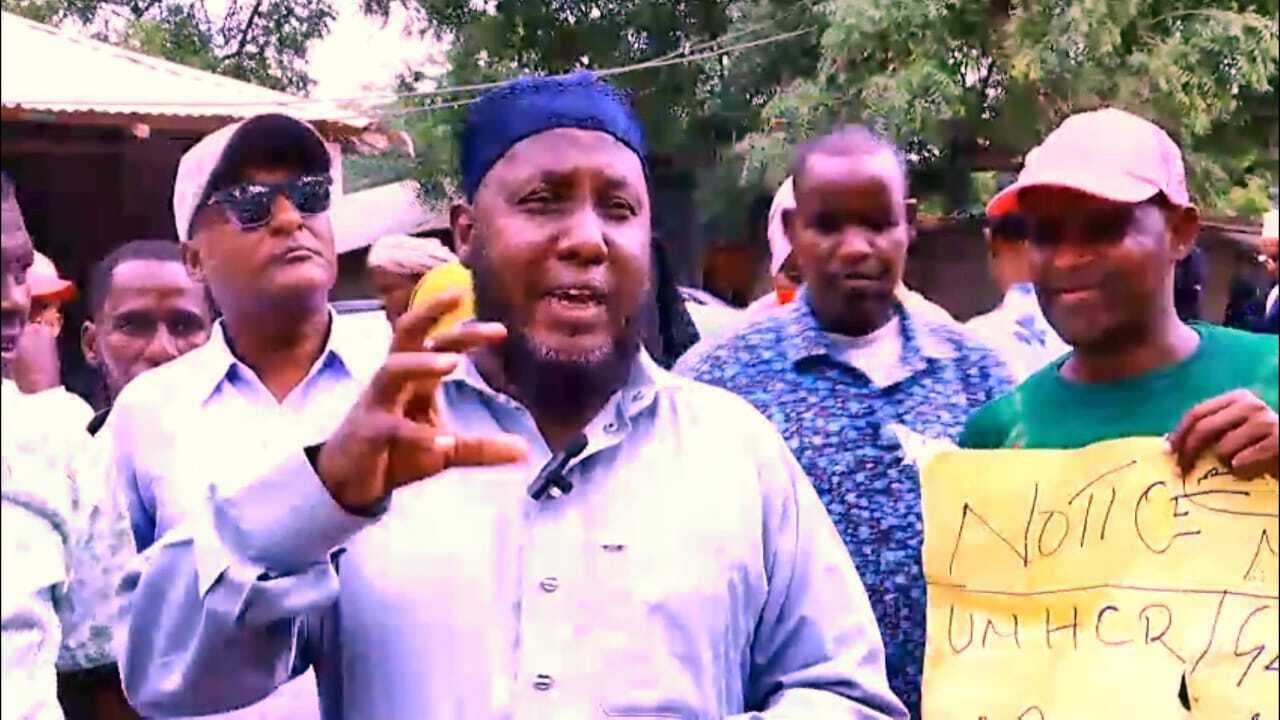
Mohamed Abdullahi
Speaking of the issue of donation/aid that the American government or Donald Trump cut off to the refugees, it has caused many problems.
Those problems include impact on health services. Health agencies/organizations who support hospitals have really been affected. There’s a scarcity of medicine and people cannot afford them. When people get sick and go to hospitals they are told there’s no medicine at the hospital and that they should go buy medicine at the marketplace.
Maternity centers have also been severely affected. Because there’s no generator to service maternity centres and provide electricity for the hospital because it is unaffordable. It’s reached a level where women give birth under the light of a torch.
In terms of water, the refugee camp is suffering a lot due to severe lack of water and the reason is the funding that UNHCR and other agencies got from the American government was cut off and it had a huge impact.
Life gets difficult day by day at the refugee camp. And you feel as though there’s a shortage. The Shirika Plan that was introduced by the Kenyan government is good on one hand and bad on the other. Shirika Plan coincided with a time when agencies were struggling due to lack of funding. We’ve been reliant on aid from agencies for 30+ years. For the government to introduce the Shirika Plan project that will enable the refugees to be independent and free from the aid of agencies and work for themselves and be provided with economic inclusion is a good thing that will lead us to be free from agencies.
But if you look at it from the other side, the biggest thing refugees need is to do business and to have free movement. Shirika Plan does not assure refugees free movement. I would say the government should include free movement for refugees in this country so they can work and get what they want. But if you restrict refugees to where they are and tell them to only work there, I don’t think there will be any major changes in their lives.
When you look at the current problems brought by the American president Donald Trump, where he has totally cut funds for agencies that were providing aid to refugees, you would say to yourself that Shirika Plan is actually good and that the refugees shouldn’t rely on one source. Because the refugees closed their eyes. The food WFP was providing is now at about 40%. And it keeps on decreasing. And now we are hearing that by June, there won’t be any food to feed the refugees.
So if there’s no healthcare, no water, and no food, it shows you that there’s nothing to stay here for.
The other major thing is the impact on education. UNHCR and other agencies working on education specifically for secondary school students were all told that the agencies cannot pay for their registration fees for the Kenya Certificate of Secondary Education (KCSE). It’s a huge all round impact that results from Trump’s funding cuts.
The Shirika Plan project, and the government opening up the curtains, coincided with the impact of fund cuts that Trump implemented against BBRM and USAID being shut down. So I would say to the government of Kenya to give the refugees freedom of movement within the country so they can work and to provide them with land to farm. For a person to be self-sufficient/independent, they need a lot of things.
The way people saw Shirika Plan initially is different to how they see it now. Because initially they saw it as a plan to push out the services the agencies were providing. But now when the agencies face funding cuts and they can no longer afford to provide for the refugees, people want to progress and live differently than they have for over 30 years. And to take their own lives forward through doing business, learning skills, and using those skills to work. Refugees should be given work permits to work within Kenya. And if someone has the ability to do a job that other Kenyans are doing, they should be allowed to do it and they should be paid the same as Kenyan citizens. Those are some of the benefits in the Shirika Plan. Refugees should be treated equally as Kenyan citizens and can do the same jobs as them provided they pass through the same legal requirements.
I would say Shirika Plan is a good project introduced by the government but it has many shortcomings. One of those shortcomings is the documentation of refugees. For example the alien card should have the same legal rights as the Kenyan ID. They should be able to take bank loans with the alien card, to move around freely and do everything with it. We really need help with that documentation. We should be able to get work permits through it. Businesspeople should be able to move around with it and go to the interior of Kenya and shop for things there and sell things there. The hope is that the movement should create/plant a flower of business and economic opportunities.
We ask the government to implement the Shirika Plan programme and not let it stay on paper. We hope it will change people’s lives. We would also like to tell President Trump that the refugees are vulnerable people who require support. The aid being given to refugees shouldn’t be politicised. He should be merciful towards refugees and support the agencies helping the refugees, especially the agencies providing life saving services should be funded and given money so they can serve the people.
Ismahan Adan Said
Greetings. I am a Somali mother living in the Dadaab refugee camp, particularly the Hagardera camp. My name is Ismahan Adan Said.
If a person could speak about the life of the refugees and how it has been affected by America’s funding cuts to the UN agencies, it has had a very wide impact.
First of all God is the one who provides. But the American government played an important role in the UN and funding aid for the refugees. The funding cuts have affected us in every way possible whether it is healthcare, education, other basic life needs like water, daily food that used to be provided by WFP. In terms of education it gets worse and worse. It has a very wide impact and it has really affected us. We request the American government and President Trump to change some of those decisions because we are refugees, we have no place in politics and we need constant aid. And aside from God, we need help from the agencies and we need the humanitarian aid that America was giving us as well as other international agencies.
If you research the true state of living of the refugees you will find that 50% are people whose lives are very lowly. People came here at different times. Some came in 1992, others came midway through and others came recently and are being registered now and being provided with new cards. So the lowliness of the people’s lives is directly proportional to the time they came here. But the refugee life is always constant whether you came here earlier, midway through or later. The word “refugee” is a very painful one and it is a person feeling a humanitarian pain, someone who left their country to become a refugee will still feel needy regardless of when they left. A refugee cannot do without the kind of aid UN agencies and countries were providing. We are saying that refugees constantly need support and awareness. Refugees are suffering and they need all humanitarian aid. There’s no normal life. Even those who are healthy feel depressed and stressed and are constantly thinking due to the lack of funding because they don’t get enough food with their meal cards, there’s no quality water to drink. They drink lake water, dirty water in a valley where donkeys, cows, goats and humans all drink from. It should be recorded and the world should see. We collect water from the same place that donkeys drink from.
At the hospital, patients are told there is no medicine and they should buy it if the illness is not severe. If the illness warrants a transfer they provide you with a travel document and you are still expected to pay for your medicine. What the UN used to pay for when someone is sick, an operation/procedure that costs a lot, a refugee person who is poor is now being told to pay for it. And when someone is sick, the circumstances force the relatives to go to the mosques and the streets of Nairobi to beg both Muslims and non Muslims and transfer the patient from the refugee camp to a hospital there and then beg for medicine. Whether through Facebook or other social media platforms.
[Addressing the interviewer] What you just said, many of the refugees don’t know about it. Others have heard of it but they don’t have an understanding of it. When you tell a refugee about it they ask “What does integration mean?” A refugee without an Identity Card and without a home here, who is living in a tent made of paper, when you tell them they’ll integrate with people who are citizens and whose country is established, and these people [refugees] have no money or resources anywhere, they will question why they are being integrated with others. My thinking is, when someone [a refugee] is integrating with a Kenyan whose life is complete and established, they have nothing to deal with, they have no resources/capital to go to the city and deal with others and work. (Says something unintelligible about the meal card). They don’t have businesses and other resources. When we as refugees are being integrated, are we going to be given houses, money and cars? It’s good for us to understand. Is there another system of coexisting with them? We don’t understand. And in my opinion, we can’t be with people whose lives are stable, who are with their government, who live in their own houses and compounds. As a refugee who can’t even repair/renovate my own house due to the UN not providing the paper material to do so, I don’t think I can live/hang out with someone who lives in a city. And this same mindset is shared by 80% of the refugees. And so it is important to understand the benefits of integration and it will take time to help the refugees understand it.
Mohamed Abdullahi Ali
My name is Mohamed Abdullahi Ali, famously known as the future president of Somalia, and I live in Dadaab camp, particularly in Hagardera.
That issue [funding cuts] has had a huge effect let alone in the refugee camps but all over the world. USAID is the supplemental funding for humanitarian assistance. The refugees have been affected. There’s no fuel, there’s a shortage of water, life has deteriorated. There are no processes and everything has been halted. So it has a huge problematic impact.
The biggest issue facing the refugees today is scarcity of water. WFP and all the rest of the donors were reliant on the biggest source of funding and that is America, followed by Europe. So that issue has brought problems and it has impacted our lives. We hope Trump looks at it from a humanitarian perspective and helps the people who need help. Because aside from God, the people got help from there. And that has been stopped now. The number of doctors has reduced, water is in shortage, the electricity the government used to get is also reduced, the incentives the refugees and government staff used to get has decreased. There’s been a huge impact. We hope he [Trump] lifts this boycott and allows USAID and other aid agencies to do their work. That is my message to him.
We rely on God’s capability and we belong to God.
If refugees are supported in terms of education, water supply, and healthcare, those three are the most significant. Those are the foundations. If those three are received, and the refugee is invested in, he/she will work. If someone is given a shop or a business is established for him, it will be good. You don’t want people to be the bird that is always fed. You want them to be responsible for themselves. If they continue like this they’ll lose the ability to be self-reliant, they’ll always be waiting for aid. So I welcome this matter [the Shirika Plan].
If some people had their alien cards given a legal status, and others had their Identity Cards, they can do a lot of things like farming for example. In Fafi, there are good farms that people can benefit from. I would also say to the people in this settlement that they should mutually benefit each other. It is important. We have already integrated with the people here, intermarried with them, work with them, co-own companies, marriage between girls from the refugee camps and the citizens and vice versa. When we first came here it was open and barren, God gave us a blessing here and we found water. My thinking is we should be responsible for each other and depend on each other, rely on God and come up with our own businesses. I would tell the aid agencies to create job opportunities for people because people will work. The borders should also be opened.
Hibaq “Qarshe” Ali
We are feeling a lot of heaviness/burdens. The first major issue facing the refugees is a lack of water. The meal cards that we used to get food have also been affected and there’s no good food that people take anymore. There’s a lot of suffering among the refugees. There’s not enough medicine. Things have gone really down. In terms of water, I can’t even speak about it. It has been a disaster.
There’s a lot of suffering that resulted from this. We can’t even talk about the water shortage. The generator/motor pumping water used to be on for more than eight hours, now it is on for less than four hours, because of the lack of fuel. There’s a short window for having water and before you can get enough if it runs out. You have children and you have to struggle and suffer to go look for water. It’s a lot of suffering. You leave the small children behind or at times you give them jerricans to fetch water and even then you can lack water. So the lack of water is something that can’t be described.
People can’t access medicine. You’ll stand in a queue at the hospital and when the doctor gives you a prescription, he tells you to go buy elsewhere because there’s no medicine at the hospitals. You could be pregnant and laying in the hospital without enough blood in your body and feeling weak and you won’t find any drips to help you. When pregnant women are taken to the hospital, they lay there weak and go into labour and it is only by God’s grace that they give birth, otherwise there’s no medical support here. Our situation has deteriorated 100%.
There’s nothing specific Trump has done for the refugees. Refugees cannot engage with politics. They are poor people who are restricted in one place and who are suffering. It is always good to give refugees their priorities and not to be dragged into the world’s politics. Refugees should be viewed with a specific eye. Trump should change this situation.
The mothers who are giving birth here face many problems. When a mother is in labour and is taken to the hospital, she doesn’t receive any care, there are no tubes to provide drips, they are weak and need help but they don’t get it. I recently gave birth there and I was low on blood and very weak and my situation was very challenging and I couldn’t find any help. God helped me. It’s a very problematic situation. Mothers don’t have support. You give birth outside. There’s no staff. No one is looking after you. Only God saves you but otherwise it is a very dangerous situation. The women there some die, some are saved by God. The situation here is very difficult. People who need blood transfusion are not cared for, people who are weak are not cared for. There’s not a single tube to provide drips. So may God help us.
Mothers are in a very dangerous situation. The workers, the economy, every aspect of life has been affected. And if things don’t change fast, it will happen (not clear what will happen), it is already happening, it's just that people are not aware. Mothers here are very much neglected.
We’ve heard about this issue [Shirika Plan] and we can’t say what exactly it is. We haven’t gotten anyone to translate it for us and explain it to us. We don’t know what it is based on. Until we know what exactly it is and what is being done for us and the support and aid we will get from it, as of now we just hear it on the news and we don’t know what it is. No one has consulted us and called us into a meeting to ask us what we think about it. We have no idea about it. We don’t know whether it is good for us so we can’t protest about it. We can’t tell. If something is beneficial for you and is explained to you and you are consulted on it, then you can make a choice of whether to accept it or reject it. We have no idea what it is. We just heard about it on the news. No one, whether from an aid agency or from the government has come to us to interpret and explain it to us.
When someone is explained to, and told how things are and the benefits they will get as refugees and the support they will get, and if we see our interests are in it, then we accept it and if not then we will see how to handle it. But now there’s little we know about it.
Adan Abdi Abdullahi
If I’m to speak about the problems that have resulted from the American president Donald Trump cutting aid, the funding cuts that he implemented on USAID which provided donations and funding for aid agencies, it has resulted in a lot of burdens and problems that have impacted different aspects of life. People living in refugee camps in Kenya, especially in Dadaab camp, if we look at those problems, they include: the worst shortage of water in Dadaab ever. Refugees are going to long distances day and night in pursuit of drinking water. When the agencies could no longer afford the fuel for the motors, people could no longer get consistent clean water. Healthcare has also been impacted and there’s a shortage of medicine when people go to health centers. When people go to health centres they are told they can no longer get the medicine they used to get and they should buy them from privately owned centres and pharmacies. This has affected people with chronic illness such as diabetes, hypertension and the killer disease known as AIDS.
There’s also the issue of the young refugee workers who were employed by aid agencies and who were providing services for their people, who have been laid off. This has resulted in an increase in gender based violence because the young people who used to report on the problems happening in society are no longer there. Generally the burdens have increased
If we look at the food sector, the food WFP used to provide for the refugees has significantly decreased since the agency has lost funding and that has led to them significantly reducing the grams they gave the refugees. In the coming months we will without a doubt see many refugees who are malnourished and starving. Even now we see many sick children who are malnourished because they lack the specialized food they used to get and it is all connected to Trump stopping the funding of aid agencies that helped refugee camps in Kenya and Africa generally.
We request Trump to look at the refugees and their lives with a humanitarian lens and not politicise aid that saves people’s lives and the refugees who fled their motherlands. He shouldn’t politicise aid and he should let USAID continue funding the agencies working in the camps so that people can keep living and at the same time confront hunger and famine that people here may be facing. We foresee the problems increasing if we don’t get immediate help and foreign aid to manage the lives of the close to half a million refugees living in Kenya.
As I said, there’s severe lack of water in the refugee camps, there’s no electricity, there’s no fuel, healthcare has reduced, the food portions the refugees received are going away. If the agencies don’t find alternative funding to bring these services back, we estimate that the lives of the refugees will be at its worst place for the last 34 years and the displacement as well as burdens of the refugees will increase.
To avoid that, we ask the American government to allow the aid given to refugees to go on and not politicise it.
Already in the refugee camps, the people who had received resettlement to America and had their tickets ready have been stopped and that has resulted in a lot of heartbreak, anxiety and depression that has even destroyed families. In addition to that if the aid is cut off from the agencies helping the refugees then many people will lose hope and give up. Because of that, the noise and burdens of the refugees have already begun and we are only a few months in. If this goes on for four years, the refugees will go into an immeasurable deterioration.
Ahmed Mohamed Hassan
The funding that the American government gave charity agencies working in refugee camps which was the aid that the refugees were reliant on for a long time, since the new president Donald Trump halted this funding, the people living in these camps have felt it deeply especially those with little means who are new to the refugee camps and are heavily reliant on aid from agencies with no other alternative income.
Specifically we can look at the food that people received, the most important thing was cooking oil which everyone knew was being provided by USAID since it had its labels/branding. The day Trump announced that he had halted the operations of USAID was the last day refugees got cooking oil. The refugees used the oil in two ways. First they used it to cook their food. Second, it was used as a food accompaniment. Whether it’s the food cooked for dinner like maize or wheat or grains that are provided at the camps. If you don’t add oil, the food is inedible. So the impact was, people had food in their homes but they slept hungry [due to lack of cooking oil]. If there’s no immediate changes, the refugees are going to face a huge danger.
The food that was being provided has reduced. Now refugees receive about 20-40% of the food. The rest has been cut off. If America doesn’t continue the humanitarian funding it provided the charity agencies who work in refugee camps, the refugees will face a huge danger. And everyone will tell you this. You see the suffering on their faces and when you ask them you find out he didn’t give dinner to his children the previous night and they didn’t have breakfast this morning and didn’t have lunch. And if you ask them about the causes of these problems, they understand that it is because the American president stopped aid coming to them. So it would be nice if the American government had some shame regarding those poor people whose lives are in danger. The grams and the kilos of food they used to receive…the president of America who runs the biggest country in the world with the largest economy should be ashamed in my opinion.
Shirika Plan is a plan that the government of Kenya has for long been pushing and it is designed to change the lives of the refugees living in Dadaab. For over 30 years people here have been reliant on humanitarian aid and the help they get from charity agencies. This plan creates the path for people to be self reliant and to integrate with Kenyans, while previously there was clear segregation between refugees and Kenyans. The people living here are Somalis who speak the same language and have the same culture and the same religion. But they differed and didn’t integrate and were separated into citizens and refugees. This plan encourages people to integrate, to do business together, to live together in the same place, to be the same and have the same access to education and healthcare.
In my opinion, the refugees have not been informed well about this plan and they have not been convinced of why it is good for them. A few people who represent the refugees are the ones who have been informed and I don’t know how they passed that information to the refugees. People are suspicious. But from what we’ve read and how it is written, it is really good and it encourages people to be independent instead of relying on others.
For example, someone who owns a business and doesn’t have training on how to elevate his business, such a person, according to the plan, needs more capital and investment in their business and secondly they need to be trained on how to make profits. Someone could have a product that is not being bought. Maybe the people surrounding his shop need a different product that they would buy. That is business knowledge. Also, people don’t have business permits and they should be helped with that. All those things are good for the refugees.
For a long time, people have been waiting to be allowed to move freely in this country. Some of them have been living here for a long time. Some were born here, raised here and studied here, and they are not allowed to leave the camps. That kills their morale and their hopes. Someone develops an identity of themselves as a refugee who is different from other people and who is not free. So for a long time people here were told that they will be allowed to move freely and go to Nairobi, Mombasa and any other town and settle wherever they want as long as they can take care of themselves. But what has been revealed now, although I’m not very sure, is that the movement bit has been omitted from the plan. And that breaks the hearts of the people who have been waiting for this for a long time. And it makes people lose trust in the Shirika Plan. But if the plan stays the same as it was before, and part of the integration is that someone can go from here to Nairobi and do business there and then go to the port in Mombasa and do business, or work as a driver and carry passengers from here to Nairobi and come back, if the refugees are allowed to do that then it will be a huge victory that the refugees have been waiting for a long time and people will be really happy with that.
Abdullahi Abdirahman Nur
My name is Abdullahi Abdirahman Nur, more commonly known as Abdullahi Hiiraan. I live in Dadaab refugee camp, particularly in Hagardera camp.
When USAID was stopped, plenty of problems emerged in the refugee camps. Especially where we are. These include lack of water since the fuel that was used in the motors to pump water were cut off. The lack of water has resulted in diseases like cholera because the people are drinking harvested rainwater which is dirty. The lack of water has also affected education since the students, instead of going to school, their parents send them to fetch water. So you see students working around with jerry cans in the camps looking for water instead of going to school.
There’s also a lack of cooking oil which has not been provided in the refugee camps ever since USAID was discontinued. One of the biggest things the agencies provided was cooking oil. The lack of cooking oil has significantly affected people’s lives.
There’s also been an increase in unemployment. The young people who were working within the camps and working for the aid agencies, they were educated and they were working for the people. Since the agencies were hit with funding cuts, many people have lost jobs and that has led to an increase in drug abuse and other things that were initially not common in the refugee camps.
As you know, the biggest thing WFP provided was the Bamba Chakula programme. Bamba Chakula will end in May. Without Bamba Chakula one of the results is that many families will be destroyed. In September last year, Bamba Chakula was halted and the report that resulted from that is that many families were broken. And what led to that is the family was reliant on the Bamba Chakula programme which was used as accompaniment for food and a bill for the family. If the man of the house has no job, and the Bamba Chakula is no longer there, then a clash arises and that causes a family to break.
Also, after the aid programme was cut off, there has been a lack of electricity in the refugee camps. The whole town of Dadaab lacks electricity which has been a result of the funding cuts.
In terms of education, this year there were many schools supported by the aid agencies that had to let go students, especially the ones who were in Form Four. In the biggest school here, Hagardera Secondary School, close to 30 students lacked money to pay for their Form Four fees. You can imagine a student who has been in school for four years, rising early and studying despite hunger and suffering, when they reach a time to do their final national exams, to be told they can’t due to a lack of funding is a huge challenge that society faces. The students are not given a chance to carry on with their studies and no one is looking for alternative funding. They have been sent home and they are going astray getting into drugs and things like that instead of sticking to doing things adjacent to education.
The other challenge is, the young children were being given nutritional biscuits that were being provided by the agency and had its label. The children who were malnourished were the beneficiaries. Since the programme has been cut off, it is clear that many children will die of malnutrition since the nutrition programme has been removed. So there’s that and many more problems caused by the absence of the aid programme
Regarding the Shirika Plan, first there had to be community engagement to teach people of the plan. The community is not aware of this plan. And in my opinion, 90% of the refugees will not benefit from the programme because that programme will help businesspeople and people who can work for themselves and have resources. If you talk about integration, if a person doesn’t even have a means to light a fire , what will they benefit? They can’t go to Nairobi and anywhere else. That person was surviving here on little aid. I believe the [Shirika] plan will benefit people who have money and are doing business. And those people weren’t even facing any challenges in terms of integrating because they got permits to go wherever they want in the country, buy whatever they want. The people who are always struggling and suffering are the real refugees who are here to get education and security and to get support from agencies. When such a person is told the support is being replaced with integration, first many in the community don’t know about it, and those who do like myself believe there’s nothing in this programme for the community.
Osman Abdullahi Osman
My name is Osman Abdullahi Osman. I live in Hagardera refugee camp which is part of Dadaab.
Since Trump stopped funding support for USAID, there have been many changes. I have been at the refugee camp for close to 18 years. I have never seen the changes I’ve seen this year since the funding support we got from the American government was halted by Donad Trump.
Some of the changes and impacts we’ve seen in the refugee camps include a scarcity of food. Initially, all families whether big or small relied on the diverse food distribution which they used to manage their lives and the lives of their families and it was supplementary food. But now it seems like the food is out of the picture and the amount of food people are getting is very little and the refugees are complaining a lot.
If you look at the healthcare sector, there’s a shortage of medicines at the hospitals and a shortage of doctors. If you go to the hospital to get medicine they tell you to go to outside pharmacies or other places. And this is caused by America cutting funding for the refugees.
If you look at the water sector, there’s no fuel for the water motors. The fuel was tied to the aid and when the aid was stopped there was a scarcity of fuel. The motors are not pumping water and the refugees are complaining about the scarcity of water. We don’t get water like we used to. There are many other things that I cannot summarise in terms of the impact that the USAID funding cuts have had on refugees.
The stipend/money the refugees were being given has also reduced and will be halted in May. That will lead to clashes in families or even families breaking up because the stipend used to cover many families who weren’t really being supplemented by the food they received. The stipend became supplementary and was enough for the family. If they got food from the agencies, they would use the money to buy cooking oil and meat. But that is now out of the picture.
The young children who are malnourished or who suffer from minor illnesses used to get nutritional biscuits and food. But that is also out of the picture now. There’s no such food and the children still have severe malnutrition. It’s a huge impact facing the refugees and a lot needs to be done about it.
I would request president Trump to stop politicising aid to refugees and to separate global politics from aid. Refugees are people who fled their country and sought refuge in another country. Therefore they have the same rights as all other refugees around the world. They have a right to the basics of life. I and all the refugees would like to send a big request to president Trump to stop politicising aid to refugees.
It is an existing thing that is being discussed since the refugees have argued on two things. It is possible that the youth in the refugee camps don’t even have an idea about it because the Trump issue is stressing them out and they are thinking about the food cuts, the unemployment among the many youth, so they don’t have time for it [the Shirika Plan].
But it is a very surprising thing to have a refugee who fled their country be told that they will be integrated with the citizens without any visible support. From the other side, if you look at global refugees, they live with the rest of the people and share things with them. But the refugees here at Dadaab you’d think they are living in an open air prison. People have no freedom of movement, they don’t interact with the rest of society and they have many burdens. So on one hand it can be a helpful programme if it is not politicised and it can be helpful to the refugees and they can get basic services through it like travelling around and even visiting other countries and basically lift the blockade they live under. On the other hand it can be a challenge because everything good has its bad. A refugee who doesn’t know anything, if you make them similar to a citizen and they lose the basic rights they had as refugees, such a person will feel personal discrimination and will feel other many burdens as a refugee since they fled their country and are not fully accepted into this country. I would say everything that is being done needs to be clear, explained to the refugees and get their consent. If they refuse they shouldn’t be burdened with it.
Shukri Ali Hussein
When Trump halted the aid, the whole world, all four corners were closed to us by Trump’s words. Some of the things affected include the soap we used to wash our clothes, the food we used to get, the poor and weak children who used to get care, the women who had access to maternity care and who received the porridge, all that has been cut off. We don’t have medicine, we don’t have water, we don’t get any care. There’s no livestock anymore. No one is taking care of us in our homes. We are suffering and we request the international community to do better for us and Trump should stop this thing he is doing to us.
There are people who are suffering who have no car, no shop, who have no family abroad, who relied exclusively on the support of the aid agency and since the aid agency stopped its support, the people are suffering and dying and poor who need donations. This life is very tight. There will come death by starvation if the international community and Trump don’t allow aid. We ask Trump to stop the problems he’s placed on us.
The elderly used to get care, they received medication, mosquito nets, blankets, the disabled got wheelchairs and walking sticks. All that has been cut off and closed down. We are suffering. The elderly are suffering. Those without any other income are suffering. The orphans, the widows are all suffering. We are suffering a lot and we ask the international community to do better for us. Death is near. The problems people are facing come with the risk of death.
This is the most difficult situation refugees have been in. There is no life. We are at the brink of death. There is suffering. We don’t have anywhere to go. We ask Trump to lift the problems he’s placed on us.
We see it [Shirika Plan] as something that’s not for us but for the Kenyan government. We were not consulted as refugees, we were not called for any meeting, we were not informed of this issue. It is not something that we are happy about or that we support. We are refugees and we don’t know Kenya. We don’t want that issue and we don’t support it and we want it stopped.
Fathiya Abdi Guled
Greetings. My name is Fathiya Abdi Guled. I live in Hagardera.
Some of the things is IRC for example, used to care for the pregnant women and they were given fish, eggs and food that restores blood. Now you’ll see someone bleeding out and they are told to go out and look for medicine outside. Or you’ll be around for long and get only one injection.
We’ve seen it in CARE as well. They’ve stopped providing oil, soap, salt and everything else. Now we are being threatened …
The refugees were cared for, the elderly were cared for, the pregnant women were cared for. All around, the refugees were taken care of. But now it’s like they’ve plotted against us. My request to Trump is that he should bring back our old life.
Someone could have diabetes or hypertension and they are told to buy their medicine from outside. The person bleeding out will bleed out on you. The [hospital] staff used to go in rotation/shifts and care for people. You could feel the hospital had care. Now the pregnant women are traumatised and they even run away from hospitals. They say no to hospitals.
We are Muslims and we as refugees request Trump to bring back the life we had. There are students who completed school and are jobless.