


Share & more
A nationwide spate of violence and crime has gripped Peruvian communities, disproportionately affecting the most vulnerable.
Bordered by Colombia, the largest producer of cocaine, and Ecuador, a major transshipment hotspot, the country has progressively fallen captive to criminal cartels that have taken advantage of the COVID-19 pandemic and an unprecedented crisis of governance to consolidate their presence.
Overwhelmed by the new levels of violence, many marginalised communities across the country have seen their daily lives disrupted, as they lose their livelihoods, struggle to get their children educated, and develop mental health issues. In more remote areas, where illegal mining thrives, environmental devastation is compounded by a surge in human trafficking, forced labour, and sexual exploitation that threatens the survival of Indigenous groups.
Roughly midway along the Pacific coast between Peru’s capital, Lima, and its border with Ecuador, Pedro (his real name is not being disclosed for safety reasons), a 38-year-old cab driver in the department of La Libertad, explained how extortion has become so widespread that “it really stops you from wanting to move forward”.
“As soon as you start something new, threatening extortionist messages begin,” he told The New Humanitarian, recalling how the threats made him think again about opening his own business in the regional capital, Trujillo. “They could be coming from criminals or from someone in your circles taking advantage of the situation,” he added.
Encompassing both a major illegal mining area in the Andes (where 13 security workers were killed in gang violence last May) and the coastline from where most of Peru’s cocaine production is shipped, La Libertad has emerged as one of the country’s most violent and extortion-prone regions. More than 30% of “liberteños”, meanwhile, live below the poverty line – above the 27.6% national average.
Wilson Hernández, an expert on violence and crime at GRADE, a Lima-based research centre, said a weak Peruvian state, the rising availability of guns, and an abundance of illicit opportunities have allowed criminals to thrive and diversify activities. Money may be laundered in areas such as illegal gold mining, logging, and land-grabs that corrupt officials help legitimise.
“There is no reason why a criminal organisation should specialise only in one activity when the possibility of doing it in different activities generates more profit and doesn’t increase the risk of apprehension,” he explained.
Nationwide, transport workers like Pedro have been among those most targeted as they deal mostly in cash. Between January and August 2025, at least 180 taxi and bus drivers were killed for refusing to pay extortion money.
Other public-facing operations, such as bodegas (small stores), night clubs, and even schools have also become easy targets.
“They go after teachers who earn minimum salaries, sometimes in small communities where there are just a few hundred inhabitants,” Pedro said. “How is it possible that criminals have become stronger than the state?”
Rising crime and dwindling aid
With less than three months to go until presidential elections, many Peruvians are asking themselves the same question.
In the past five years, the homicide rate has steadily increased going from 5.8 per 100,000 inhabitants in 2020 to 10.7 in 2025. And according to the Observatory of Crime and Violence, 29.3% more extortions were reported during the first eight months of 2025 than in the same period of 2024.
These figures represent a worrying trend of growing criminal activity, but official statistics can reflect as little as 20% of the real number of cases.
The spiral of violence has been enabled by an unprecedented crisis in Peruvian governance.
In October, José Jerí became Peru’s seventh head of state in just 10 years. He replaced Dina Boluarte – one of the world’s most unpopular leaders. She was removed from office in part for her failure to tackle the soaring crime rate.
But before donning the presidential sash, Jerí may himself have contributed to the current crisis. While in Congress, he approved laws limiting the power of the public prosecutor's office and the police to fight illicit activities such as illegal mining, drug trafficking, and money laundering. He also faced accusations of corruption and rape, and has come under pressure to resign after video recordings revealed secret meetings with a Chinese businessman linked to timber trafficking.
Since taking office, the media-savvy 38-year-old has tried to project a mano dura (tough on crime) image, flagging a new security plan to rein in the surge in organised crime. However, he has already postponed the launch of the plan twice, and a recent poll shows that nearly 83% of Peruvians disapprove of his security management.
The humanitarian impacts of the insecurity and political instability have been significant enough for some aid groups to reprioritise their assistance.
Rocío Vargas, director of Save the Children in Peru, told The New Humanitarian that the aid group has prioritised its “safe schools” programme ahead of natural disaster response as a result of the rising risks to families from extortion.
It found that extortion on buses taking the children and their parents to schools in poor neighbourhoods – as well as a lack of recreation time due to concerns about threats to children playing outdoors – have started to affect the mental health of pupils.
“When this happens, classes are suspended, creating an emotional impact,” Vargas said, stressing how schooling in Peru had already been severely limited, particularly in rural areas, during the pandemic. “They don’t necessarily have all the technological resources to attend virtual classes. However, this is something that is happening regularly.”
Save the Children also warned in a statement that Peru’s political crisis is undermining “the implementation of effective solutions”.
“Risk of extinction”
Indigenous communities in Peru’s Amazon – already challenged by their lack of political representation and the constant struggle to secure their land rights – have been particularly vulnerable to these new and worrying trends.
In Cusco’s lowlands bordering the Madre de Dios region, deforestation caused mostly by illegal gold mining has been threatening the way of life of Indigenous communities since the early 2010s.
In the past few years, however, this has been accompanied by an increase in the number of people being murdered just for defending their land.
Elsa Dariquebe sobbed as she recounted the loss of her brother. The 58-year-old park ranger was killed in April 2024, allegedly by a hitman, in retaliation for destroying the equipment miners had left in the Amarakaeri communal reserve.
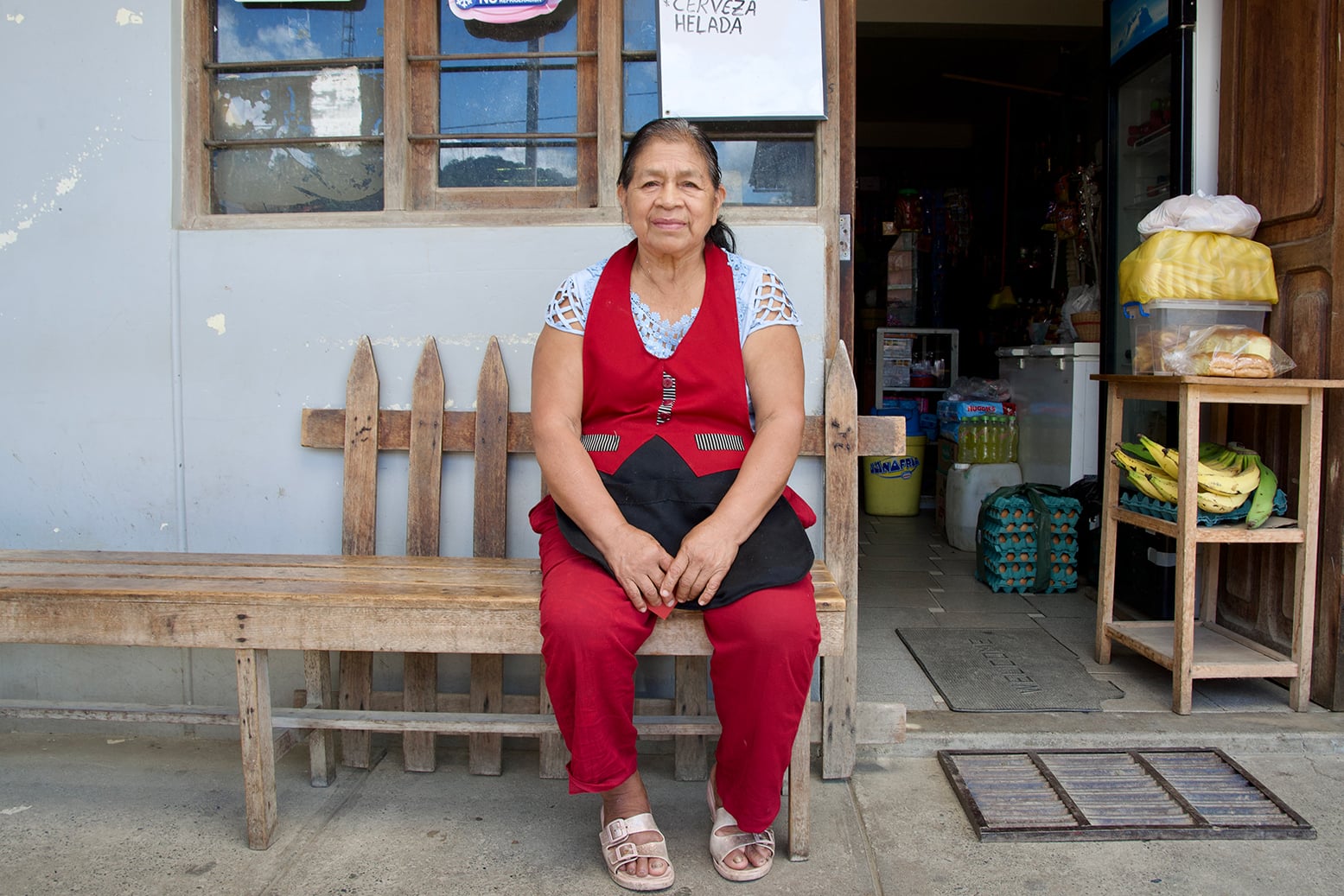
“There is so much impunity and no justice,” Dariquebe said, adding that – almost two years later – no one has been investigated for the murder.
Dariquebe is a member of the Harakmbut Indigenous community that is believed to have lived in this region’s fragile, ancestral rainforests for thousands of years.
Since the early 20th century, the Harakmbut population has fallen by at least 90%, following the arrival of rubber tappers and evangelists who brought diseases for which they lacked immunity – and due to the high number of people who have moved to Lima and elsewhere seeking work opportunities.
“We are in pieces, in risk of extinction, and they kill us! It really hurts,” Dariquebe said, as she sat in her small shop in Pillcopata, a village about 275 kilometers northeast of the city of Cuzco. She sells everything from sweet drinks to household goods, and said she lives in fear amid frequent assaults and robberies due to nearby drug trafficking.
A new threat is adding to the challenges faced by communities in this area: A shoddily asphalted road built by a Chinese contractor into the Indigenous territory appears to have fuelled illicit activities. Hidden from the main road in the reserve’s buffer zone, labs producing coca paste have been found and vast plantations of coca line discrete driveways.
In May, Peru’s largest Indigenous association, AIDESEP, warned that the advance of drug trafficking on Amazonian communities represented a “serious threat to their survival”.
For the traffickers – who are mostly linked to local gangs (though larger armed criminal groups from neighbouring countries have also been documented) – the dense forest provides a perfect operational foothold. Police presence is low and underequipped, while the remote areas provide cover for expanding production.
The January-June 2025 dismantling of the US foreign aid department, USAID – which had provided assistance to fighting drug and illegal gold mining in Peru through environmental and sustainable development programmes – may have further emboldened criminals.
Hernández, the crime expert, suggested that some people who had benefited from jobs created through USAID’s sustainable development programmes may now have turned to “criminal opportunities” to compensate for their loss of income.

Resistance and repression
Peruvians have been pushing back against the rise in crime and governance failures.
It was youth-led protests – fuelled both by anger over the lack of economic opportunities and over the incompetence of a state corrupted by alleged links to organised crime – that helped to topple Boluarte.
And when police killed Gen Z protester and hip-hop artist Eduardo Mauricio Ruíz in October – days after Jerí assumed office – public outrage only increased further, especially among those on the front lines of the crime epidemic like Rosa Elvira Reyes.
A resident of San Juan de Lurigancho, Lima’s most populous neighbourhood, Reyes was enraged at how people have been rendered defenseless by an incompetent state. Nearly 60% of residents in the area claim to have been victims of extortion.
“The police do not protect us. When we protest, the government calls us terrorists,” Reyes said ahead of a rally called one month after Ruíz’s killing. “Right now, we have a criminal mafia that has taken control of the branches of the government,” she added.
Nearly four months after Ruíz’s death, the police officer behind the fatal gunshot has still not been charged with homicide.
“Our lives here have been destroyed,” Ruíz's father, who now has to take care of his 10-year-old grandson in addition to his other son, told The New Humanitarian. “I want them to move forward,” he added.
Edited by Daniela Mohor.


