


Share & more
A small, fragile light sways in the dark. The beacon sits atop Nadir, a sailing vessel standing watch over the grey wooden boat ahead of us, buffeted by high wind and waves.
People on the wooden boat are yelling, scarcely audible in the howling night. Even the roar of our powerboat’s engine is diluted to a low purr. Nadir, the first vessel to respond to the wooden boat’s distress, struggles with the weather. The people in the wooden boat never really stood a chance of completing their journey unsupported.
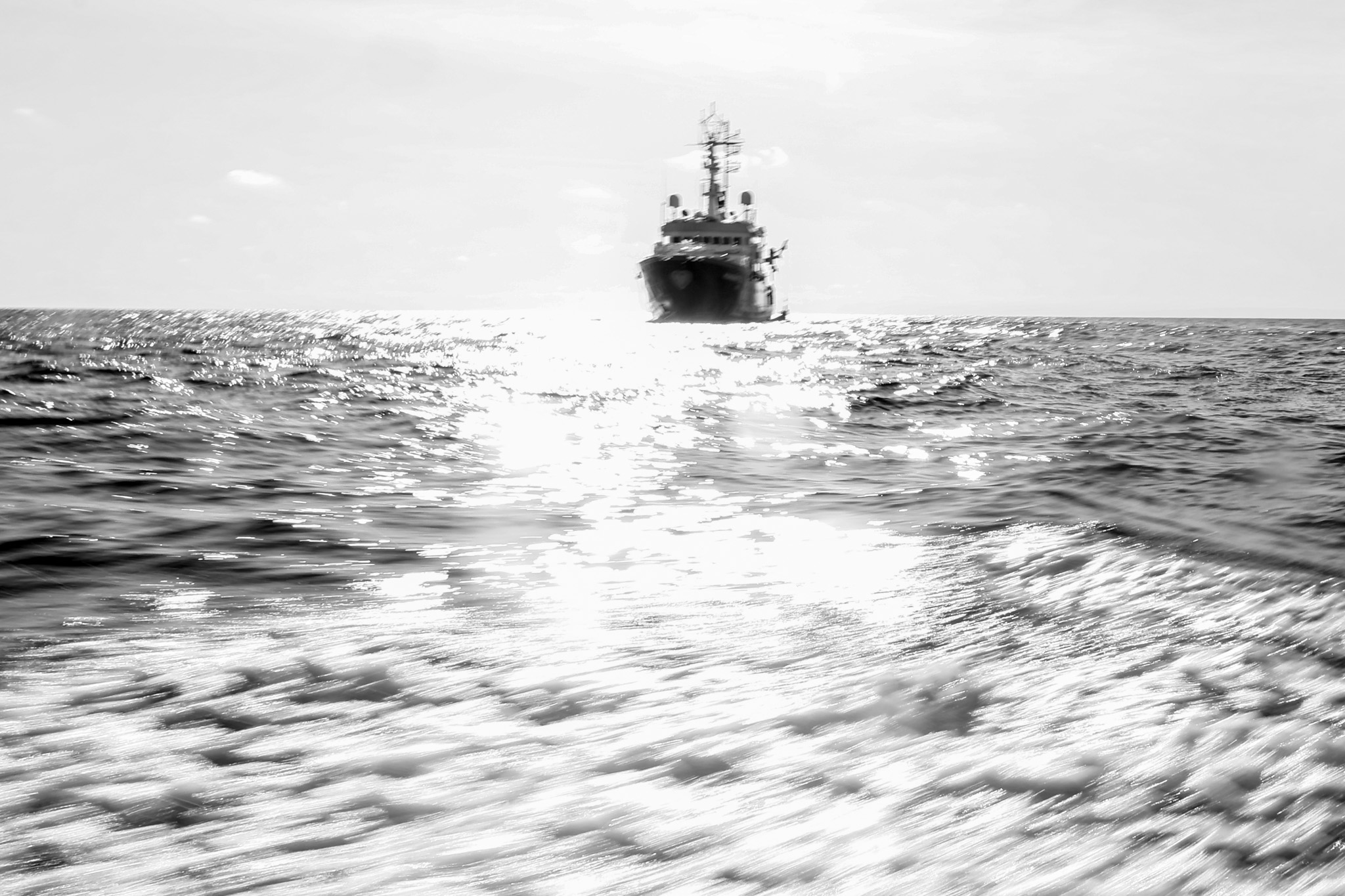
We are arriving on the scene not a minute too soon, in the Humanity 1, a 60-metre former research vessel that has been converted into a volunteer search and rescue ship. It is carrying two smaller, faster rescue vessels named Bravo and Tango.
In Bravo, we circle the wooden boat. Rocco Aiello, an affable Italian in his 50s whose career has taken him from tuna farming to maritime rescue, begins calling out instructions translated into Arabic by Egyptian mediator Zeina Nasser.
The 60 passengers on board are seasick and frightened. In this moment they may surge toward us and capsize, attempt to jump in and swim to us, or any number of intuitively rational actions that would nonetheless make everything worse.
After a couple of false starts and handing out life jackets, we are ready to bring people aboard. A man collapses as he is helped into Bravo, retching violently. A teenager staggers in disoriented. “Sit down here,” we say. “You’re okay now.”
A solemn anniversary
This rescue was carried out in March of this year, but similar life-and-death scenarios play out with such regularity in the central Mediterranean Sea, between the North African coast and Italy, that they have become routine, unremarkable. Even when rescues fail, or rescuers are nowhere to be found and people die, it rarely captures public attention anymore.
In that sense, 2025 marks a solemn milestone: It is the 10-year anniversary of the launch of the civil fleet – a collection of around 20 boats and a few airplanes run by various NGOs and largely staffed by volunteers. This ad hoc network of organisations formed in the aftermath of twin shipwrecks off the Libyan coast in April 2015 that claimed the lives of up to 1,200 people.
In the decade since, the civil fleet has been involved in rescuing more than 175,000 people. Over the same period, more than 22,000 people have died or gone missing attempting to cross the central Mediterranean – and those are just from the tragedies that have been recorded. The true death toll is thought to be significantly higher. Ten years later, there appears to be no end in sight.
The civil fleet’s existence has been catalysed by European policies that make these deaths more likely, and that help perpetuate a brutal cycle of migration detention and abuse in Libya. Sea rescue is – or should be – a state responsibility. But since 2015, European countries have sought to shirk that responsibility in the central Mediterranean. At the same time, the European Union and its member states have provided material and logistical support to the Libyan Coast guard to intercept people attempting to reach Europe by sea.
The crews of the NGO search and rescue vessels that sought to fill the gap left by European governments quickly became witnesses to Europe’s complicity in the vast human tragedy unfolding in the central Mediterranean. The civil fleet’s outspokenness about the deadly consequences of EU policies has made it a flashpoint in Europe’s increasingly toxic political crisis over migration. And, with governments lurching seemingly ever-further to the right on the topic, hostility to the civil fleet is rising.
Just last month, the German state, which has provided funding to a number of search and rescue organisations since 2022, ended that support. Overnight, two million euros that were supposed to be disbursed throughout the rest of the year evaporated – an amount that would have supported around a dozen missions.
For supporters, the fleet is a symbol of solidarity and humanitarian traditions. For detractors, rescuers are a “taxi service” for migrants. As governments seek to shut down movement at all costs, the civil fleet faces non-cooperation, obstruction, and even criminalisation from state authorities.
I first got involved in 2022 when I went to Trapani, a city in Sicily, to interview crew members on the Iuventa 10 who faced time in jail over accusations (later disproven) of cooperating with smugglers. Just over a year later, I joined a crew, as media coordinator on another rescue ship. The operation in March on board Humanity 1 was my third rotation. It is unlikely to be my last. The intensity and purpose of the work, and the unlikely community forged on board the rescue vessels, leave a lasting impression and keep drawing me back.
The dangers of Libya
That night in March, among those climbing into Bravo, the smaller rescue vessel, was a 23-year-old mechanical engineer named Adil (a pseudonym).
Later, safely aboard Humanity 1, he recalled his childhood in Syria’s capital, Damascus, with warm nostalgia – before his father died and the Syrian revolution that began in 2011 turned into a grinding civil war.
His family was displaced several times, and some of his relatives were incarcerated in Seydnaya prison, notorious for systematic torture and murder. Even after the collapse of the Assad regime, Adil still does not know what happened to them. He is happy the regime is gone, but remains pessimistic about the state of Syria.
As a teenager growing up during a war, Adil wanted to find work to support his family, but his mother, a supermarket worker, insisted on him staying in school. His favourite subject was geography. On Humanity 1’s deck, he traced his route on a map with thread and masking tape. After he graduated in 2024, time was running out on the draft deferments he’d been granted as a student. He was scared of dying, and more scared of killing, and so he fled to Libya.
Despite its own post-revolutionary dysfunction, Libya lures thousands of people every year from countries in the Middle East and Africa with the promise of work opportunities or because it’s seen as a stepping stone to Europe. In this divided, militia-filled petrostate, those seeking a better life are often taken hostage, tortured, and held in slavery-like conditions. Some eventually manage to try to escape by crossing the Mediterranean.
Europe’s leaders say they are fighting the smuggling gangs that perpetrate abuses against migrants. In reality, the EU and its member states pour funding into Libyan security forces that are often indistinguishable from the smugglers. Libyan militia leaders play a double game, simultaneously profiting by organising crossings while currying European support by pulling people back to Libya after they depart. In 2023, the EU’s border agency Frontex was even found to be coordinating with a militia that effectively kidnaps people on the high seas.
Adil described an amorphous, interchangeable “them”: men in fatigues who sent him to work placements that barely paid, confiscated his passport, detained him when he demanded it back, and eventually arranged his sea crossing.
At one point, he was held with 15 people in a small room. He said he was beaten, fed a single piece of bread, and given a single toilet visit each day. The first attempt to smuggle him to Europe failed because the smugglers were unable to reach an agreement with the Coast Guard, he said. On the second attempt, Adil was ordered at sunrise to swim out to a waiting grey wooden boat, alongside 59 others. “Take it to sea,” they were told. “A rescue has been arranged in a few hours.”
In reality, no rescue had been arranged. Every time European states have tried to prosecute NGOs for allegedly coordinating with smugglers, the cases have collapsed. The argument that rescue ships act as a “pull factor” encouraging people to cross has also been disproved by quantitative research.
Instead of an arranged rescue, after a day at sea, Adil and the others were fortunate to be spotted by Seabird, a reconnaissance plane run by the NGO Sea-Watch, which alerted state authorities and the civil fleet.
“Danger is produced not by the sea but by those in power”
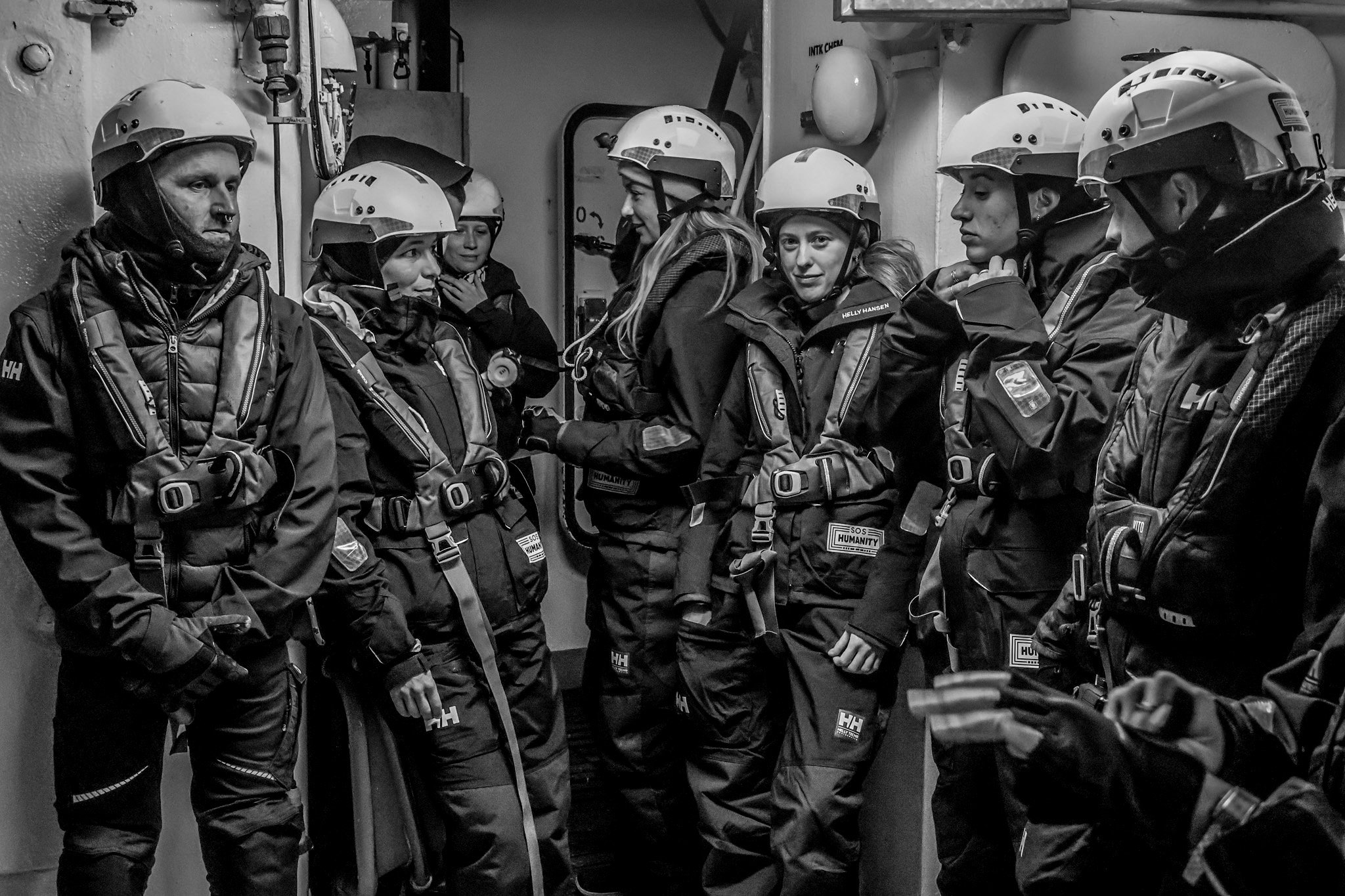
Aboard Humanity 1, we had barely finished our training exercises when we received the call. There were several boats in distress at the same time, and we were getting confusing information from Alarm Phone (a network of phone volunteers who field distress calls), a cargo ship, and Seabird. Maltese and Italian authorities were non-communicative, and it was getting dark. Our ship and Nadir began searching.
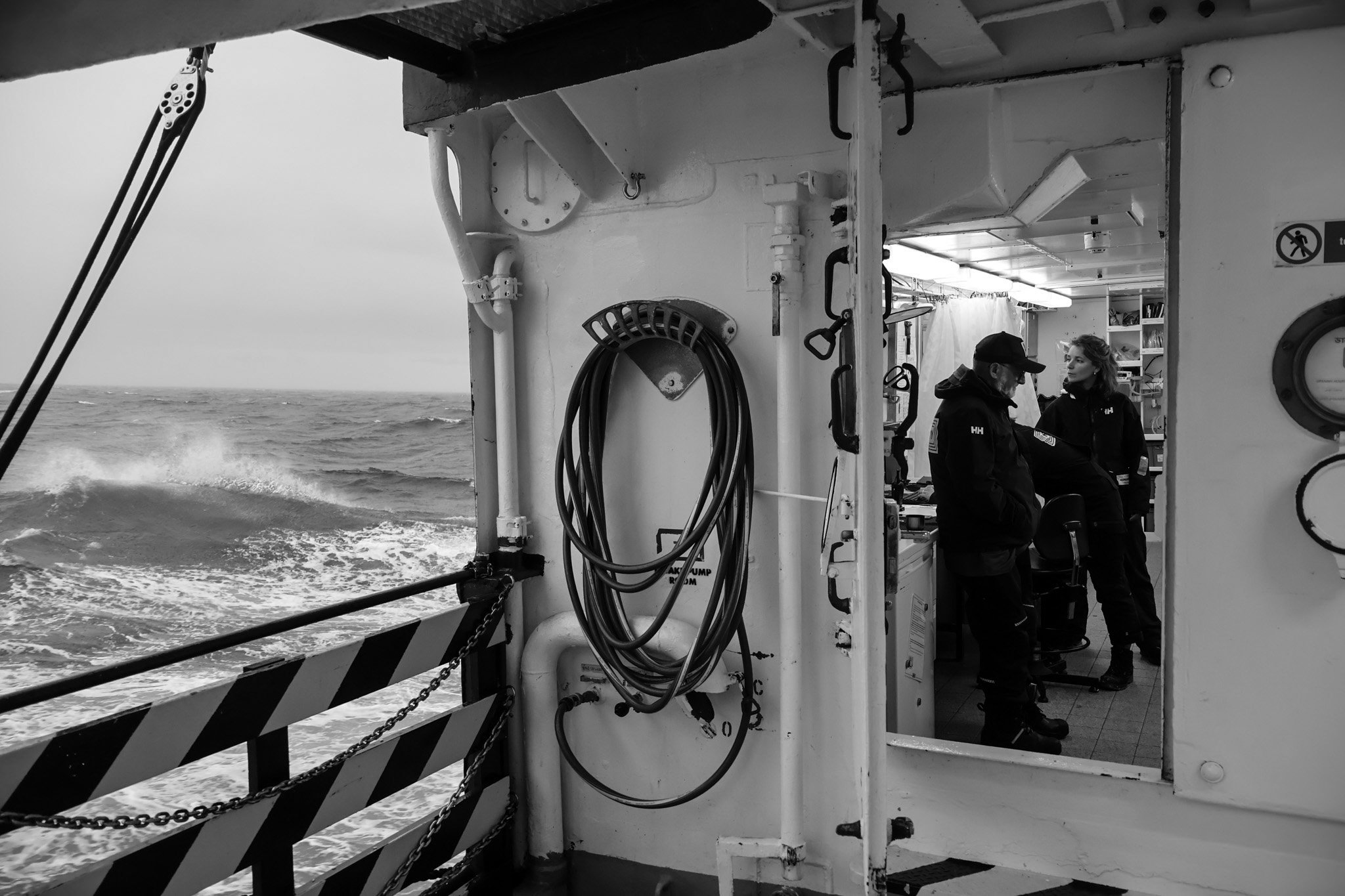
Nadir located the boat carrying Adil first. The sea was rough, and even on our relatively stable ship, coffee pots were hurled across the mess room as we rolled. But it could have been worse. On my first rotation on a rescue ship I encountered people who had drifted for nearly five days in the boiling August sun.
As we approached, we were on high alert, rushing into an emergency, but we were doing so at the moderate pace of less than 10 nautical miles an hour.
People paced apprehensively or tried to rest. There was a brief respite when a pod of dolphins began leaping and playing around the bow against a brilliant coralline sunset. I managed an hour’s nap before the call came just after midnight: Get ready for rescue.
Perched in the bow of Bravo with Rocco and Zeina as we raced to the scene was Eva Kolkman, a 28-year-old Dutch woman whose work focuses on femicide and gender-based violence. The sea is her home. She grew up on a boat built from scratch by her bohemian father. With a slight shudder, however, she recalled how a pleasant afternoon turned suddenly dangerous as she struggled to launch a boat on the low Dutch coastline as the tide rushed in. She escaped unharmed, but it gave her a keen awareness of the sea’s mercurial unpredictability.
In the Mediterranean, she said, danger is produced not by the sea but by those in power. Their decisions force people with no other options to take dangerous journeys, and then European countries neglect their responsibility to rescue when those people take to the sea.
As an undergraduate, Eva read European studies and learned to view the EU favourably. Many of Eva’s classmates became ensconced in the Brussels bureaucracy, “treating it like a religion”, she said. But as European leaders hardened policies that kept people dying on migration routes, her view of Europe soured.
We spoke as Poland, with European backing, was tearing up 70 years of international refugee law at its border, and as the EU was beginning to transform itself into a military power. It was doing so, ostensibly, to stand up for “European values” amid a schism with US President Donald Trump. But with both the US and Europe ramping up violent border controls, how different are those values?
Former Trump adviser and multibillionaire Elon Musk, who has aligned himself with the far-right party leading Italy’s government, routinely attacks rescue crews as “criminals”.
Some activists argue that all borders necessarily imply the violence of their maintenance. But amplifying – and revelling in – that violence is a new and dark feature of Western politics.
Eva said she still believes that a way of being European that is plural and welcoming is possible: “I try to understand people who disagree with me. All I ask is that they do the same.”
Threading bracelets
Working with undocumented women in shelters in Madrid, Eva became keenly aware of the gendered dangers of migration journeys. But during this rescue we have only men and boys on board, skewing towards the younger and the stronger, who have taken the responsibility of providing for people back home on their shoulders.
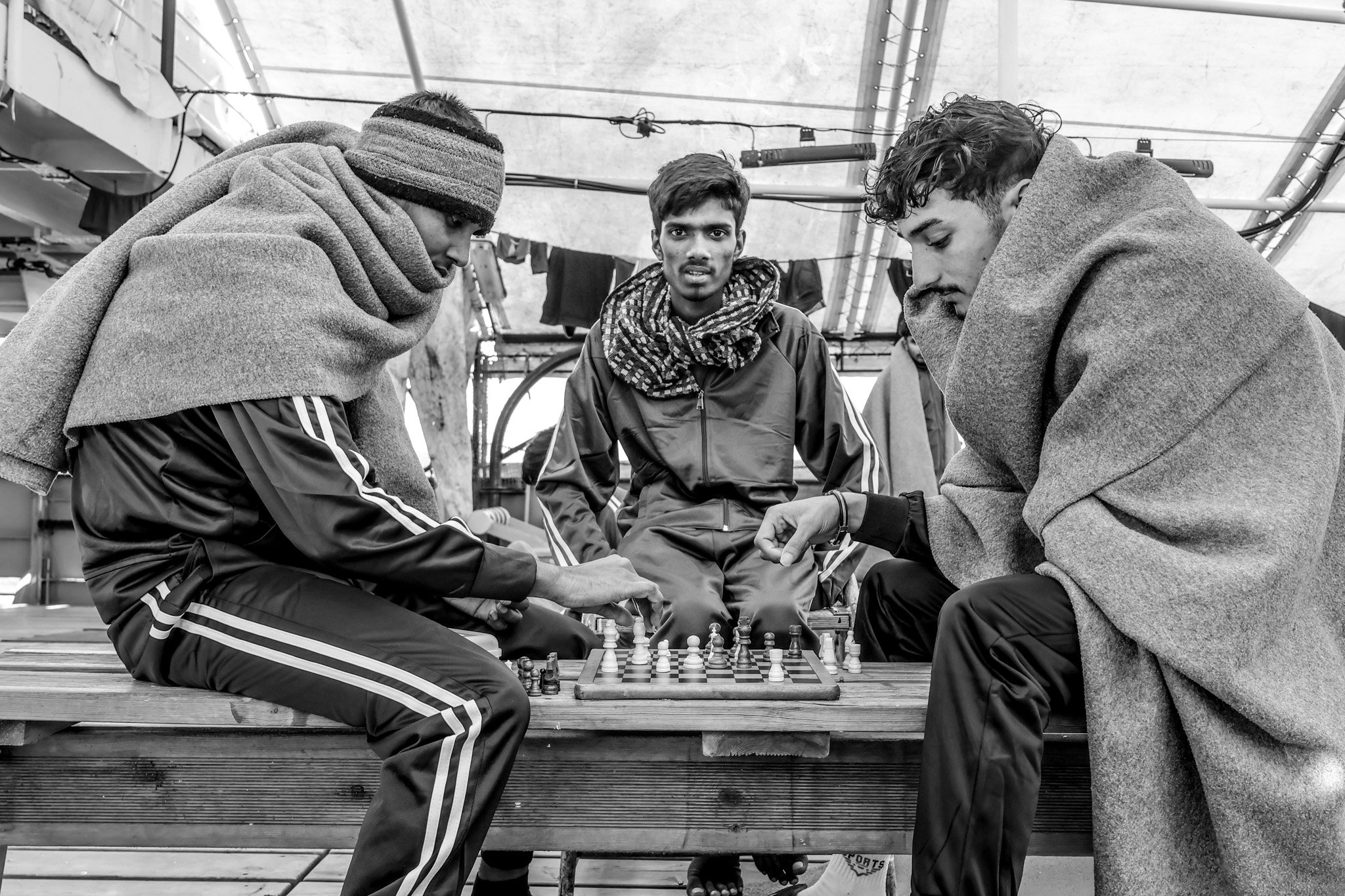
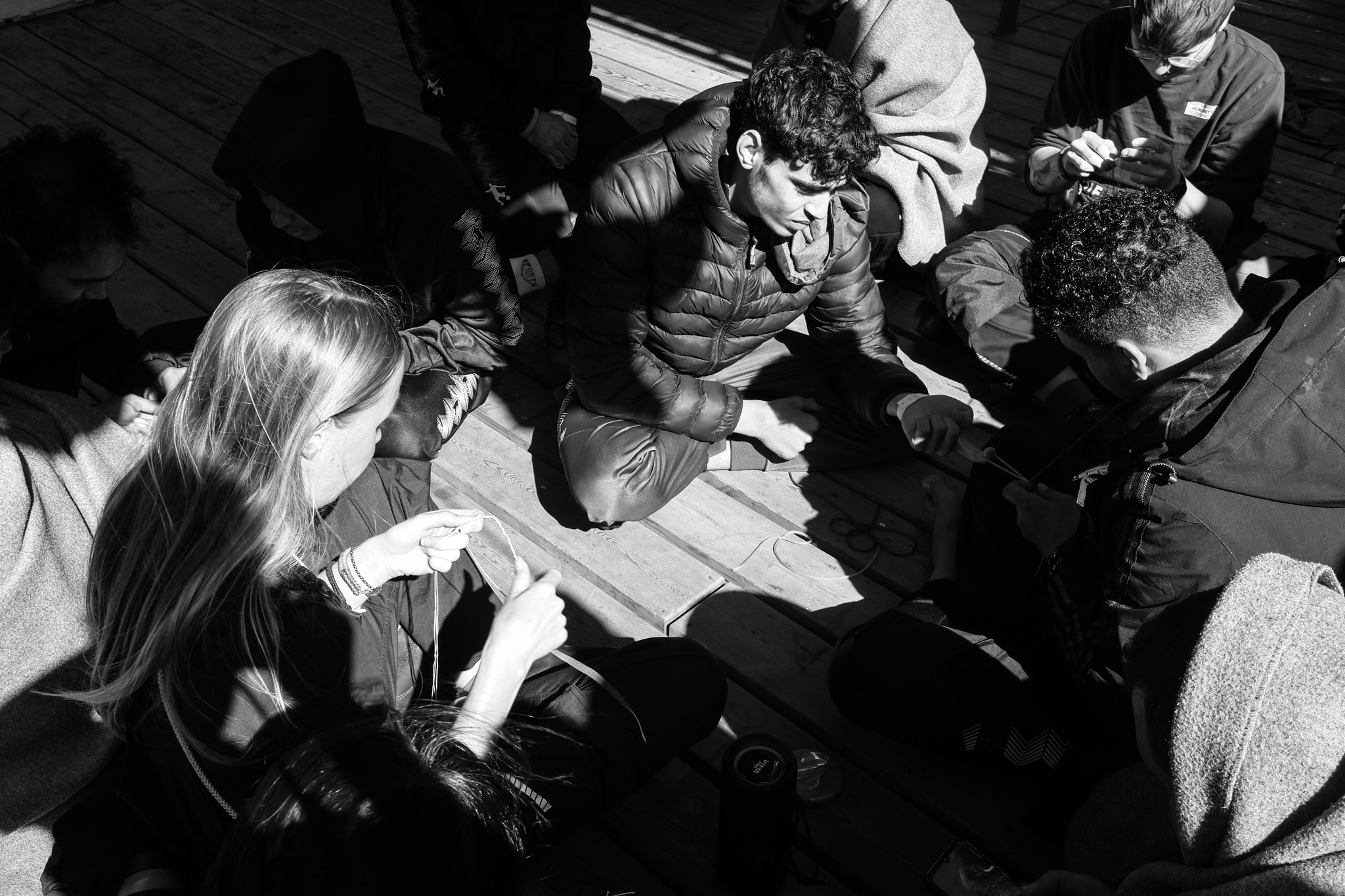
The first hours are quiet. They recover, tossed around on the rolling sea, huddled under a cobalt grey sky in grey blankets with hot, sweet tea. Gulls skim the water in driving rain. As Eva threaded herself a bracelet to pass time on deck, one of the young men cautiously approached her. She shows him what she is doing, and soon she is surrounded by a widening group, making friendship bracelets together.
One man is particularly good at it. He explains how he learned by watching others knit in a Libyan prison but never had any yarn himself. The group – who are from five different countries (Syria, Egypt, Nepal, Bangladesh, and Pakistan) and only met the previous day – start to connect over craft. A young man adds his new bracelet to his Palestine wristband.
The shadow of the genocide at the other end of the Mediterranean weighs heavily on everyone. One of our crew spent six months in the Israeli military a number of years ago, which she now deeply regrets. “I got out while I could,” she said.
As people begin to feel safer, stories emerge. Some of the teenagers describe their Libyan guards’ behaviour by imitation, making chopping motions, pointing imaginary guns in an almost excited way, as if recounting an adventure rather than a horrific experience.
There’s a sharp-eyed Bangladeshi chess player, who wins gracefully but can’t resist shooting me a cheeky grin as he unhinges my defence. An Egyptian breaks down in the evening and spends hours with our therapist. A trio feeds half their breakfast to a pigeon alighting on the deck.
These are people, we are told, who represent a civilisational threat to Europe.
The medics check on people. For some, it’s the first time they have had access to healthcare in years.
Rafa, a 62-year-old Spanish doctor who learned medicine as an army conscript just after the fall of the Franco regime, oversees the clinic alongside a Canadian nurse. She tells me she is sometimes tempted to extend her analysis from the medical to the political in her notes: Patient X suffers from exactly the conditions you’d expect to find in someone held in inhospitable conditions for over a year.
Meanwhile, the rescued people are briefed on the Italian asylum system. There are charts, videos, and other visual aids to explain what happens next. But the real answer is, who knows?
Once in Italy, they may be released to find their own way. Once, on a post-rotation night out in Naples, we ran into people we had rescued relaxing near the train station. They may be allowed to stay long-term (in Siracusa, where Humanity 1 is berthed, a little pizzeria is run by two Bangladeshis who arrived by sea in 2013), or they may be detained and deported.
But for one afternoon, people push such uncertainties to the back of their minds and thread bracelets.
The ship, the crew, the stakes
For Eva, Rafa, and a few others, it’s their first rotation, but most of the crew are veterans.
Leverne, the ship’s quirky and avuncular flame-haired electrician, who is in his mid-30s, guided me through the bowels of the ship with an expertise borne of 18 rotations.
He explained the desalination machine that produces water, the sewage treatment plant, the heating and communications systems, and everything else we depend on. “There’s one place where the whole ship could literally stop working on the half-turn of a screw,” he said.
The ship is both robust and fragile, and operating it requires creativity and flexibility on the one hand, but also a command of process and detail on the other. It is the sum of innovations from various crews over the years, reacting to diverse and unexpected circumstances.
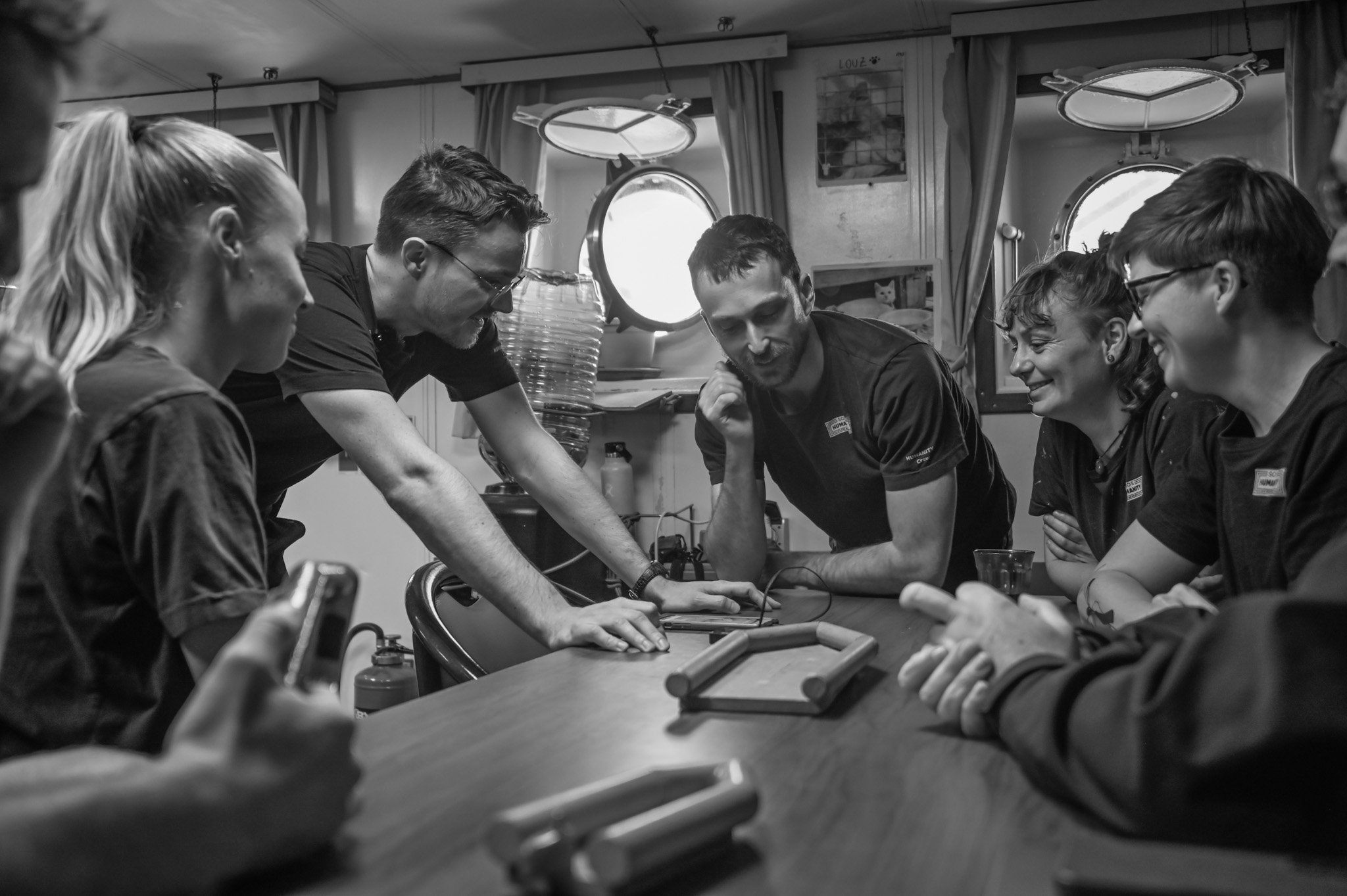
This could also be said of the crews themselves, where engineers, cooks, search-and-rescue teams, doctors and therapists, officers and seafarers, and communications and legal experts – some of whom have never met prior to each rotation – have to work as a single unit. New operational issues emerge all the time, and crews are having to adapt.
“You have shitty boats full of huge numbers of people who have often endured months, if not years, of abuse, torture, imprisonment, or slavery… [We often] find people barely alive, close to starvation, with shot wounds and open fractures. Absolutely none of those factors would be present in a normal sea-rescue operation”, Kathrin Schmidt, a former head of mission on the Iuventa, explained to me in 2022. “We had to rewrite the book.”
During my first rotation in 2023, we were shown a news report from the early days of the civil fleet. Responders had driven their big ship right up alongside a boat in distress and were trying to embark people up an uncomfortably high gap.
As they lost control and people started falling into the water, they barked orders aggressively, raising panic further. A rescuer who jumped in to save a child briefly went missing and others had to look for him, taking their eyes off the rescue. Bodies were dragged out with TV cameras rolling, providing little dignity. It was a whirl of darkness, confusion, chaos, terror.
In the hard silence that followed, we understood the point. This is how you don’t do a rescue.
The fleet learned, adapted, and grew, and people kept crossing the central Mediterranean. Many made it to Europe, but an intolerable number continue to die.
Just after I left Humanity 1 during its March rotation, the crew carried out two rescues within hours of each other, recovering 88 people including several infants, but they were too late to save one person who had gone overboard and drowned. On another NGO ship in January, one of our crew had recovered four dead children in a single rotation.
Problems ashore
In addition to operational challenges, there are political and legal ones as well.
In the Iuventa case, Italy arrested multiple crews on smuggling charges, which took half a decade to disprove. The state had reportedly placed spies on ships to gather evidence. This year, a new scandal has seen the Italian state accused of using Pegasus spyware against a search and rescue organisation as well as refugee activists.
While the Libyan Coast Guard’s violence is primarily directed against people migrating, Libyan patrols have also harassed rescue crews and fired live rounds into the water near their boats.
The problems don’t end when ships come ashore. Crews operate under a duty to rescue, and a duty to disembark people in a safe place – duties that are enshrined in international law. But for a period of time, Italy stopped allowing crews to dock altogether. Malta still won’t allow rescue ships to enter its ports and recently had to be ordered by a UN agency to conduct a rescue.
In spite of its tenacity, the fleet would rather not exist. Its continued existence means two things: the humanitarian emergency persists, and authorities are not sufficiently fulfilling their duties.
In one 2019 incident, with hundreds of people on board, in dire heat and running out of supplies, rescue captain Carola Rackete defied the orders of port authorities and docked her ship on the Italian island of Lampedusa. She was arrested on disembarkation – unlawfully, it transpired. While the fleet declared solidarity, her decision was hotly debated internally.
Giorgia Meloni, Italy’s far-right prime minister, came to power in 2022 promising naval blockades to stop migration. In reality, Meloni’s government has used less attention-grabbing, more bureaucratic measures to stymie rescues.
The 2023 Piantedosi Decree, for example, orders ships to go to a port after their first rescue. This prevents them from responding to multiple distress calls. Italian authorities often ensure those ports are as far away as possible from the area where boats are most often in distress, and they punish perceived violations of these conditions with crippling detainments of rescue boats and fines.
Meanwhile, migrants continue to be routinely wrongfully arrested and jailed on smuggling charges. These cases rarely receive the publicity surrounding those involving mostly-white European rescuers who are criminalised.
In spite of these difficulties, the civil fleet persists. The ships, several aircraft, and a huge land-based operation are sustained by small donors, churches, and charitable foundations. Ten years on, many rescuers are now also fighting in other corners. Rackete, once threatened with jail for her rescue work, is now a member of the European Parliament, while another former rescuer sits in the German parliament.
In spite of its tenacity, the fleet would rather not exist. Its continued existence means two things: the humanitarian emergency persists, and authorities are not sufficiently fulfilling their duties.
I ask Lukas, the ship’s communications coordinator, if he thinks the fleet will still be here in ten years. He laughed mirthlessly as the ship bucked against a wave: “I hope not.”
Gossamer threads of history
After rescuing the wooden boat in March, Humanity 1 was ordered by Italian authorities to disembark in Civitavecchia – a four-day, 900-kilometre voyage. We argued that following these orders could possibly cause a serious accident as the weather deteriorated. In this case, we were assigned a closer port in Sicily.
On the last night before disembarkation, Frances, the ship’s British care coordinator, gave a speech after dinner to the rescued people. “You will need to learn the language of your new country and integrate,” she said. “But don’t change who you are. You can take on another culture and keep your own. That’s what makes you special.”
It’s advice that could have been given at any time over the centuries to the countless people who have boarded ships to seek a different future – including the ancestors of some of the people who joined the crew of the Humanity 1 with me.
In 1913, an Italian family sailed from Sicily to seek their fortune in the New World, defying racist immigration laws. The sea stayed in their blood. They made a new life in the US as naval engineers, working on ships that fought German – and Italian – fascism.
Over a century later, their descendant Alex, a seafarer from New Jersey, set sail aboard the Humanity 1 as its second engineer. Over lunch, he tells me he is applying for Italian citizenship, looking to return to his ancestral home.
These gossamer threads of history are weaved across the ship. Izaro, our Spanish midwife and medic, talks to the Egyptian rescued people about Al-Andalus and the ties between Spain and the Islamic world.
Last year, Nico, a Canadian cook on Humanity 1, went walking in the port of Ortona after survivors were disembarked. She discovered a memorial to members of the unit her grandfather fought in during World War II who were killed in a December 1943 battle in which Canadian infantrymen drove elite Nazi paratroopers out of the town.
In Genoa’s naval museum, among models of the first European ships to reach the New World and a Cold War submarine, visitors can walk through a replica of one of the myriad Italian migrant ships that sailed to the Americas. At the end is an exhibit of photos from the 2015 Mediterranean migration crisis, inviting people to compare these two histories.
A silver lining
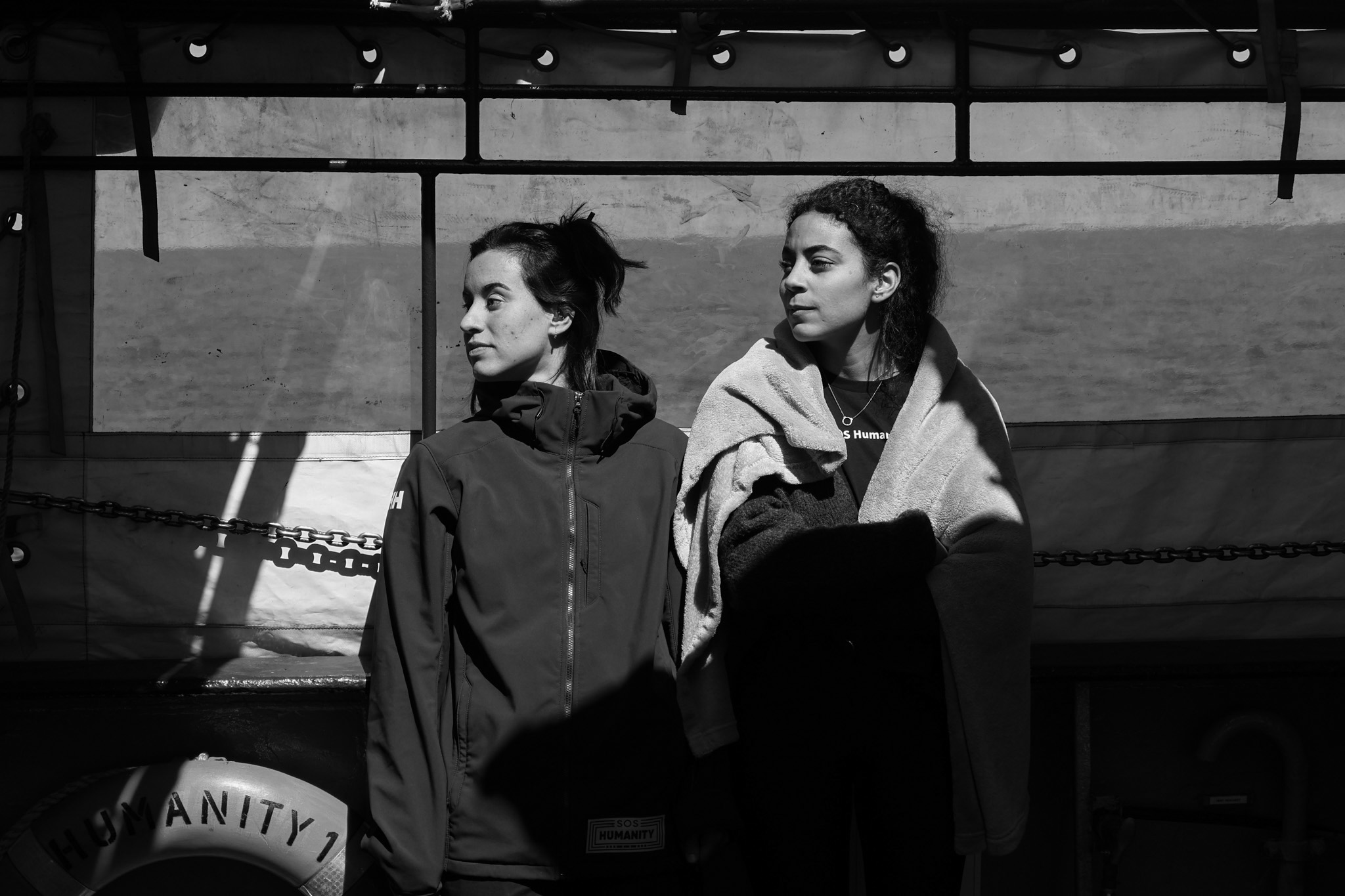
The rescue ships of the civil fleet are a little bubble, but they contain multitudes. Amidst the pain they encounter also comes comfort and connection in the fleeting, ephemeral society created onboard.
The crew are from everywhere. During my rotation on Humanity 1, we had a Ghanaian bosun, a Czech cook, and a German captain living in Brazil. Zeina, the Egyptian mediator, explains that the Egyptians she often meets on board are from much more deprived backgrounds than hers – people she would never have encountered growing up. But there are better-off people among them too, forced to flee suddenly.
Here, we are literally all in the same boat.
People don’t agree or get on all the time, but they get the job done. Different civil rescue ships have different approaches, but generally the hierarchical tradition of professional seafaring, operational discipline of emergency services, and egalitarianism of left-leaning activist culture has melded into a compromise structure that mostly works.
Humans meet emergencies by looking out for those closest to us. It’s a natural impulse. But sometimes that morphs into a desire to throw up walls and boundaries. Politicians seeking to weaponise migration as an issue are enjoying success against the backdrop of fear in a time of economic, political, geopolitical, and climate turmoil.
As competition over resources intensifies, the walls go up, and compassion for the plight of people abandoned at sea dims. So too does people’s awareness of their leaders’ responsibility for that plight – through arms exports, environmental degradation, and unequal systems of global exchange.
But the civil fleet demonstrates a different model of emergency response, one which is rooted in compassion and universalism, which insists that we learn to live together or we die alone. If there is a silver lining to our times of crisis, it is that more things like it – models of mutual aid and resilience forged by necessity – may emerge.
The beats of an operation start to feel familiar quickly. Embarkations, briefings, food distributions, cheers when ports of safety are announced, arguments with authority figures, and, ultimately, people stepping ashore to the next stage of their gamble with fate.
This is true of the last decade, and it’s true at a grander scale. Alex’s story hinted at the transcendental nature of human movement – at the traces of countless comparable journeys – as we sailed into Sicily on a grey March morning.
And yet every journey is unique. As a Nepali man waves us farewell and enters the gangway into the hands of waiting police and Red Cross volunteers, a crew member and I, who have seen these scenes a few times before, exchange a wry glance and a couple of words: “Same, same but different.”
Edited by Eric Reidy.


