

Share & more
On 9 July 2025, my name was on a list – a list that meant I could leave Gaza for the first time in my life. But leaving was not freedom. It was a severance.
Before, I had dreamed of studying in France and completing a master’s degree and PhD in linguistics. But not like this: Not under these circumstances.
Earlier this year, I was accepted into a programme to study political science at the School for Advanced Studies in the Social Sciences in Paris, and, after months of uncertainty, the French consulate informed me that an evacuation had been arranged.
After surviving 21 months of genocide, I was allowed to walk out of Gaza with around 30 other people, almost all of them students who had been admitted to universities in France. I had nothing but the clothes I was wearing, my ID, and the unbearable ache of knowing that my mother, my father, and my younger sister – my entire world – would stay behind in a war designed to erase us.
That week, Gaza wasn’t Gaza. It was dust, ash, sirens, and the sound of limbs being pulled from under crushed ceilings. The escalation of violence and evacuation orders had never been more intense.
In the background, there was talk of a ceasefire being close, raising hopes that this horror would finally end. It made me feel a little calmer about leaving. But today, those talks have been abandoned. Like all the previous rounds of talks, they were a spectacle intended as a distraction. Still, out of desperation, we fall for them every time.
A few days before I left, the French consulate told me to get ready and that if I carried anything other than my ID, a cellphone, and a charger, Israel would confiscate it. How do you pack for exile when you can’t carry anything with you? How do you fold your memories into a backpack you’re not even allowed to bring?
Witnessing Gaza’s destruction
The night before I left, I tried to memorise my sister’s eyelashes. I slept between her and my mother, all hugging like it could be the last time.
My sister, who is 19, was quiet. Too quiet. She didn’t say don’t go. She just looked at me and hugged me even tighter. That look will follow me longer than this war. And my mother – oh, I have no strength to write this – I can’t forget her eyes and how she cried her heart out while pushing me out of the room to leave, while knowing we may never see each other again.
We gathered in Deir al-Balah at 4am, at a meeting point designated by the French consulate. I huddled together with the other students who had been chosen to evacuate, each of us carrying stories we will never finish writing. On the way there, I travelled on the coastal road, al-Rasheed Street. It was the last time I saw the sea. I kept looking back and forth between it and my mother and sister, trying to memorise my two homes.
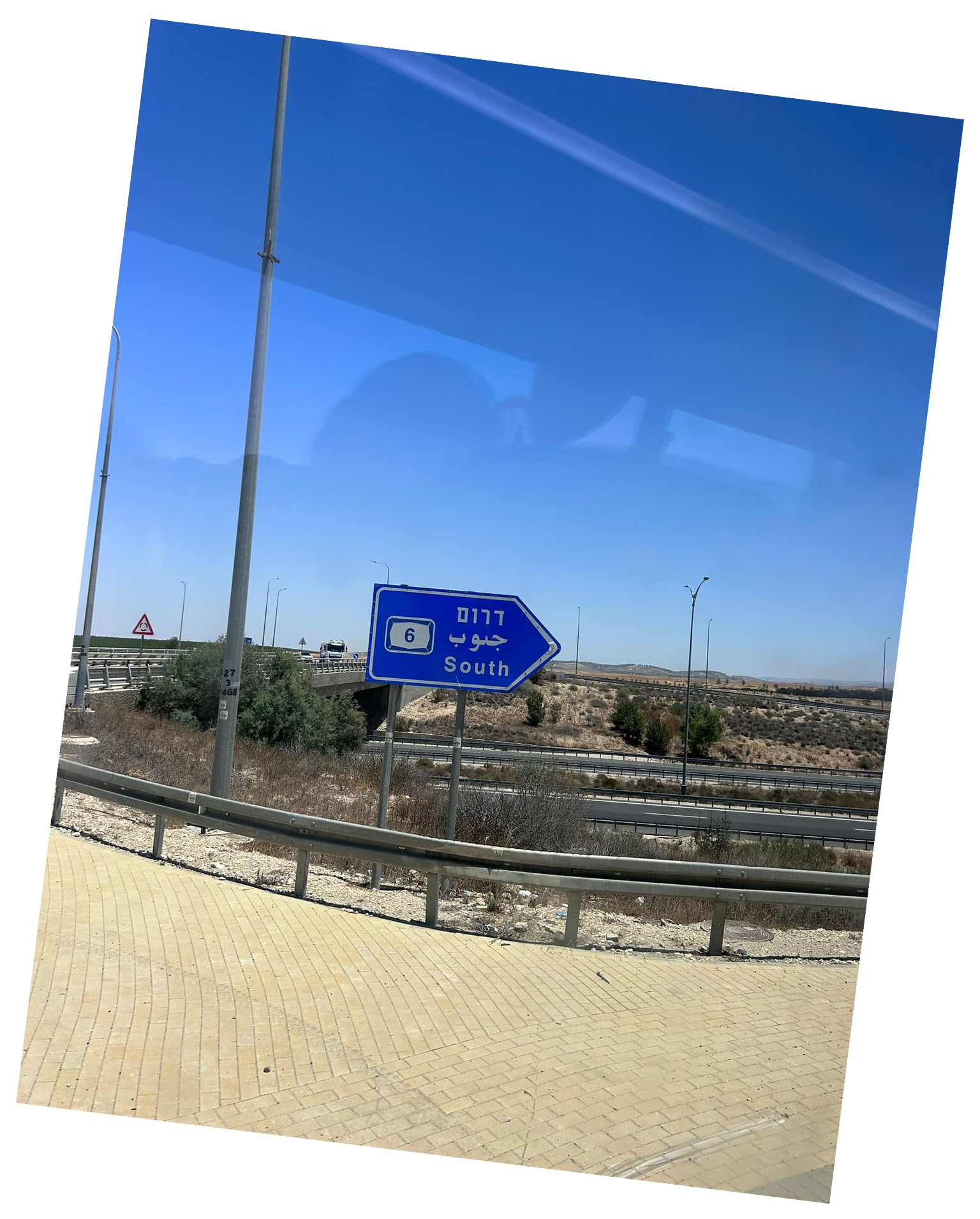
When the buses arrived, we boarded them like ghosts, eyes puffy from tears and lack of sleep. I sat by the window and forced myself to watch – to watch the death of what used to be home. Khan Younis. Rafah. Names of places that no longer exist – flattened into an architecture of silence. Concrete bones. Burnt laundry. A tricycle melted onto a doorstep. Even the birds flew lower now, as if in mourning.
I have no words to describe the amount of destruction I saw on the road to the Kerem Shalom border crossing. Everything was unrecognisable. It was like a movie of the end of the world.
In Rafah, which has been almost entirely depopulated, we passed aid trucks lined up like props in a crime scene. Dozens of them. Full of food, flour, water, medicine. Parked just metres from Gaza’s corpse, but never allowed to reach the people who need their supplies. Bread rotting while children in tents boil grass for dinner.
What do you call that if not a war crime? The bureaucracy of genocide? It’s murder by paperwork, signed in Washington, worsened by Europe, and enforced in Tel Aviv.
Humiliation
At the border crossing, Israeli soldiers waited, rifles in hand – as if we were the threat, not the victims. They verified our identities, and told us again to bring nothing with us. No laptops. No books. Not even headphones. I wasn’t even allowed to bring a notebook containing poetry I’d written throughout the war. Words, apparently, are too dangerous for the occupier.
I left the notebook with my sister, along with everything else I have. She promised to keep it safe for me until, perhaps one day, I return.
The soldiers searched our bodies like we were carrying bombs, not grief. They touched our backs, checked our socks, scanned our eyes.
One soldier looked at me and said: “Where are you from?” I wanted to respond: “Where am I from? From under your bombs. From the womb you tried to bury. From a city you erased but couldn’t unbirth.” But I didn’t answer him. I just said: “I have a scholarship.” He smiled. “May you be successful.” I have never felt more humiliated in my life. To be blessed by your killer.
On the other side, staff from the French embassy and other European embassies were waiting. They checked our names again, but they were kind and warm and gave us food.
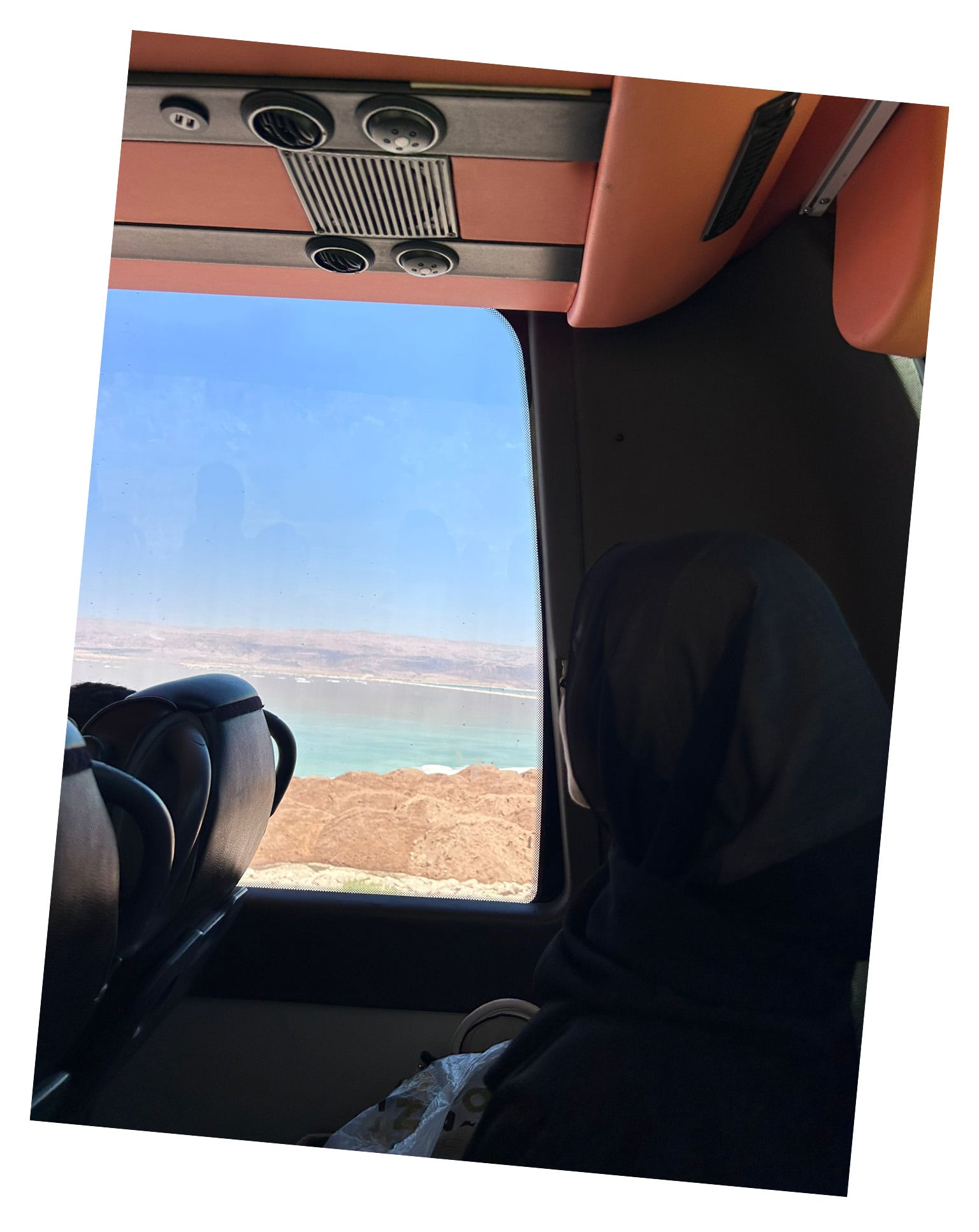
On board the bus to Jordan, no one spoke. But grief has its own language. Our silence was a hymn – a funeral song for the families we left, for the children we may never see again, for the truth we were forbidden to carry.
Two seats behind me, a girl around my age whispered to me. She didn’t ask my name, and I never asked hers. But she said: “My father stayed. He said he’d rather die in his house than in a tent. My little brother, he’s five. I told him I’d bring chocolate from France. He smiled. He doesn’t know. He doesn’t know this might be goodbye forever.”
She pulled her sleeves over her hands, stared at the floor. “I feel like I left my soul under the rubble. And now I’m scared someone will step on it… I am convinced that I will return home to my mother and describe my journey to her, and she will say, “Hi girl, you are late!’”
And that was it. No crying. No sobbing. Just quiet. A silence so heavy it pressed against our lungs. That girl, like me, is somewhere in France now. Eating bread. Studying French. Beginning her studies. But part of her – part of all of us – is still in Gaza, screaming behind a collapsed wall that no one is trying to break through to rescue us.
Did I betray them?
On the way to Jordan, we passed through the occupied Palestinian territories: four hours crossing a homeland I had never seen.
Because we’re from Gaza, we’ve never seen our own land – the rest of Palestine, always forbidden to us, always a rumour. And yet, there it was: mountains; vineyards; hills bleeding with olive trees; the Dead Sea; and, finally, the beach resorts on its shores; the five-star hotels; Europeans tanning in bikinis while 30 kilometres away children are buried, two to a tent.
Now I am safe and fed. But I am alone. I sleep in a very comfortable and warm bed, but every night I stare at the ceiling and ask: Did I betray them?
This is the cruel theatre of occupation: Genocide on the Mediterranean. Cocktails by the Dead Sea.
When we reached Amman, the French embassy had rooms for us at the Intercontinental Hotel. It had everything you could ever need. Coming from Gaza, it was overwhelming. I was shocked and depressed having just left my entire family and home behind. We stayed for two nights, until our flights to France. They were days full of silence and loneliness. I stayed in my room, crying.
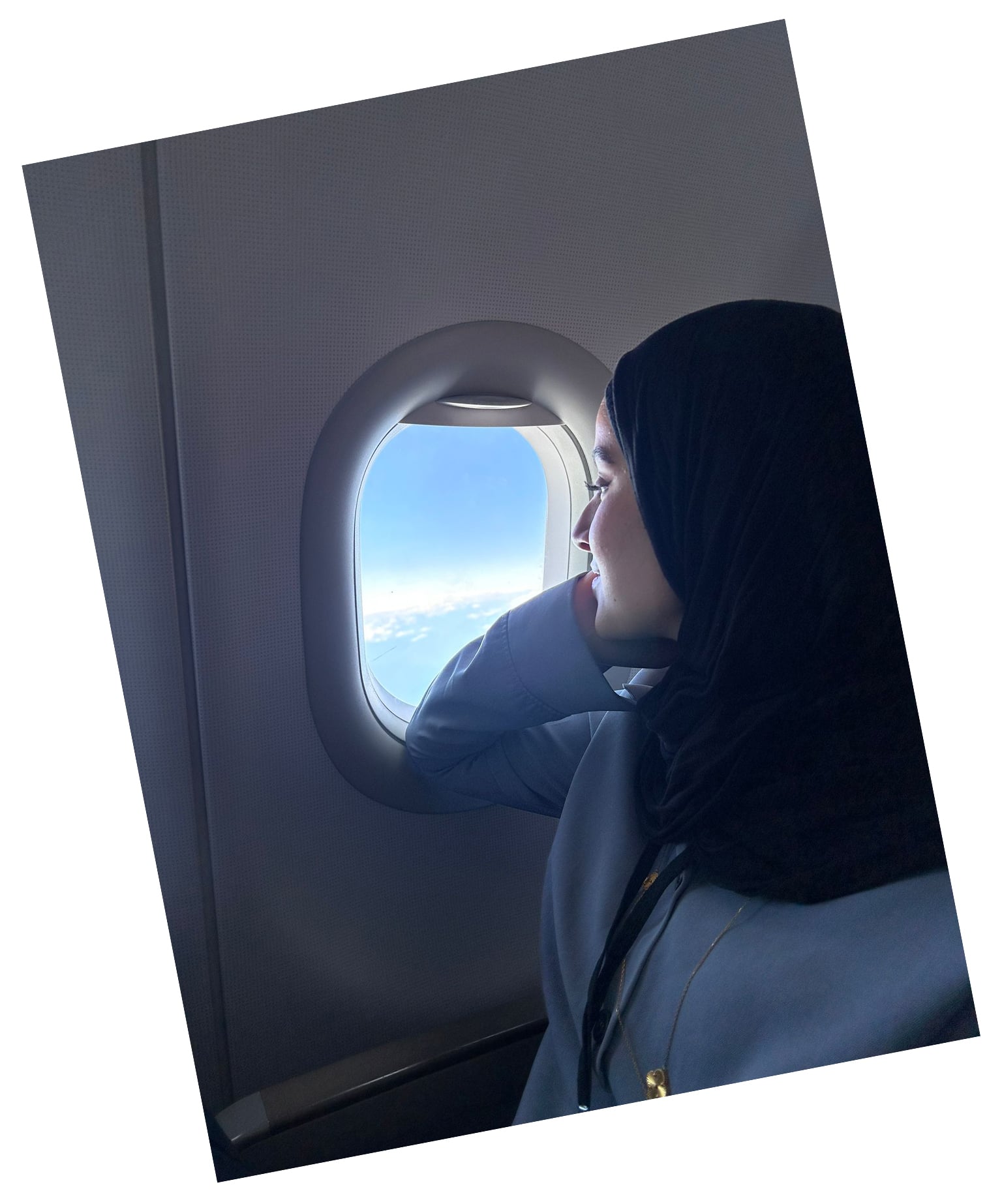
Finally, we went to the airport and departed for Paris. It was my first time on an airplane. I got really sick, but I was amazed by how big the world actually is and how a tiny piece of land can make the entire world wake up and realise how wrong they have been.
At the airport in Paris, friends I made through social media were waiting for me with beautiful flowers and warm hugs. Now I am safe and fed. But I am alone. I sleep in a very comfortable and warm bed, but every night I stare at the ceiling and ask: Did I betray them? Did I abandon my mother? My sister? My people?
A promise of return
The situation back home is only worsening. How did the world allow this man-made starvation to deepen to the point where children are actually dying because Israel will not allow in food?
Was leaving an act of courage or desertion? But I know this: I did not leave Gaza to forget it. I left to avenge it with language, with politics, with memory sharper than bullets.
When my family manages to have internet connection and I am able to talk to them, they try to hide how tired they feel. For months now, all they have been eating is tiny portions of food. They tell me there isn’t any food left in the markets – even having money is useless at this point.
The guilt burns my stomach. Tears flow from my eyes. Food turns to dust in my mouth.
I ask myself: Was leaving an act of courage or desertion? But I know this: I did not leave Gaza to forget it. I left to avenge it with language, with politics, with memory sharper than bullets. I left to learn the language of the courts that never saved us: to use their own tools to carve our name back into history.
You, in your embassies and press rooms and TV studios, you will hear from me. I will not be your success story. I will be your mirror. And you will not like what you see. I left Gaza with nothing. No bag. No books. Only rage. Only names carved inside my chest. Only the promise that I will return, not as a guest. But as a storm.
Edited by Eric Reidy.


