


Share & more
When vast numbers of displaced Sudanese began arriving in the Darfur town of Tawila three months ago, escaping vicious attacks from the paramilitary Rapid Support Forces (RSF), a small group of local volunteers mounted an emergency response.
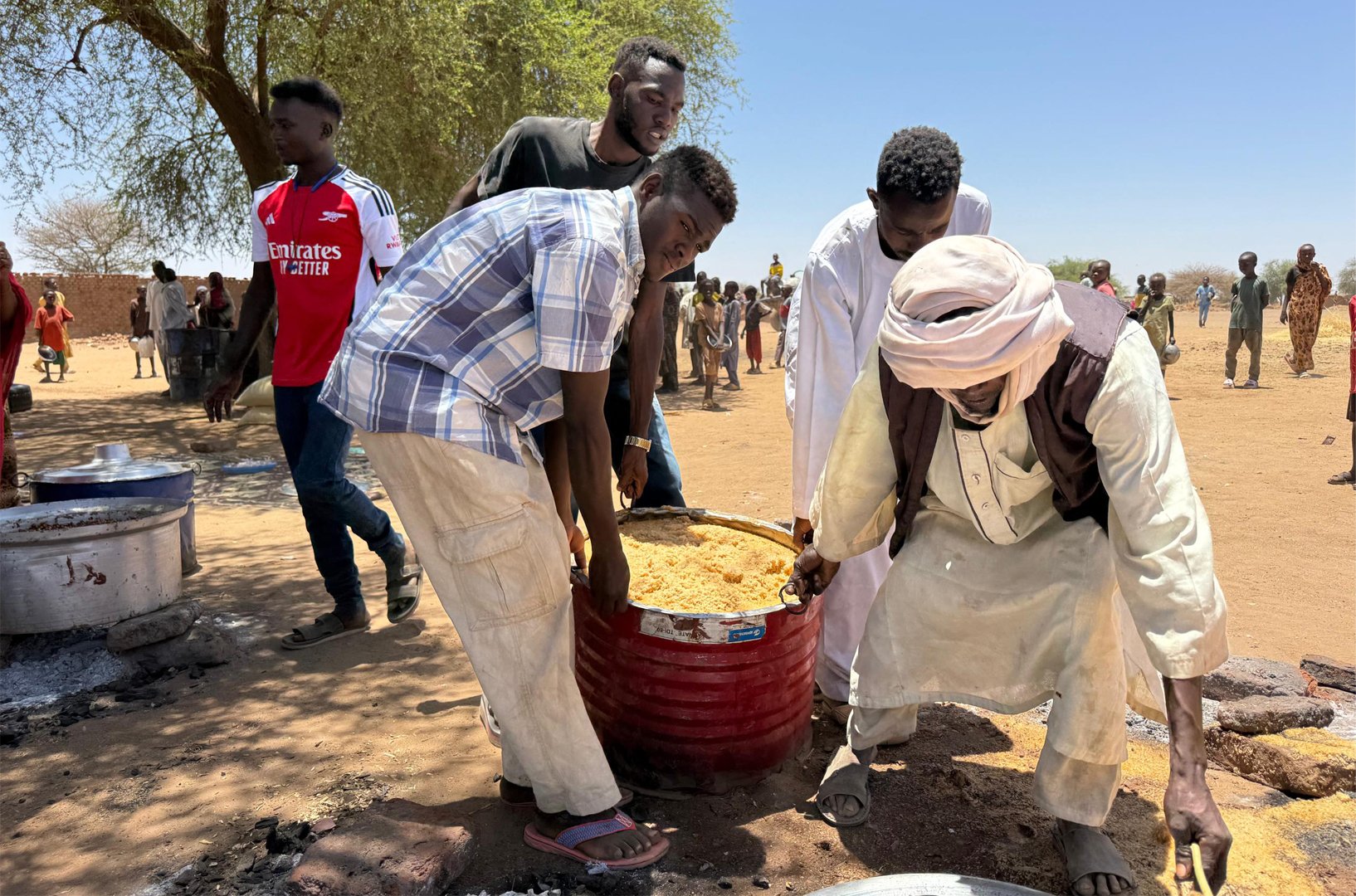
With five bowls of aseeda – a thick high-energy porridge – cooked from a single sack of flour from their stocks at home, the group quickly made their way to the new arrivals, most of whom had come to the town with nothing.
Soon, the initiative spread across their neighbourhood, as other residents donated supplies. Now, despite only receiving sporadic funding, the group feeds more than 2,000 families a day – many of them large households with no other source of food.
“What pushed us to continue was the situation of the newcomers – they had fled the war with nothing,” said Fouad Ismail, a founder of the initiative. “As locals, we know how to manage things, to help people until they can become self-reliant.”
Fouad’s initiative is one of many community kitchens that have sprung up across Tawila, a small town with few resources or public infrastructure that has now become one of the main hubs of displacement in Darfur, with up to a million people seeking refuge there.
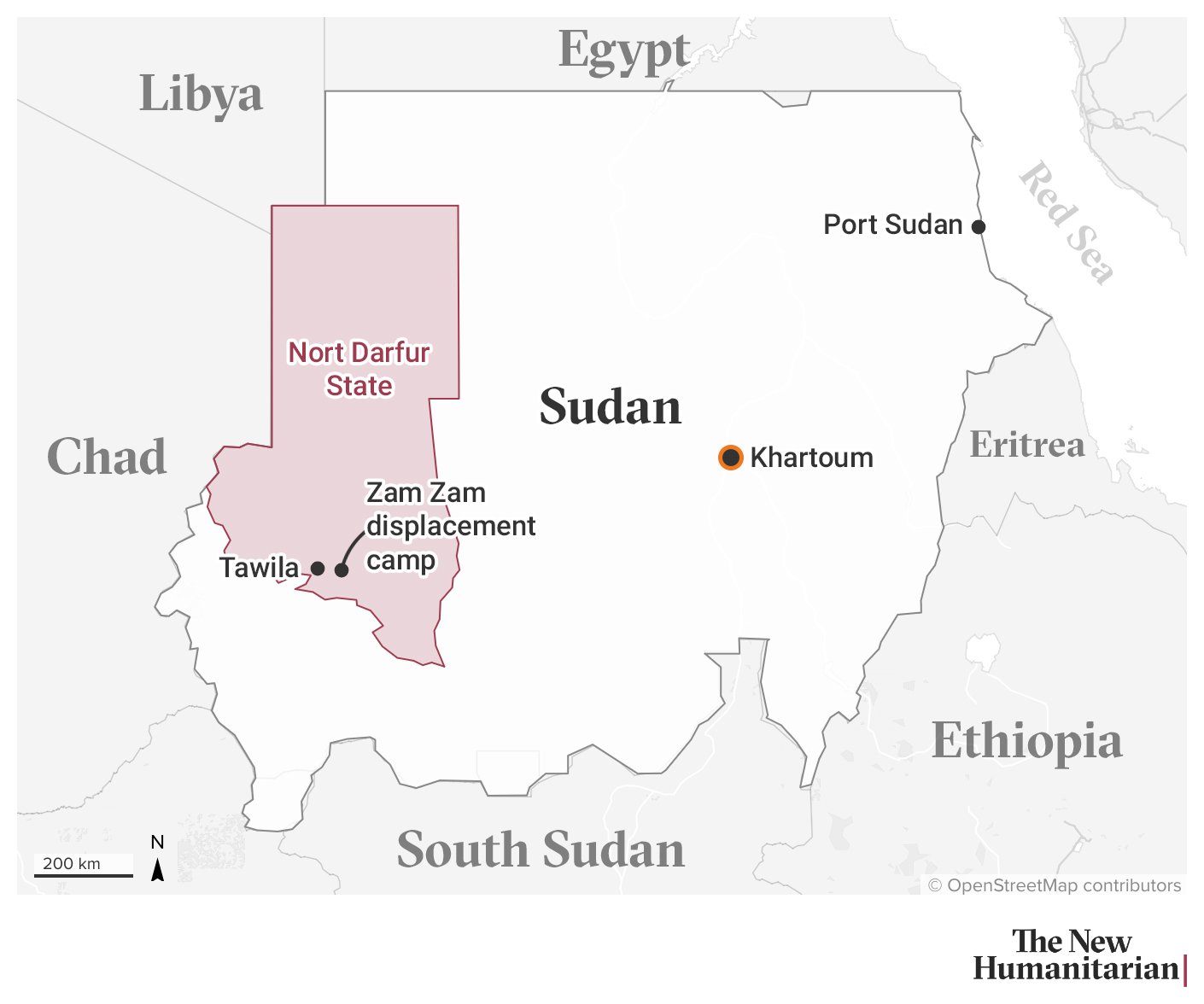
Most of the displaced have come from North Darfur state, which is the only part of the Darfur region – the stronghold of the RSF – where the paramilitary group is still being challenged by the Sudanese Armed Forces (SAF) and allied militias.
Arrivals have soared since April, when up to 400,000 people escaped the famine-hit Zam Zam displacement camp. The camp – the largest in Sudan – was brutally overrun by the RSF, which viewed communities there as aligned to pro-SAF armed groups.
Volunteers say their efforts in Tawila – part of a nationwide mutual aid movement that has mobilised since the war between the RSF and the SAF erupted in 2023 – have saved lives as people face some of the harshest conditions in the country.
Still, the volunteers say they are relying on small donations – from communities, local philanthropists, and international aid groups – while contending with supply shocks, soaring prices, local bureaucracy, and psychological strain.
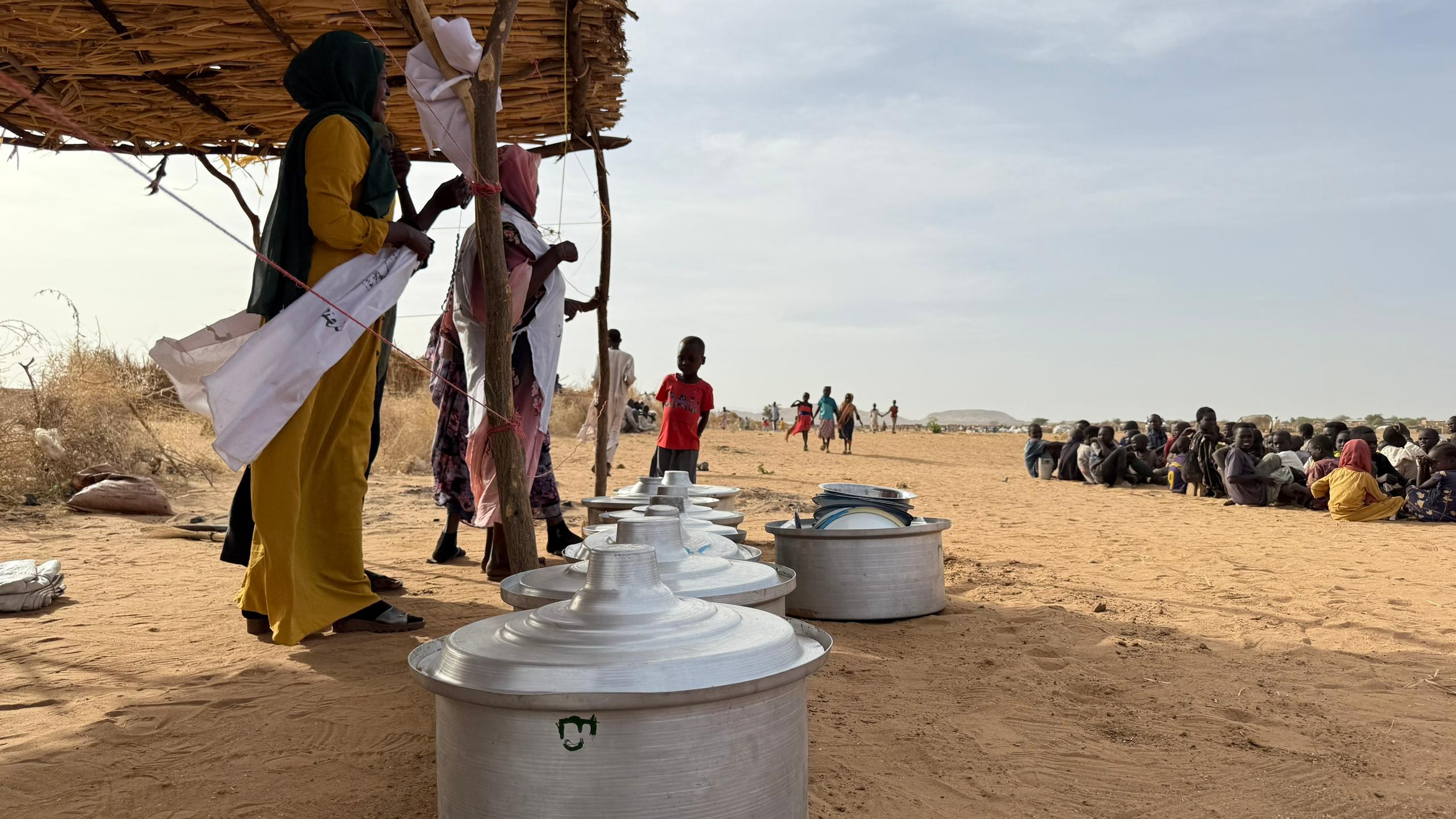
Despite their efforts, conditions remain dire both inside Tawila town and in surrounding camps, where hundreds of thousands of people are living in open fields – exposed to relentless dust and with little to no shade from the harsh elements.
“Families are surviving on scraps, sleeping in the dirt under roofs made out of straw, with barely any access to clean water and toilets,” said the Sudan country director of the Norwegian refugee council (NRC), Shashwat Saraf, in a statement this month.
Saraf, whose organisation is one of few international groups operating on the ground, said the window for saving thousands of lives is closing fast, especially as the rainy season is set to worsen conditions and restrict access to humanitarian groups.
Safe haven
Darfuris began escaping to Tawila early last year. Despite its lack of basic services and facilities, it became a safe haven because it is controlled by an armed group that has maintained a stance of neutrality between the SAF and the RSF.
Many who spoke to The New Humanitarian said they also came to the town believing its tight-knit community would offer support – and hoping that, over time, international aid groups would follow.
Asia Mohammed Sarour, who recently arrived from El Fasher – the North Darfur capital which is currently besieged by the RSF – said she has been receiving rice and lentils from a community kitchen, but has not received help from international aid groups.
“Our current need is for nutrition programs, as our children have become weak and so have we,” Sarour said. “We also need utensils, shelter, plastic sheeting, blankets, and a market where we can work.
Local responders described a range of efforts, spanning emergency response rooms – mutual aid networks that exist across the country – to more informal Takaya soup kitchens set up by community members.
Some kitchens were established by Tawila’s host community, while others are run by displaced people who had operated similar kitchens in their own towns and villages before being uprooted – and have now restarted them in camps.
Ismail, the founder of the group that began with five bowls of aseeda, said his kitchen was one of the first in Tawila. He described a sense of duty to those in need – echoing the idea of Al Dhara, a local tradition of hospitality, especially to strangers and travellers.
“The motive that drove us to establish the kitchen was humanitarian,” he said. “We saw people coming to us in Tawila and considered them guests – we provided food and water because it is our custom.”
Ismail said his kitchen relies entirely on local donations and volunteer efforts. “We used to collect donations from neighbourhood residents and philanthropists, and we are still continuing,” he explained. “There is no specific, fixed entity we rely on.”
“The displacement has been continuous”
Volunteer Islam Adam Ibrahim said she launched a community kitchen in February 2024 after leaving El Fasher for Tawila and hasn’t stopped since because “the displacement has been continuous”.
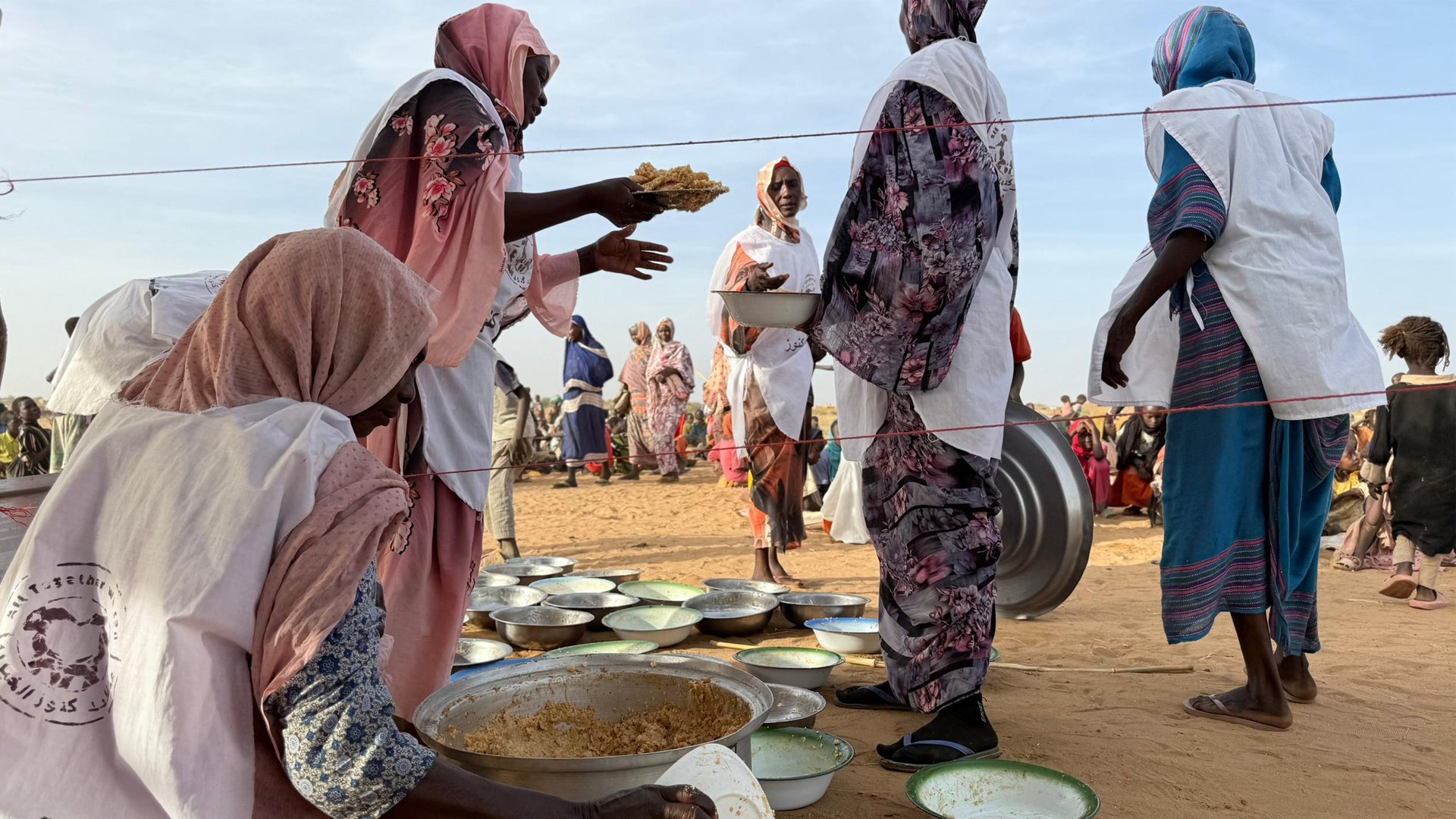
Ibrahim said her kitchen began with just a few pots serving a small number of people in El Fasher but now prepares 22 large pots daily in Tawila from one central kitchen with four additional branches and distribution points.
She said financial support comes from local residents, the Tawila emergency response room – which coordinates kitchens and other local efforts in the town – and an international NGO.
All of the local kitchens coordinate with each-other, added Bader Abdul Rahman Mohamed, who leads the Kanouz kitchen at the Daba Nayra camp, which is one of the main hubs receiving newly displaced people.
“We work well and in coordination with other kitchens and organisations,” Mohamed said. “Each group has its own area or exclusive region, covering the daily needs based on its capacity or the kitchen’s size.”
Mohamed said his kitchen began operations in April, with a modest first meal of lentil porridge. It now provides lunch daily to around 1,200 people, on a 10-day meal plan that includes millet porridge, oranges, and grilled meat.
The kitchen is run by around a dozen volunteers – some of whom are displaced themselves – and gives particular attention and care to vulnerable families who are identified by community leaders for needing additional support, Mohamed explained.
“We give them special meal cards so they can come anytime – morning, noon, or evening,” he said. “Unlike others, they are not limited to one meal per day. Whenever food is ready, they receive their portion.”
Mohamed said his team operates on principles of solidarity and shared leadership – values common to mutual aid groups: There is no hierarchy, decisions are made collectively, and team members support one another when emergencies arise.
Pricey goods and bureaucratic hurdles
Despite the local efforts and the limited support from international organisations, displaced people, Tawila residents, and civil society all described conditions in and around the town as the worst in Darfur and among the worst in the country.
According to NRC, in four camps set up to accommodate new arrivals, only 10% of people have reliable water access, less than 10% have access to latrines, and most families report eating one meal a day or less.
“People here are living in harsh conditions, suffering from pollution as well as from the sun,” said Ibrahim, the volunteer from El Fasher who helped launch a kitchen in early 2024.
Ibrahim said the vast majority of children fleeing Zam Zam show signs of malnutrition, while families struggle to feed themselves with the meals provided, and women face added burdens due to lost livelihoods.
Volunteers described funding as their biggest challenge, with local communities overstretched in what they can provide and money from international donors coming in irregularly.
“We rely on grants from humanitarian organisations, and most kitchens in Tawila depend on this type of humanitarian funding, which is neither continuous nor consistent,” said Mohamed, from the Kanouz kitchen.
“Sometimes, we cannot secure next week’s funding, so we reduce the quantity served daily or omit some items — for example, removing meat from a meal,” Mohamed added. “Some kitchens have stopped operating, and others are working partially.”
Rani Salah Abdullah, who works for the emergency response room in Tawila, said his group operates without any stockpiles, collecting water from a few scarce hand pumps, and relying entirely on daily donations from the community.
“We urgently appeal to international organisations, United Nations agencies, and philanthropists for immediate intervention,” Rani said. “We need support for local organisations and initiatives to address this dire humanitarian situation.”
“We have a humanity that does not allow us to stop, because what affects your brother and sister affects you.”
Mohamed and others also described numerous supply-side challenges. Tawila is dependent on goods coming from Chad, Libya, and eastern Sudan, yet roads are regularly blocked by the RSF, and checkpoint taxes on trucks have driven up prices.
The responders said they are also struggling with a severe cash crunch as funds sent to their bank accounts or via mobile transfers become costly to access due to extremely high exchange rates.
Bureaucratic hurdles imposed by the civilian administration controlled by the Sudan Liberation Army-Abdul Wahid (SLA-AW) – the armed group that is in charge of Tawila – have further complicated relief efforts, several volunteers said.
They said displaced people arriving in the town must obtain permission to set up kitchens or join local initiatives, a process that can involve vetting funding sources and approval from multiple authorities, including police and intelligence.
Several volunteers who escaped to Tawila described enduring psychological trauma with little or no support following harassment and arrests by the RSF and pro-SAF forces in El Fasher and nearby camps.
Others said the sheer scale of displacement in Tawila and limited resources have added to their stress, creating a sense of helplessness. They called for urgent mental health support for volunteers.
Despite the challenges, none of the responders said they planned to stop their work. Several spoke of ambitions to expand beyond kitchens, with ideas ranging from protection initiatives for women and girls to vocational training for displaced people.
“We have a humanity that does not allow us to stop, because what affects your brother and sister affects you,” said Ibrahim, the volunteer from El Fasher. “We too were displaced before and people stood with us.”
Edited by Philip Kleinfeld.


