


Share & more
It has now been more than a year since the rule of Sheikh Hasina, Asia’s longest-serving autocrat, came to an end amid deadly student-led protests, and many people in Bangladesh are impatient for a government that can deliver the reforms and services that tens of thousands took to the streets to demand.
After 15 years of rule in the nation of 176 million – marked by allegations of corruption, torture, and forced disappearances – Hasina, the daughter of a former prime minister, presided over a July-August 2024 crackdown that left up to 1,400 civilians dead, according to UN investigators.
This week, amid rising tensions in the Bangladeshi capital, Dhaka, and a flurry of crude bombings and arson attacks nationwide, 78-year-old Hasina – who is now living in India under the protection of the Indian government – was sentenced to death in absentia for crimes against humanity.
The interim government, led by Nobel laureate Muhammad Yunus, has promised sweeping reforms. In June, his administration even released a booklet outlining initiatives ranging from anti-corruption drives to electoral overhauls and decentralisation.
Delayed elections are now scheduled for February 2026, but as the Bangladeshi economy continues to stagnate some wonder why Yunus’ promised changes are so slow to come.
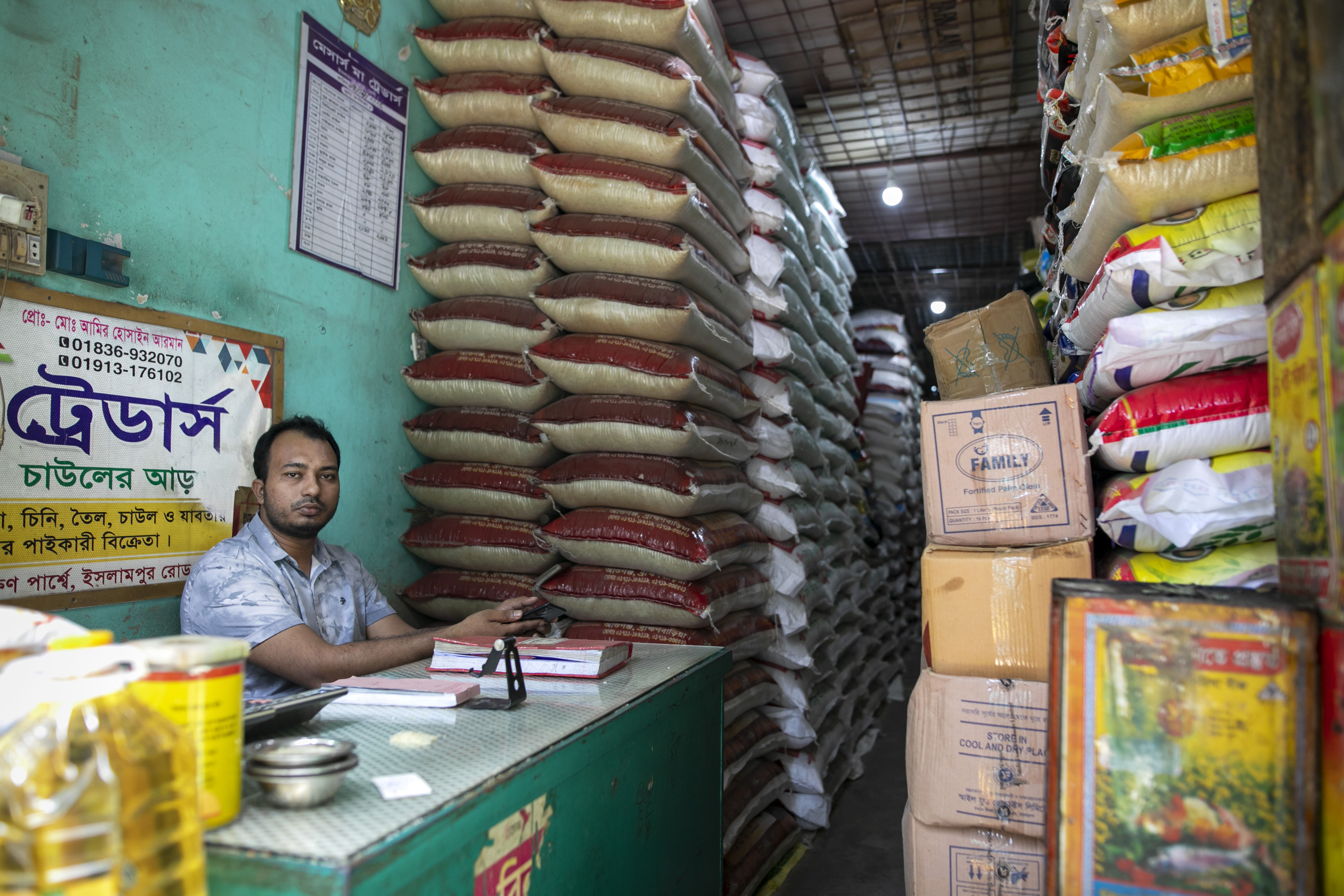
This question simmered in Feni’s bazar, a once busy wholesale market on an early October morning. Stalls that used to overflow with buyers were empty as traders counted losses instead of profits.
“Sales have dropped sharply. Retailers used to crowd around to buy goods at this time, but now look – it’s empty,” wholesaler Nazmul Hoq sighed, explaining that products are now being sold to buyers on credit and that sellers are also having to buy new stock on promises in place of cash.
Another trader, Rahman, said this has led to a situation where, “costs stay the same, but incomes have disappeared.”
Nearby, Joynal Abedin was stacking sacks of unsold rice. He posed a question that is on the mind of more and more Bangladeshis: “Was the revolution worth it?” It is also a question based on a very real fear. “If this continues, we will have to starve someday,” he added.
Frustration builds as growth stalls
Economic figures underpin these concerns.
Inflation has been decreasing but is still above 8% and food prices are rising. Growth in the last fiscal year slipped to 3.97%, the lowest it has been since the COVID-19 pandemic. For traders, these numbers are not abstract – they translate into lived realities of shrinking margins and empty stalls. They also exemplify the paradox of Bangladesh’s fragile transition. Freedom from authoritarian rule has come, but safety, inclusion, and economic relief have not yet followed.
In Dhaka, leaders and experts talk about constitutional reform. But in towns and villages, people worry about rice prices driving up costs and daily survival.
“The interim government focused on cutting waste and halting corrupt projects rather than prioritising economic reforms, which reduced jobs and hurt livelihoods,” said Khondaker Golam Moazzem of Dhaka-based think tank CPD. “Political indecision discouraged investment, shrinking revenue and raising inflation. Genuine reform now depends on a swift political transition through elections.”
Observers worry that the gap between grandiose promises in Dhaka and people’s daily struggles is growing, and unless reforms bring real help to ordinary lives, rising frustration on the streets could upend the whole transition.
Reforming security without sparking instability
It’s not just the economy that worries people. The country has clearly moved away from authoritarian rule and created room for much-needed political reforms, but the struggle to ensure public safety while upholding individual freedoms has revealed deep systemic flaws.
When leading constitutional lawyer Syed Zaynul Abedin Mesbah warns that “security reform is essential, but it cannot become a tool for political suppression or unchecked surveillance,” his words carry the weight of history.
For decades, Bangladesh’s security forces held near-total sway – feared more than trusted. Since Hasina’s dramatic fall, the country is struggling to redefine what security means. “True stability depends on professionalism within the forces and an independent Election Commission that citizens can trust,” Mesbah told The New Humanitarian.
At first, there were signs of change. The government lifted bans on Islamist parties, invited in UN monitors, and allowed a UN human rights office to open in Dhaka: gestures that suggested openness and accountability.
But beneath the surface, progress has been uneven.
“After the fall of the government, Bangladesh entered a period of lawlessness and fear, during which people of all classes, not just minorities, became vulnerable.”
In February 2025, a Human Rights Watch roadmap laid out clear steps: repeal the Cyber Security Act, disband the Rapid Action Battalion (RAB), and establish independent oversight of the police and intelligence agencies. Yet the RAB continues to operate, and the Cyber Security Act has only been partially amended. These half-measures cause some to question whether the old habits of control have truly been abandoned.
Meanwhile, insecurity and fear are spreading: Police hesitate to act, leaving ordinary citizens vulnerable. This vacuum has emboldened mobs and fuelled violence in the streets. Dhaka, in particular, is feeling more unsafe. Last week, 14 crude petrol bombs exploded in different parts of the city. Three buses were also set on fire, and traffic became unusually empty as people stayed home. This comes on top of rising mob attacks, which killed 111 people between January and August 2025.
“After the fall of the government, Bangladesh entered a period of lawlessness and fear, during which people of all classes, not just minorities, became vulnerable,” said Abu Ahmed Faijul Kabir, senior coordinator of Ain o Salish Kendra (ASK), a leading Bangladeshi legal aid and human rights organisation. “Mobs attacked homes, schools, and teachers, spreading a culture of intimidation.”
Minorities, in particular, fear for their safety.
Rights groups such as ASK and the Bangladesh Hindu Buddhist Christian Unity Council (BHBCUC) have tracked violence. BHBCUC reported thousands of incidents since August 2024, including 27 murders this year alone. In September 2025, more than 40 Sufi shrines were attacked, and Ahmadi mosques also came under violent mob assaults. This unchecked mob violence has left communities shaken and feeling unprotected, and shows how fragile the social fabric remains.
“Walking alone has become a source of anxiety”
After initial headlines focused on targeted attacks against minority groups, the insecurity has crept into all corners of Bangladeshi society, which is now facing a strange contradiction: People want the state to step back after years of heavy-handed rule, but without strong institutions and active policing, insecurity is spreading fast.
“This is not only a minority issue but a national crisis that demands justice and the restoration of public trust,” said Kabir. What began as scattered attacks on vulnerable groups has grown into a wider breakdown of order. Families across the country now face the same fear, whether in cities or villages. It’s no longer just about protecting minorities; it’s about whether the state can re‑establish control and stop the violence.
A school teacher, Fahmida Khatun, described how routine life has been transformed: “Going to the market used to be a normal, everyday thing, but now it feels frightening. I’ve seen incidents with my own eyes, and every day the news and social media are filled with more unsettling stories,” she said. “Walking alone has become a source of anxiety. It was never like this before.”
Many citizens who once demanded liberty now say they simply want to feel safe. Mesbah explained it plainly: “The challenge is not only to restrain the state but to rebuild it so ordinary people feel both free and safe. Real reform will remain out of reach until swift elections bring a government with genuine legitimacy.”
The stakes are clear. Unless Bangladesh can prove that its transition protects all citizens equally, reform risks being dismissed as an elite project, detached from those most vulnerable to violence and economic ruin. For ordinary shopkeepers, worshippers, and teachers, the measure of democracy is not in speeches or booklets, but in whether they can live without fear and put food on the table.
Edited by Ali M. Latifi.


